
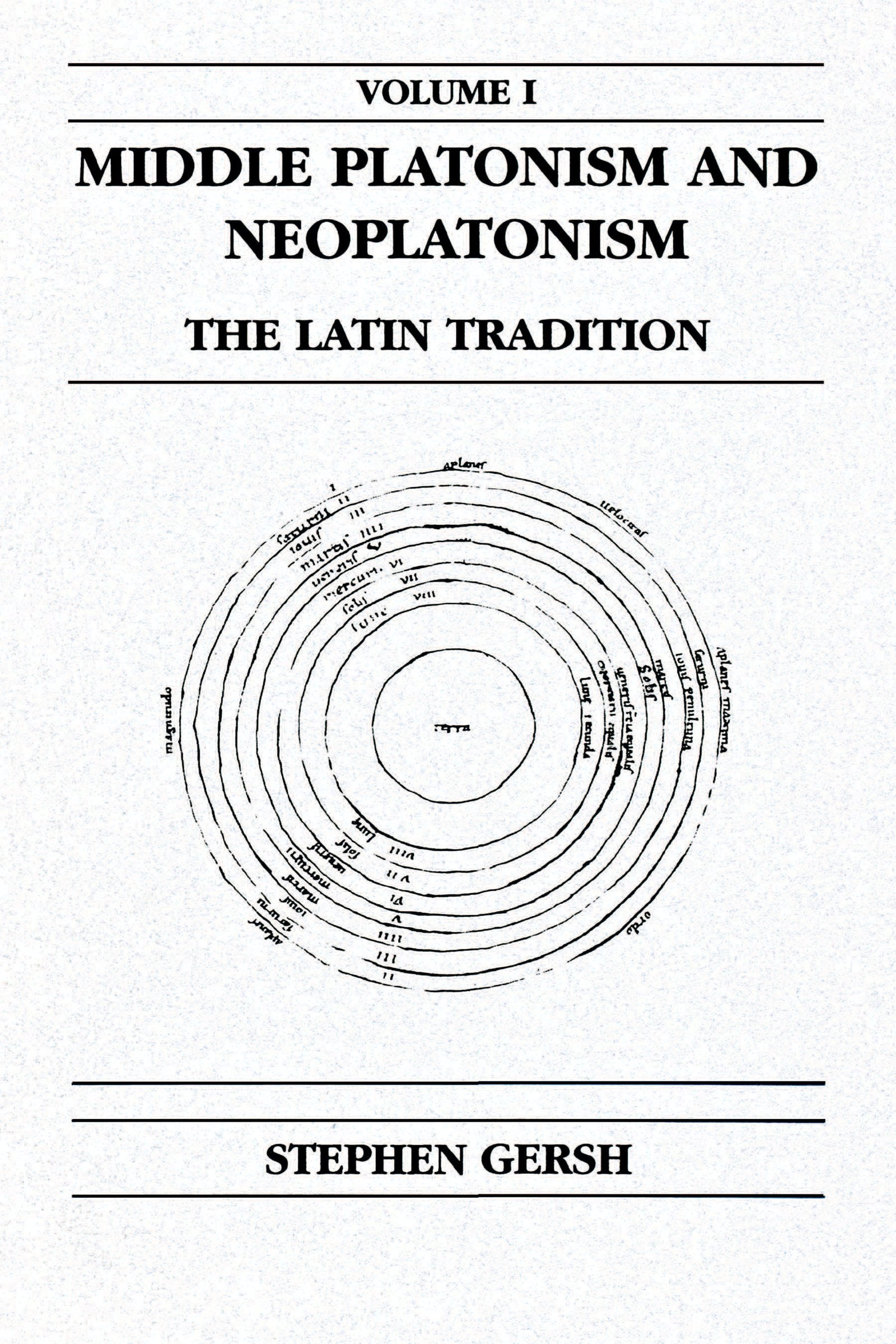
Title

Middle Platonism And Neoplatonism, Volume 1: The Latin Tradition (Publications In Medieval Studies)
Sold by Ergodebooks, an authorized reseller.
Returns accepted within 30 days | support@ergodebooks.com
Shipping Information
- Free Standard Shipping — United States only
- Processing Time: 3–5 business days
- Estimated Delivery: 6–10 business days after dispatch
- Double-boxed, fully insured & discreetly packaged
- Tracking number sent via email once dispatched
Returns & Refund
Returns accepted within 30 days of delivery.
Damaged or Defective Item
Free return shipping + replacement or full refund
Wrong Item Received
Free return shipping + replacement or full refund
Change of Mind
Return shipping at customer's expense · 25% restocking fee applies
Payment Option

It Is Generally Agreed That Those Types Of Philosophy That Are Loosely Called 'Platonic' And 'Neoplatonic' Played A Crucial Role In The History Of European Culture During The Centuries Between Antiquity And The Renaissance. However, Until Now No Scholar Has Attempted To Describe The Evolution Of These Forms Of Thought In A Single Comprehensive Academic Study. So Writes Stephen Gersh In The Preface To Middle Platonism And Neoplatonism: The Latin Tradition.Stephen Gershs Twovolume Survey Of Platonic Influences Upon The Middle Ages Focuses On Questions That Are Basic To Scholars Of Medieval Philosophy, History, And Literature: What Was The Influence Of Platos Philosophy During The Middle Ages? Is It Correct To Consider Earlier Medieval Philosophy As Platonic? How Do Platonism And Neoplatonism Differ? What Do Platonic And Neoplatonic Modes Of Thought Have To Do With Plato?Most Medieval Philosophers Developed Their Doctrines Without Access To The Greatest Intellectual Works Of The Greeks. Instead, They Elaborated Their Philosophies In Relation To The Latin Philosophical Literature That Spanned The Classical Period To The End Of Antiquity. Thus, Gersh Develops His Study By Examining The Important Channels Of Transmission That Existed For Medieval Philosophers.Following An Introduction That Outlines Particular Methodological Perspectives Relative To The Discussion, The History Is Divided Into Three Main Sections. In Total, The Study Surveys An Impressive Range Of Authors Never Previously Considered In A Single Work, With Many Of The Translations Previously Available Only As Greek And Latin Texts: I.1 Middle Platonism: The Platonists And The Stoics (Cicero, Seneca); I.2 Middle Platonism: The Platonists And The Doxographers (Gellius, Apuleius, The Hermetic Asclepius, Ambrose, Censorinus, Augustine); Ii Neoplatonism (Calcidius, Macrobius, Martianus Capella, Boethius, Marius Victorinus, Firmicus Maternus, Favonius Eulogius, Servius, Fulgentius, Priscianus Lydus, Priscianrs Grammaticus).The Concluding Chapter Illustrates The Platonic Influence Upon Certain Medieval Authors Up To The Early Twelfth Century, And It Establishes Guidelines For Further Study. Middle Platonism And Neoplatonism Contains An Extensive Bibliography And A Complete Index Of Latin Texts.
⚠️ WARNING (California Proposition 65):
This product may contain chemicals known to the State of California to cause cancer, birth defects, or other reproductive harm.
For more information, please visit www.P65Warnings.ca.gov.
- Q: How many pages does this book have? A: This book has four hundred thirty-four pages. It provides an extensive exploration of Middle Platonism and Neoplatonism.
- Q: What is the binding type of this book? A: The binding type is paperback. This makes it lightweight and easy to handle for reading.
- Q: What are the dimensions of this book? A: The book measures nine point zero two inches in length, six inches in width, and zero point eight eight inches in height.
- Q: Who is the author of this book? A: The author is Stephen Gersh. He is known for his expertise in medieval philosophy and Platonic studies.
- Q: What category does this book fall under? A: This book is categorized under Ancient Greek and Roman philosophy. It focuses on philosophical traditions influential in medieval culture.
- Q: Is this book suitable for beginners in philosophy? A: Yes, this book is suitable for beginners. It provides comprehensive insights into Middle Platonism and Neoplatonism.
- Q: What themes are explored in this book? A: The book explores themes such as the influence of Plato’s philosophy, differences between Platonism and Neoplatonism, and the transmission of philosophical ideas.
- Q: Can this book be used for academic study? A: Yes, it is ideal for academic study. It includes extensive bibliographies and detailed analyses of philosophical texts.
- Q: Is this book appropriate for high school students? A: Yes, it is appropriate for high school students. It offers foundational knowledge on significant philosophical ideas.
- Q: How should I care for this paperback book? A: To care for this book, keep it in a dry place and avoid exposing it to direct sunlight. Gentle handling will preserve its condition.
- Q: Is there a specific way to store this book? A: Yes, store it upright on a shelf to prevent bending. Use bookends to maintain its shape and prevent damage.
- Q: What if the book arrives damaged? A: If the book arrives damaged, contact customer service for a return or exchange. They will assist with the process.
- Q: What is the return policy for this book? A: The return policy typically allows returns within thirty days of purchase. Ensure the book is in original condition for a full refund.
- Q: Are there any warranties for this book? A: No, books generally do not come with warranties. However, customer service can assist with any issues you encounter.
- Q: What if I have questions about the content? A: If you have questions about the content, consider joining discussion groups or forums focused on medieval philosophy for further insights.
- Q: Can I find similar books on this topic? A: Yes, there are many similar books on medieval philosophy. Look for titles focusing on Platonic and Neoplatonic traditions for related content.