If you have any questions, you are always welcome to contact us. We'll get back to you as soon as possible, withing 24 hours on weekdays.
Customer service
All questions about your order, return and delivery must be sent to our customer service team by e-mail at yourstore@yourdomain.com
Sale & Press
If you are interested in selling our products, need more information about our brand or wish to make a collaboration, please contact us at press@yourdomain.com
Help
If you have any questions, you are always welcome to contact us. We'll get back to you as soon as possible, withing 24 hours on weekdays.
Customer service
All questions about your order, return and delivery must be sent to our customer service team by e-mail at yourstore@yourdomain.com
Sale & Press
If you are interested in selling our products, need more information about our brand or wish to make a collaboration, please contact us at press@yourdomain.com
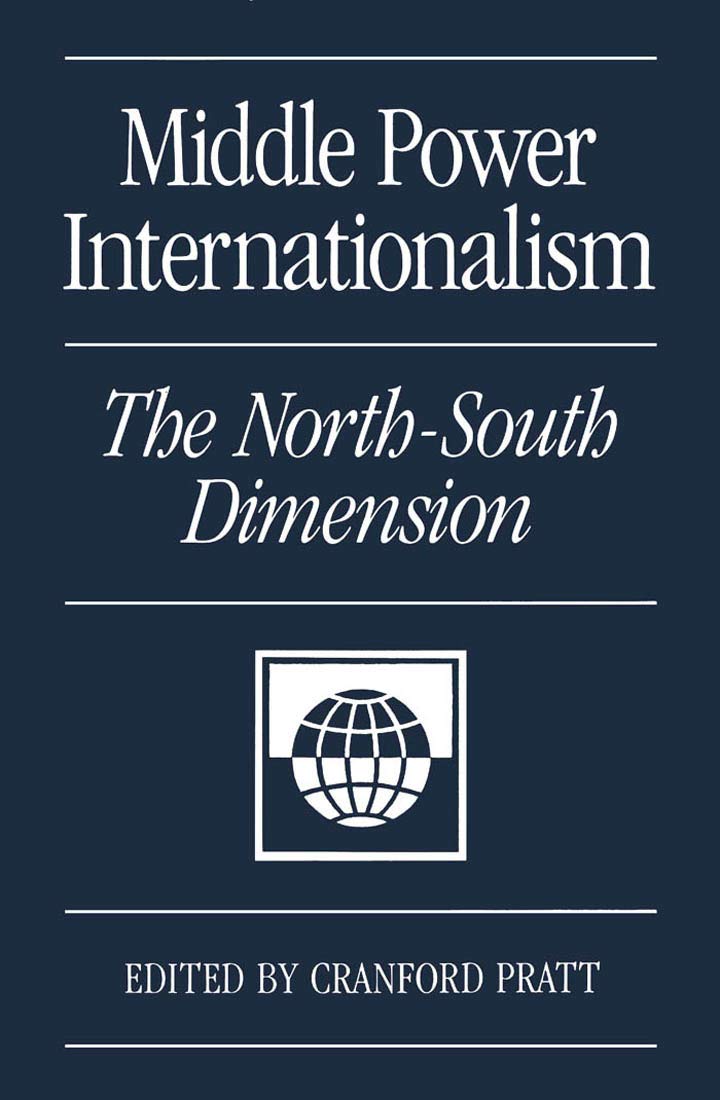
During the 1970s the picture looked very different. The countries involved in the Organization for Economic Cooperation and Development gave the impression that they felt it their duty to help the Third World. Since the beginning of the 1980s, however, this attitude has disappeared from the foreign policy agenda of one developed country after another. It seems that only when a state's selfinterest is at risk does a concern for humanistic values emerge. Canada, Denmark, the Netherlands, Norway, and Sweden the key middle powers have long been regarded as significantly more responsive to the needs of the Third World than most of the other rich industrialized nations. Middle Power Internationalism helps to identify the scope and limitations of the foreign policies of these middle power countries with respect to what Cranford Pratt terms "humane internationalism." Asbjrn Lvbraek describes the major effort in the 1970s to mobilize middle power support for the New International Economic Order. Bernard Wood considers the prospects for effective cooperation between the middle powers of the North and the South. And Raphael Kaplinsky studies the likely impact of new technologies and new methods of production on the economies, and consequently on the NorthSouth policies, of the industrial middle powers. Cranford Pratt concludes with a reflective essay in which he discusses the constraints upon middle power internationalism and the future of middle power diplomacy.
⚠️ WARNING (California Proposition 65):
This product may contain chemicals known to the State of California to cause cancer,
birth defects, or other reproductive harm.
For MAP (Minimum Advertised Price) violations and Intellectual Property (IP) or Trademark concerns, please contact:
support@ergodebooks.com
⚠️ California Proposition 65 Warning: Some products sold on this website may expose you to chemicals known to the State of California to cause cancer, birth defects, or other reproductive harm. For more information, visit www.P65Warnings.ca.gov.