If you have any questions, you are always welcome to contact us. We'll get back to you as soon as possible, withing 24 hours on weekdays.
Customer service
All questions about your order, return and delivery must be sent to our customer service team by e-mail at yourstore@yourdomain.com
Sale & Press
If you are interested in selling our products, need more information about our brand or wish to make a collaboration, please contact us at press@yourdomain.com
Help
If you have any questions, you are always welcome to contact us. We'll get back to you as soon as possible, withing 24 hours on weekdays.
Customer service
All questions about your order, return and delivery must be sent to our customer service team by e-mail at yourstore@yourdomain.com
Sale & Press
If you are interested in selling our products, need more information about our brand or wish to make a collaboration, please contact us at press@yourdomain.com
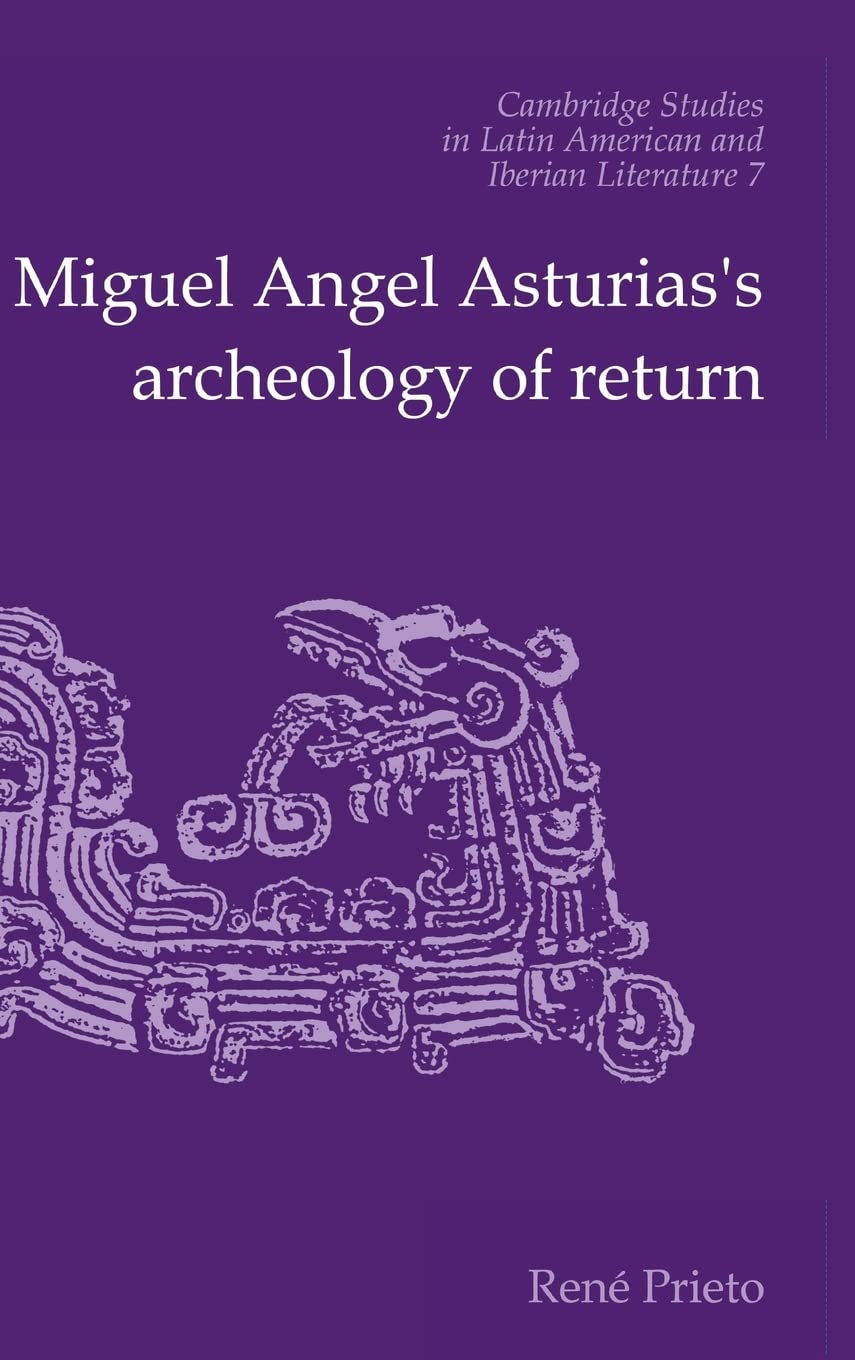
Miguel Angel Asturias (18991974) is one of the notable literary figures in Latin America who in the 1920s contrived both to explore and define Latin literature within the mainstream of Western history. He managed to be poetic, political and mythological at the same time, and with a degree of synthesis rarely achieved then or since. As is the case with many Latin American writers, his work is inextricably linked with politics, and he lived in exile for many years. He was influenced by Indian mythology, fantasy and Surrealism and was the first Latin American novelist to understand the implications of anthropology and structural linguistics for culture and for fiction. In 1967, Asturias became the first Latin American novelist to win the Nobel Prize. Ren Prieto examines how Miguel Angel Asturias turns to the cultural traditions of the ancient Maya and combines them with the rhetoric of surrealism in order to produce three highly complex and widely misunderstood masterpieces; the Leyendas de Guatemala (1930), Hombres de maz (1949) and Mulata de tal (1963). Asturias is the first American author to succeed in portraying an indigenous world vision that is blatantly nonWestern. Borrowing a variety of techniques from preColumbian manuscripts, he creates a new type of literature that is still the best example of the cultural blend typifying the Americas. This is the first book to examine these three novels for their originality beyond the usual political readings normally attributed to them.
⚠️ WARNING (California Proposition 65):
This product may contain chemicals known to the State of California to cause cancer,
birth defects, or other reproductive harm.
For MAP (Minimum Advertised Price) violations and Intellectual Property (IP) or Trademark concerns, please contact:
support@ergodebooks.com
⚠️ California Proposition 65 Warning: Some products sold on this website may expose you to chemicals known to the State of California to cause cancer, birth defects, or other reproductive harm. For more information, visit www.P65Warnings.ca.gov.