
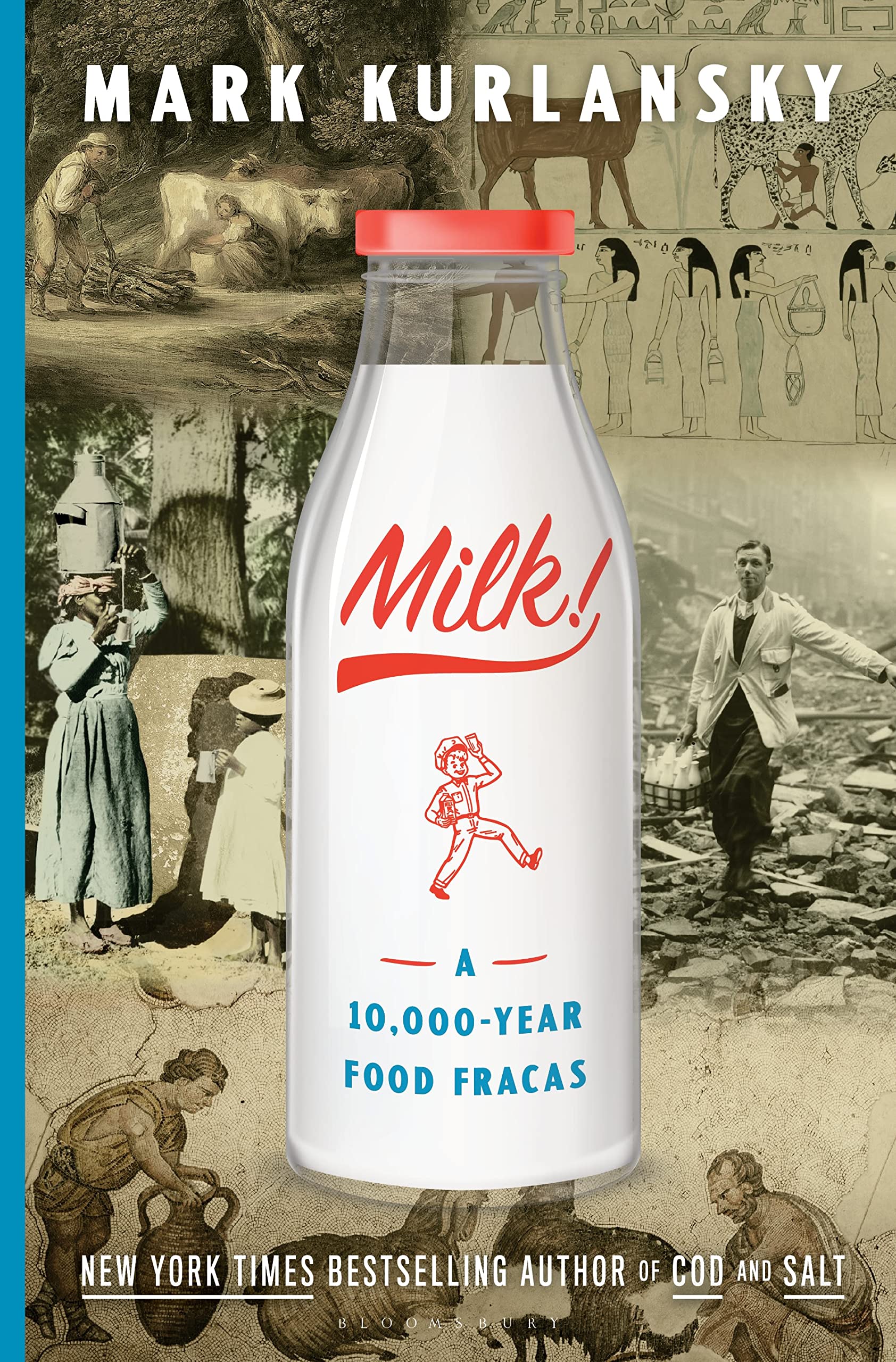
Title
Milk!: A 10,000Year Food Fracas
Sold by Ergodebooks, an authorized reseller.
Returns accepted within 30 days | support@ergodebooks.com
Shipping Information
- Free Standard Shipping — United States only
- Processing Time: 3–5 business days
- Estimated Delivery: 6–10 business days after dispatch
- Double-boxed, fully insured & discreetly packaged
- Tracking number sent via email once dispatched
Returns & Refund
Returns accepted within 30 days of delivery.
Damaged or Defective Item
Free return shipping + replacement or full refund
Wrong Item Received
Free return shipping + replacement or full refund
Change of Mind
Return shipping at customer's expense · 25% restocking fee applies
Payment Option

Mark Kurlansky'S First Global Food History Since The Bestselling Cod And Salt; The Fascinating Cultural, Economic, And Culinary Story Of Milk And All Things Dairywith Recipes Throughout.According To The Greek Creation Myth, We Are So Much Spilt Milk; A Splatter Of The Goddess Hera'S Breast Milk Became Our Galaxy, The Milky Way. But While Mother'S Milk May Be The Essence Of Nourishment, It Is The Milk Of Other Mammals That Humans Have Cultivated Ever Since The Domestication Of Animals More Than 10,000 Years Ago, Originally As A Source Of Cheese, Yogurt, Kefir, And All Manner Of Edible Innovations That Rendered Lactose Digestible, And Then, When Genetic Mutation Made Some Of Us Lactosetolerant, Milk Itself.Before The Industrial Revolution, It Was Common For Families To Keep Dairy Cows And Produce Their Own Milk. But During The Nineteenth Century Mass Production And Urbanization Made Milk Safety A Leading Issue Of The Day, With Milkborne Illnesses A Common Cause Of Death. Pasteurization Slowly Became A Legislative Matter. And Today Milk Is A Test Case In The Most Pressing Issues In Food Politics, From Industrial Farming And Animal Rights To Gmos, The Locavore Movement, And Advocates For Raw Milk, Who Controversially Reject Pasteurization.Profoundly Intertwined With Human Civilization, Milk Has A Compelling And A Surprisingly Global Story To Tell, And Historian Mark Kurlansky Is The Perfect Person To Tell It. Tracing The Liquid'S Diverse History From Antiquity To The Present, He Details Its Curious And Crucial Role In Cultural Evolution, Religion, Nutrition, Politics, And Economics.
⚠️ WARNING (California Proposition 65):
This product may contain chemicals known to the State of California to cause cancer, birth defects, or other reproductive harm.
For more information, please visit www.P65Warnings.ca.gov.
- Q: How many pages are in the book? A: The book contains four hundred pages. It provides a comprehensive exploration of milk's historical and cultural significance.
- Q: What type of binding does this book have? A: This book is bound in hardcover. The durable binding enhances its longevity and makes it suitable for repeated use.
- Q: Who is the author of this book? A: The author is Mark Kurlansky. He is known for his engaging narratives on food history, as seen in his previous works.
- Q: What is the primary subject of the book? A: The primary subject is the cultural and historical significance of milk. It discusses its evolution from ancient times to modern food politics.
- Q: Is this book suitable for children? A: Yes, this book can be suitable for older children. However, it is recommended for readers with an interest in history and food.
- Q: What kind of recipes are included in the book? A: The book includes various recipes that utilize dairy products. It offers practical applications of the historical insights provided.
- Q: How should I store this book? A: Store this book in a cool, dry place. Keeping it away from direct sunlight will help preserve its condition over time.
- Q: Can this book be cleaned if it gets dirty? A: Yes, you can gently wipe the cover with a damp cloth. Avoid using harsh chemicals to prevent damage to the book.
- Q: What should I do if the book arrives damaged? A: If the book arrives damaged, you should contact the seller for a return or exchange. Most sellers have policies in place for such issues.
- Q: Is this book a good choice for food enthusiasts? A: Yes, this book is an excellent choice for food enthusiasts. It offers deep insights into the history and impact of dairy in various cultures.
- Q: What themes are explored in this book? A: The book explores themes of cultural evolution, nutrition, and food politics. It delves into the historical significance of milk across civilizations.
- Q: Are there any dietary restrictions related to the recipes? A: Yes, some recipes may contain dairy, which could be unsuitable for lactose-intolerant individuals. Always check ingredient lists for allergies.
- Q: Is this book recommended for academic use? A: Yes, this book is suitable for academic use. It provides well-researched historical insights that can support various educational topics.
- Q: Does the book discuss modern dairy farming issues? A: Yes, the book addresses modern dairy farming issues such as GMOs and animal rights. It places milk in the context of current food politics.
- Q: What writing style does Mark Kurlansky use? A: Mark Kurlansky uses a narrative style that is engaging and informative. His storytelling makes complex historical topics accessible to readers.