If you have any questions, you are always welcome to contact us. We'll get back to you as soon as possible, withing 24 hours on weekdays.
Customer service
All questions about your order, return and delivery must be sent to our customer service team by e-mail at yourstore@yourdomain.com
Sale & Press
If you are interested in selling our products, need more information about our brand or wish to make a collaboration, please contact us at press@yourdomain.com
Help
If you have any questions, you are always welcome to contact us. We'll get back to you as soon as possible, withing 24 hours on weekdays.
Customer service
All questions about your order, return and delivery must be sent to our customer service team by e-mail at yourstore@yourdomain.com
Sale & Press
If you are interested in selling our products, need more information about our brand or wish to make a collaboration, please contact us at press@yourdomain.com
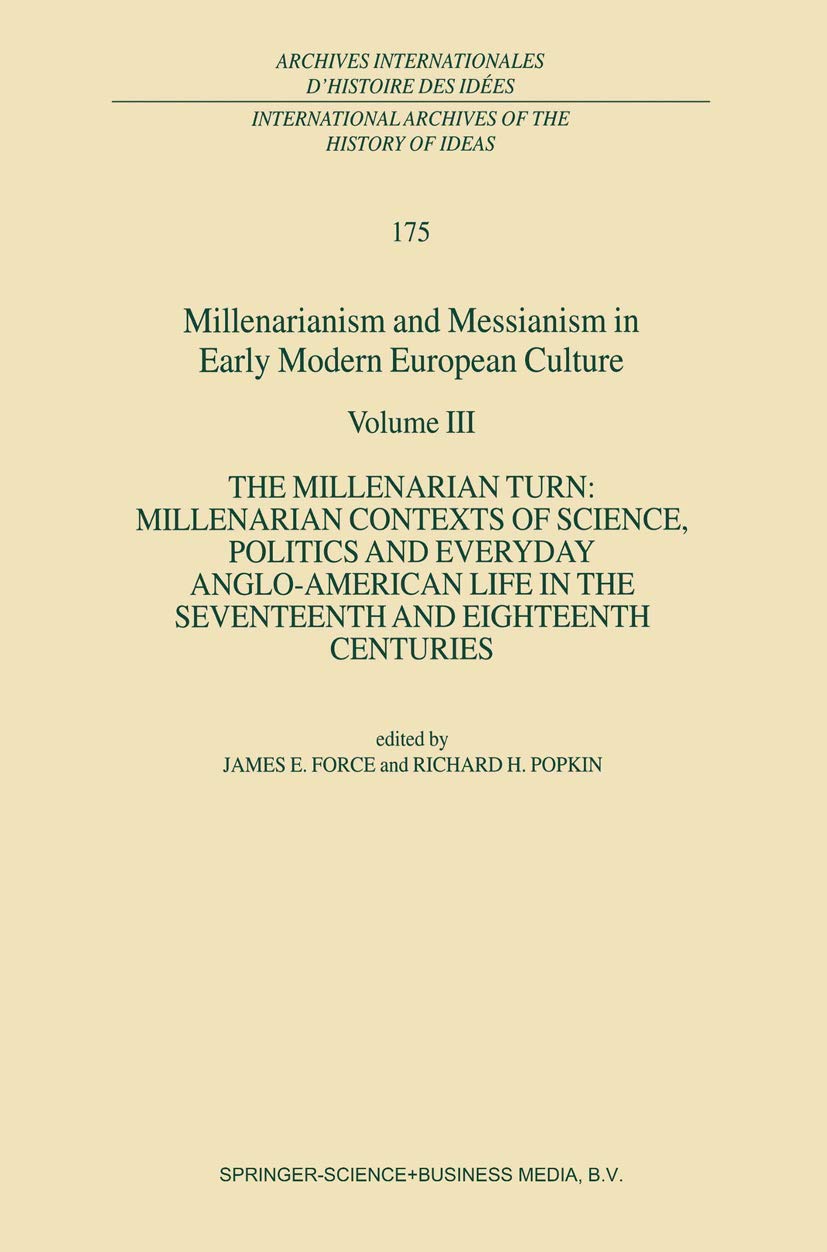
Thanks to the work of legions of scholars, the millenarian expectations within large segments of the population in Cromwellian England have been carefully examined. The widespread belief that England, with its messianic leader 1 Cromwell, heralded the millennium is well known. Less well examined, perhaps, has been the cultural conceptions of the role of millenarian and messianic ideas in the 'long' eighteenth century. Especially during the stable Hanoverian era until the American and French Revolutions the common place millennial expectations of the English Civil War appeared to recede. By the end of the eighteenth century, with the Napoleonic wars, millenarian views and interpretations underwent a minor renaissance but with nothing like the fervor, it is commonly thought, of the Puritan era when so many believed that the end was near. By the end of the eighteenth century, so the 'official' story goes, the religious sceptics and deists of Enlightened England such as David Hume had done too well their work of tarring such religious radicalism with the brush of 'enthusiasm. ' Happily, this 'official' interpretation of the events of the early modern period in which scholars have too often taken their cue from writers such as Hume and simply ignored millenarian contexts and expectations in the Age of Reason has undergone a marked shift in the past twenty years.
⚠️ WARNING (California Proposition 65):
This product may contain chemicals known to the State of California to cause cancer,
birth defects, or other reproductive harm.
For MAP (Minimum Advertised Price) violations and Intellectual Property (IP) or Trademark concerns, please contact:
support@ergodebooks.com
⚠️ California Proposition 65 Warning: Some products sold on this website may expose you to chemicals known to the State of California to cause cancer, birth defects, or other reproductive harm. For more information, visit www.P65Warnings.ca.gov.