
Title
Milton And Monotheism (Medieval & Renaissance Literary Studies),New
Sold by Ergodebooks, an authorized reseller.
Returns accepted within 30 days | support@ergodebooks.com
Shipping Information
- Free Standard Shipping — United States only
- Processing Time: 3–5 business days
- Estimated Delivery: 6–10 business days after dispatch
- Double-boxed, fully insured & discreetly packaged
- Tracking number sent via email once dispatched
Returns & Refund
Returns accepted within 30 days of delivery.
Damaged or Defective Item
Free return shipping + replacement or full refund
Wrong Item Received
Free return shipping + replacement or full refund
Change of Mind
Return shipping at customer's expense · 25% restocking fee applies
Payment Option

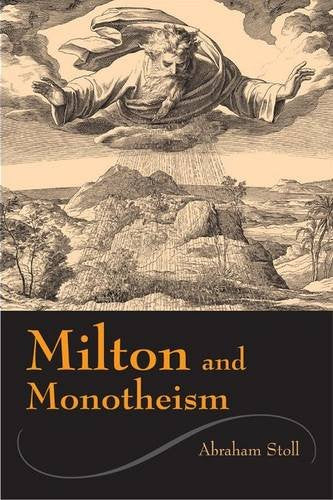
Although monotheism is at least as old as the Hebrew Bible, in the seventeenth century it received particular attention among philosophers and rational theologians. Within the writings of such figures as John Selden, Lord Herbert of Cherbury, and Henry More, and amid emerging Socinian and deist thought, official religion in England was increasingly defined according to the notion of a single God. In this compelling studyilluminating reading for literary scholars and religious scholars alikeAbraham Stoll examines Milton's poetry in the context of these debates swirling around polytheism and monotheism.While writing Paradise Lost, Paradise Regained, and Samson Agonistes with a keen awareness of monotheism, Milton is faced with serious issues for his narratives. From the classical, polytheistic conventions of the Greek epic tradition, Milton inherits divine councils, invocations, and a cosmic scope; but he is also attempting to represent a God who is omniscient and omnipotent, who resists images and personality, and who thus cannot fit the minimal requirements of plot. Negotiating these problems, Milton's monotheistic narratives must question the Trinity, depict polytheistic gods, and ultimately challenge the notion of revelation itself. Yet monotheism also describes how Milton pulls back from the extremes of rational religion to maintain the revealed God of the Bible, forging a unique version of Christianity.As Stoll points out, poetry and theology are too often understood separately, which is especially damaging for the study of Milton, whose poems are retellings of biblical stories. Milton and Monotheism demonstrates the profound differences between doctrinal discourse and narrative poetry and how neither is, individually, able to fully represent Milton's monotheismor, as Stoll says, a God of 'flickering subjectivity.'
⚠️ WARNING (California Proposition 65):
This product may contain chemicals known to the State of California to cause cancer, birth defects, or other reproductive harm.
For more information, please visit www.P65Warnings.ca.gov.