
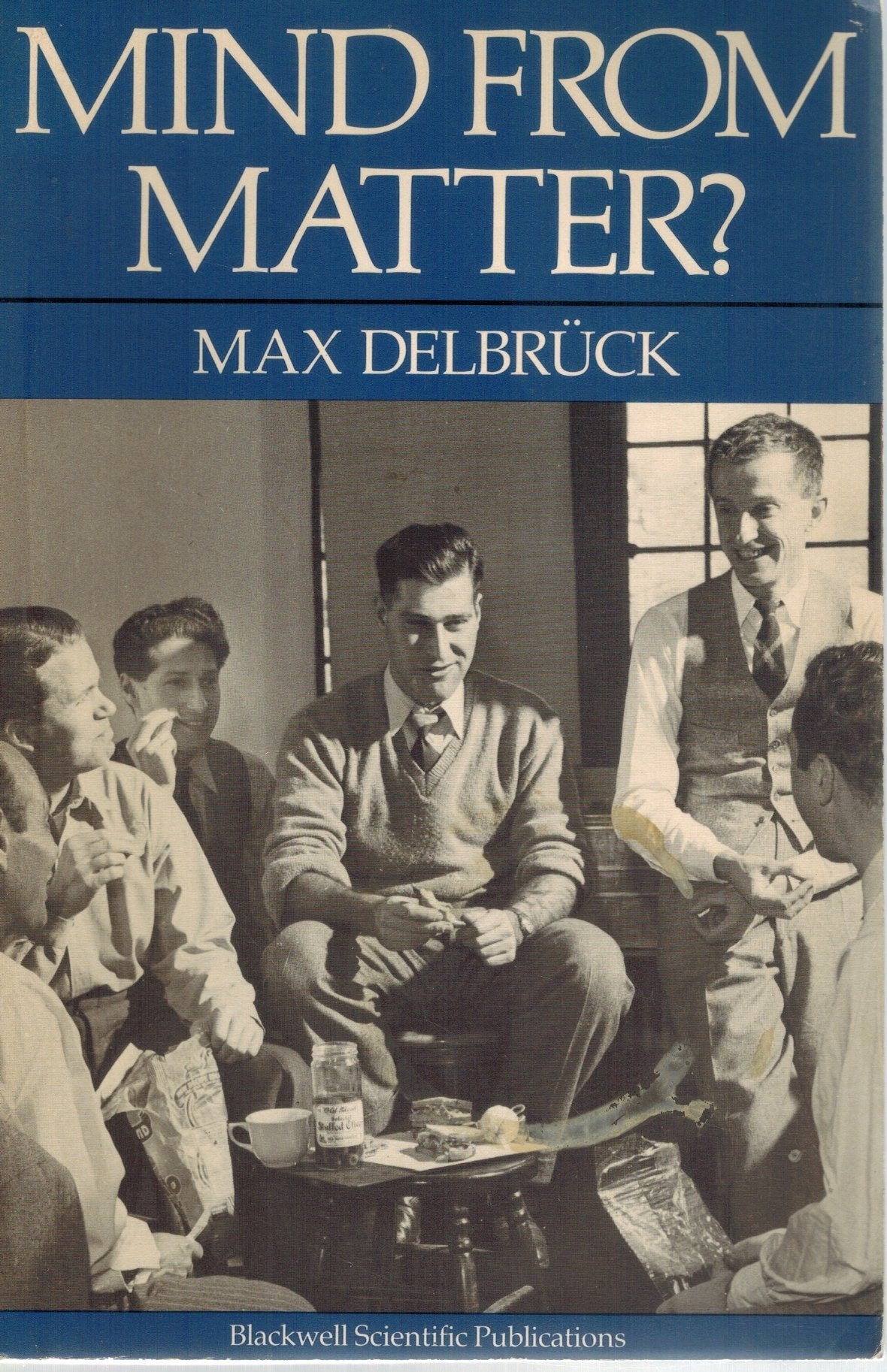
Title
Mind from Matter,Used
Sold by Ergodebooks, an authorized reseller.
Returns accepted within 30 days | support@ergodebooks.com
Shipping Information
- Free Standard Shipping — United States only
- Processing Time: 3–5 business days
- Estimated Delivery: 6–10 business days after dispatch
- Double-boxed, fully insured & discreetly packaged
- Tracking number sent via email once dispatched
Returns & Refund
Returns accepted within 30 days of delivery.
Damaged or Defective Item
Free return shipping + replacement or full refund
Wrong Item Received
Free return shipping + replacement or full refund
Change of Mind
Return shipping at customer's expense · 25% restocking fee applies
Payment Option

How was it possible for that thing we call mind' to come into being? If natural selection applies, how did the evolutionary process give rise to minds capable of profound insights into mathematics, the structure of matter and the nature of life itself? How could the capacity for knowing and understanding have grown out of inert matter? In this book Max Delbrck calls upon his unusual career in physics and later in biology to analyse these fundamental questions. He traces organic evolution from bacteria to man, and explains how biochemistry, genetics and molecular biology have done so much to advance our understanding of that process. Professor Delbruck was honoured with the Nobel Prize in 1969 for his pioneering studies in viral genetics. After his death in 1981, this manuscript was completed by his collaborators.
⚠️ WARNING (California Proposition 65):
This product may contain chemicals known to the State of California to cause cancer, birth defects, or other reproductive harm.
For more information, please visit www.P65Warnings.ca.gov.
- Q: How many pages does 'Mind from Matter' have? A: This book has three hundred two pages. It offers an in-depth exploration of the evolution of the mind.
- Q: What are the dimensions of 'Mind from Matter'? A: The dimensions are eight point four three inches in length, five point eight seven inches in width, and zero point seven one inches in height. This compact size makes it easy to handle.
- Q: What type of binding does 'Mind from Matter' use? A: This book is paperback bound. This makes it flexible and lightweight for easy reading.
- Q: Who is the author of 'Mind from Matter'? A: The author is Max Delbrück. He was awarded the Nobel Prize in 1969 for his work in viral genetics.
- Q: What category does 'Mind from Matter' belong to? A: It belongs to the Biology category. The book delves into fundamental questions about the mind's existence.
- Q: How is 'Mind from Matter' suitable for readers interested in biology? A: This book is ideal for those interested in biological evolution and molecular biology. It connects physics and biology, making complex topics accessible.
- Q: What themes are explored in 'Mind from Matter'? A: It explores themes of evolution, mind, and the intersection of physics and biology. The book addresses profound insights into life and matter.
- Q: Is 'Mind from Matter' suitable for beginners in biology? A: Yes, it is suitable for beginners. The author presents complex ideas in an understandable manner, making it approachable.
- Q: What condition is 'Mind from Matter' in? A: It is classified as a used book in good condition. This indicates that the book is still in a readable state.
- Q: How should I care for 'Mind from Matter'? A: Store it in a cool, dry place away from direct sunlight. This will help maintain its condition over time.
- Q: Can I return 'Mind from Matter' if I don't like it? A: Yes, you should check the return policy of the seller. Typically, you can return it within a specified period if it is in good condition.
- Q: What if 'Mind from Matter' arrives damaged? A: Contact the seller immediately. Most sellers have policies in place to handle damaged items.
- Q: Is there a warranty for 'Mind from Matter'? A: No warranty typically applies to books. However, check with the seller for specific return options.
- Q: What topics does 'Mind from Matter' cover in relation to evolutionary biology? A: It covers organic evolution from bacteria to humans, emphasizing genetics and molecular biology. Delbrück analyzes how these fields enhance our understanding of evolution.
- Q: Is 'Mind from Matter' appropriate for children? A: This book is more suitable for adults and older students due to its complex themes. It discusses advanced concepts in biology and philosophy.
- Q: What is the significance of Max Delbrück's work in 'Mind from Matter'? A: Delbrück's work is significant as it bridges physics and biology, providing insights into the evolution of the mind. His contributions to viral genetics are foundational in the field.