
Title
Miniature Crafts And Their Makers: Palm Weaving In A Mexican Town,Used
Sold by Ergodebooks, an authorized reseller.
Returns accepted within 30 days | support@ergodebooks.com
Shipping Information
- Free Standard Shipping — United States only
- Processing Time: 3–5 business days
- Estimated Delivery: 6–10 business days after dispatch
- Double-boxed, fully insured & discreetly packaged
- Tracking number sent via email once dispatched
Returns & Refund
Returns accepted within 30 days of delivery.
Damaged or Defective Item
Free return shipping + replacement or full refund
Wrong Item Received
Free return shipping + replacement or full refund
Change of Mind
Return shipping at customer's expense · 25% restocking fee applies
Payment Option

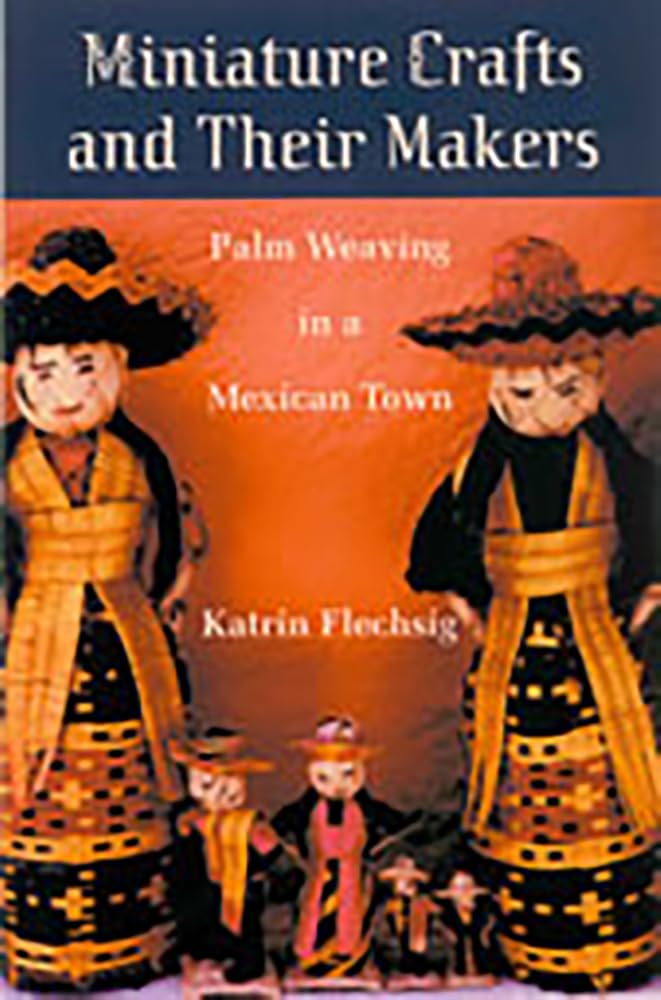
Picture a throng of tiny devils and angels, or a marching band so small it can fit in the palm of your hand. In a Mixtec town in the Mexican state of Puebla, craftspeople have been weaving palm since before the Spanish Conquest, but over the past forty years that art has become more finely tuned and has won national acceptance in a market nostalgic for an authentic Indian past. In this book, Katrin Flechsig offers the first indepth ethnographic and historical examination of the miniature palm craft industry, taking readers behind the scenes of craft production in order to explain how and why these folk arts have undergone miniaturization over the past several decades. In describing this 'Lilliputization of Mexico,' she discusses the appeal of miniaturization, revealing how such factors as tourism and the construction of national identity have contributed to an ongoing demand for the tiny creations. She also contrasts the playfulness of the crafts with the often harsh economic and political realities of life in the community. Flechsig places the crafts of Chigmecatitln within the contexts of manufacturing, local history, religion, design and technique, and selling. She tells how innovation is introduced into the craft, such as through the modification of foreign designs in response to market demands. She also offers insights into capitalist penetration of folk traditions, the marketing of folk arts, and economic changes in modern Mexico. And despite the fact that the designations 'folk' and 'Indian' help create a romantic fiction surrounding the craft, Flechsig dispels common misperceptions of the simplicity of this folk art by revealing the complexities involved in its creation. More than thirty illustrations depict not only finished miniatures but also the artists and their milieu. Today miniatures serve not only the tourist market; middleclass Mexicans also collect miniatures to such an extent that it has been termed a national pastime. Flechsigs work opens up this miniature world and shows us the extent to which it has become a lasting and important facet of contemporary Mexican culture.
⚠️ WARNING (California Proposition 65):
This product may contain chemicals known to the State of California to cause cancer, birth defects, or other reproductive harm.
For more information, please visit www.P65Warnings.ca.gov.