
Title
Minstrels Playing: Music In Early English Religious Drama Ii,Used
Sold by Ergodebooks, an authorized reseller.
Returns accepted within 30 days | support@ergodebooks.com
Shipping Information
- Free Standard Shipping — United States only
- Processing Time: 3–5 business days
- Estimated Delivery: 6–10 business days after dispatch
- Double-boxed, fully insured & discreetly packaged
- Tracking number sent via email once dispatched
Returns & Refund
Returns accepted within 30 days of delivery.
Damaged or Defective Item
Free return shipping + replacement or full refund
Wrong Item Received
Free return shipping + replacement or full refund
Change of Mind
Return shipping at customer's expense · 25% restocking fee applies
Payment Option

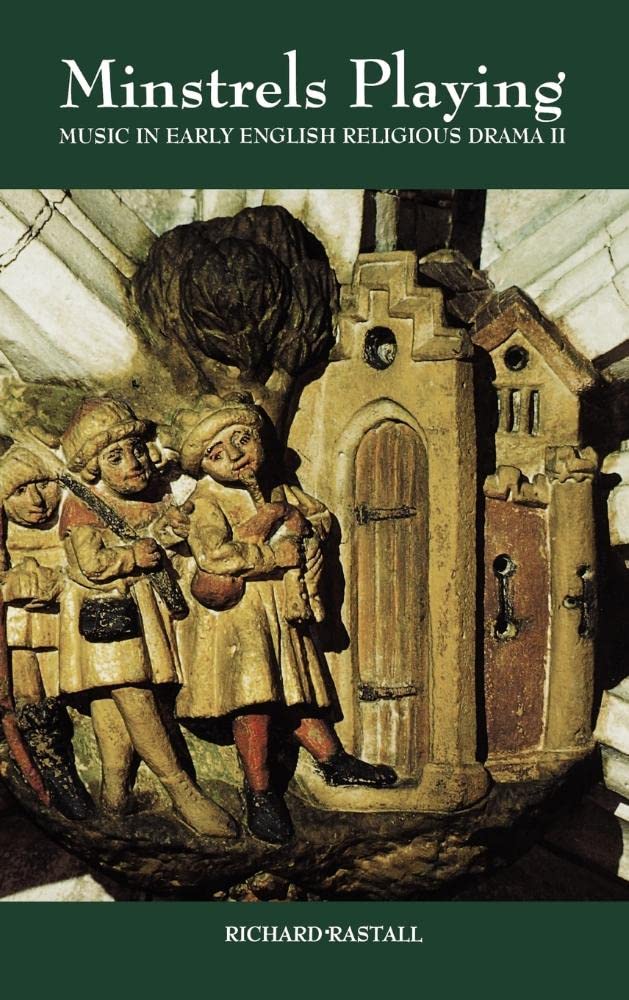
MEDIUM AEVUM says of Heaven Singing, the general discussion of the subject from which the present volume follows on with examination of the individual plays: 'A formidable achievement, indispensable for any serious and comprehensive study of early English drama.'Richard Rastall's two books on music in early English religious drama complement each other. Heaven Singing provides an overview of the evidence for music in the plays, and defines the place, nature and cultural contexts ofmusic in the drama; Minstrels Playing is a discussion of the evidence for every play in that repertory, and is therefore concerned with the place and nature of musical performance in each play individually. Followinghis general discussion of music in the anonymous religious plays of 15th and 16thcentury England in The Heaven Singing (1996), this companion volume turns to the individual biblical, saint and moral plays. Richard Rastallplaces each in its intellectual and cultural context, and notes the surviving evidence for music and other aural effects in the dramatic directions, text references, use of Latin and the liturgy, and the existing documentary records. At the end of each chapter a cuelist shows where the music should appear and presents the arguments for specific repertory and performance modes, providing an invaluable aid for directors. This leads on to a section on modern performance, in which Dr Rastall discusses a wide range of issues that impinge on the practicalities of providing music in early English drama and raise problems and queries for producers and musical directors: the type of staging and the nature of the set, the choice of cast, the choice of musical items, the training and rehearsing of singers, and much else. Dr RICHARD RASTALL is Reader in Historical Musicology and Dean of the Faculty of Music, Visualand Performing Arts at the University of Leeds.
⚠️ WARNING (California Proposition 65):
This product may contain chemicals known to the State of California to cause cancer, birth defects, or other reproductive harm.
For more information, please visit www.P65Warnings.ca.gov.