
Title
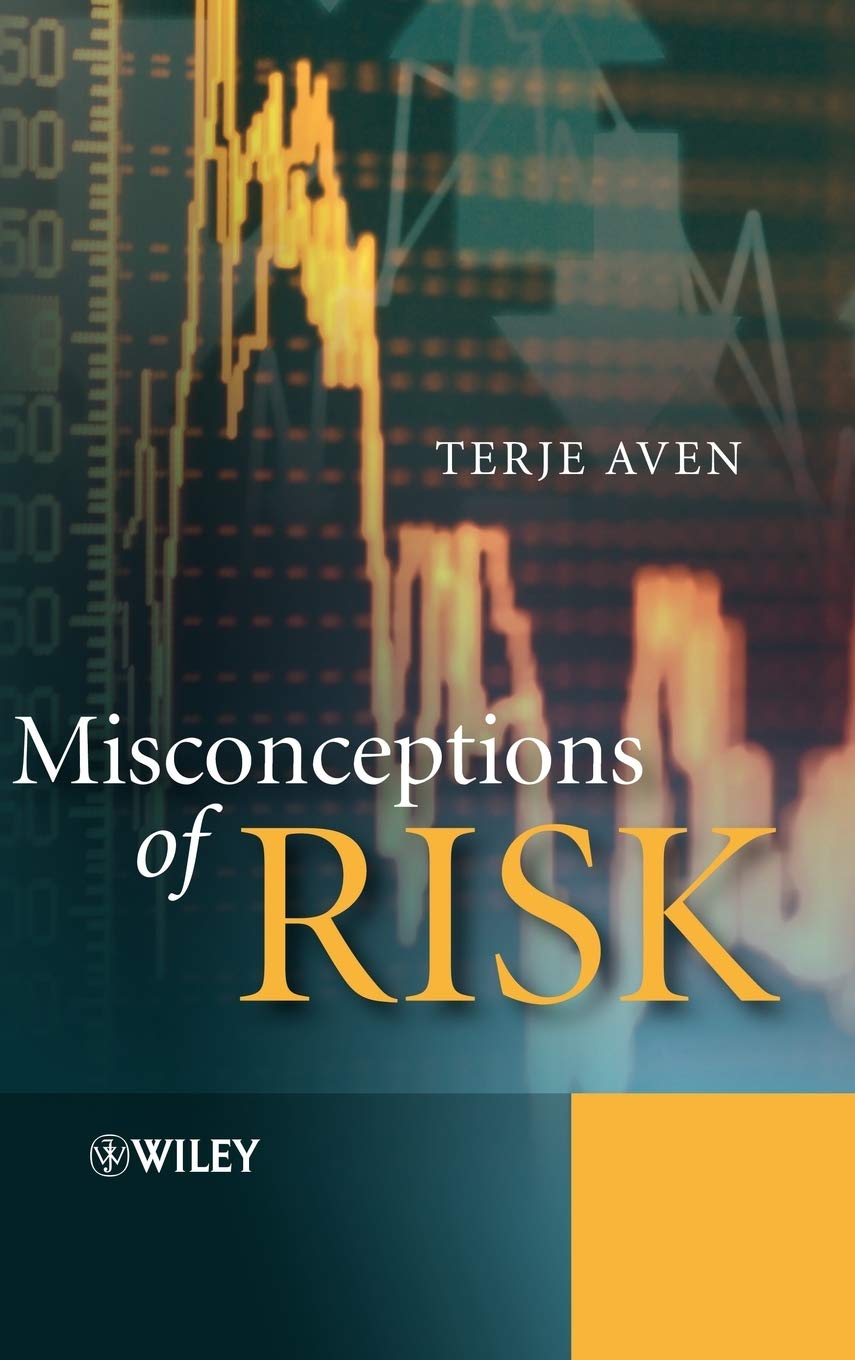
Misconceptions of Risk,Used
Sold by Ergodebooks, an authorized reseller.
Returns accepted within 30 days | support@ergodebooks.com
Shipping Information
- Free Standard Shipping — United States only
- Processing Time: 3–5 business days
- Estimated Delivery: 6–10 business days after dispatch
- Double-boxed, fully insured & discreetly packaged
- Tracking number sent via email once dispatched
Returns & Refund
Returns accepted within 30 days of delivery.
Damaged or Defective Item
Free return shipping + replacement or full refund
Wrong Item Received
Free return shipping + replacement or full refund
Change of Mind
Return shipping at customer's expense · 25% restocking fee applies
Payment Option

We all face risks in a variety of ways, as individuals, businesses and societies. The discipline of risk assessment and risk management is growing rapidly and there is an enormous drive for the implementation of risk assessment methods and risk management in organizations. There are great expectations that these tools provide suitable frameworks for obtaining high levels of performance and balance different concerns such as safety and costs.The analysis and management of risk are not straightforward. There are many challenges. The risk discipline is young and there area a number of ideas, perspectives and conceptions of risk out there. For example many analysts and researchers consider it appropriate to base their risk management policies on the use of expected values, which basically means that potential losses are multiplied with their associated consequences. However, the rationale for such a policy is questionable.A number of such common conceptions of risk are examined in the book, related to the risk concept, risk assessments, uncertainty analyses, risk perception, the precautionary principle, risk management and decision making under uncertainty. The Author discusses these concepts, their strenghts and weaknesses, and concludes that they are often better judged as misconceptions of risk than conceptions of risk.Key Features: Discusses common conceptions of risk with supporting examples. Provides recommendations and guidance to risk analysis and risk management. Relevant for all types of applications, including engineering and business. Presents the Authors overall conclusions on the issues addressed throughout the book.All those working with riskrelated problems need to understand the fundamental ideas and concepts of risk. Professionals in the field of risk, as well as researchers and graduate sutdents will benefit from this book. Policy makers and business people will also find this book of interest.
⚠️ WARNING (California Proposition 65):
This product may contain chemicals known to the State of California to cause cancer, birth defects, or other reproductive harm.
For more information, please visit www.P65Warnings.ca.gov.