
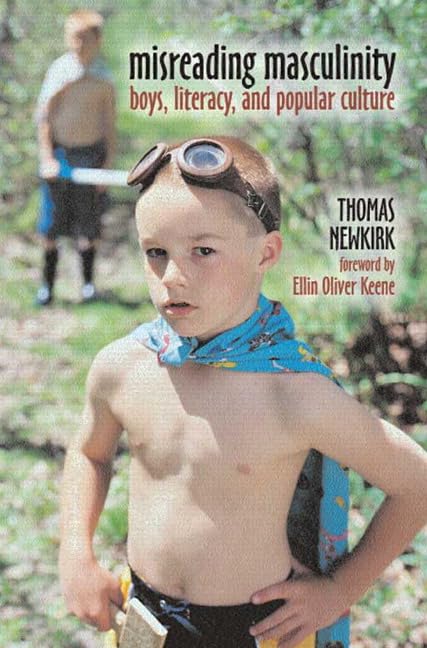
Title

Misreading Masculinity: Boys, Literacy, And Popular Culture
Sold by Ergodebooks, an authorized reseller.
Returns accepted within 30 days | support@ergodebooks.com
Shipping Information
- Free Standard Shipping — United States only
- Processing Time: 3–5 business days
- Estimated Delivery: 6–10 business days after dispatch
- Double-boxed, fully insured & discreetly packaged
- Tracking number sent via email once dispatched
Returns & Refund
Returns accepted within 30 days of delivery.
Damaged or Defective Item
Free return shipping + replacement or full refund
Wrong Item Received
Free return shipping + replacement or full refund
Change of Mind
Return shipping at customer's expense · 25% restocking fee applies
Payment Option

Postcolumbine Has Been A Time When The Issues Of Popular Culture And The Behavior Of Boys Have Generated More Heat Than Light. This Complex, Contested Intersection Has Led To Censorship And Worsealarm, Irrationality, And A Failure To Examine Our Ways Of Teaching, Particularly Teaching Literacy To Boys. In This Book Tom Newkirk Takes An Upclose And Personal Look At Elementary Boys And Their Relationship To Sports, Movies, Video Games, And Other Venues Of Popular Culture. Unlike The Alarmists, He Sees These Media Not As Enemies Of Literacy, But As Resources For Literacy.Through A Series Of Extraordinary Interviews, Newkirk Listens To Young Boys, And Girls, Who Describe The Pleasure They Take In Popular Culture. They Explain The Ways In Which They Use Visual Narratives In Their Writing. They Even Defend Their Use Of Violence In Their Work. Newkirk Disproves The Simplistic Stereotype Of Boys Who Are Primed To Imitate The Violence They See. He Shows That, Rather Than Mimic, Boys Most Often Transform, Recombine, And Participate In Story Lines, And Resist, Mock, And Discern The Unreality Of Icons Of Popular Culture.Using A Mixture Of Memoir, Research Project, Cultural Analysis, And Critique Of Published Findings, Newkirk Encourages Schools To Ask Questions About What Counts As Literacy In Boys And What Doesn'T, To Allow In Their Literacy Programs Boys' Diverse Tastes, Values, And Learning Styles. In Other Words, If We Want Boys To Join The Literacy Club, Then We Have To Invite Them In With Genres Of Their Own Choosing.
⚠️ WARNING (California Proposition 65):
This product may contain chemicals known to the State of California to cause cancer, birth defects, or other reproductive harm.
For more information, please visit www.P65Warnings.ca.gov.
- Q: How many pages does the book have? A: The book has two hundred twenty-four pages. This length provides an in-depth exploration of boys' literacy and their relationship with popular culture.
- Q: What are the dimensions of 'Misreading Masculinity'? A: The dimensions are five point nine eight inches in length, zero point four seven inches in width, and nine point zero two inches in height. These measurements make it a manageable size for reading.
- Q: What type of binding does this book have? A: The book is paperback bound. This makes it lightweight and easy to carry, perfect for readers on the go.
- Q: Who is the author of 'Misreading Masculinity'? A: The author is Thomas Newkirk. He provides a unique perspective on literacy and popular culture as it relates to boys.
- Q: What themes are explored in this book? A: The book explores themes of masculinity, literacy, and the impact of popular culture on boys. It discusses how boys engage with sports, movies, and video games.
- Q: Is this book suitable for all ages? A: The book is not explicitly labeled for a specific age group. However, it addresses complex issues around boys and literacy, which may be more suitable for adults and educators.
- Q: How can this book be used in educational settings? A: Educators can use this book to discuss literacy and the influences of popular culture on boys’ learning. It encourages reflective discussions about teaching practices.
- Q: What makes this book relevant today? A: The book addresses contemporary issues surrounding boys' education and popular culture. It’s relevant in today’s discussions about how media affects literacy.
- Q: Can this book help in understanding boys' behavior in schools? A: Yes, this book provides insights into boys' behaviors and attitudes toward literacy, which can aid teachers in adapting their methods.
- Q: What is the main argument presented by the author? A: The main argument is that popular culture can be a resource for literacy, rather than an obstacle. Newkirk challenges the notion that media negatively impacts boys' reading.
- Q: How does the author support his claims in the book? A: Newkirk supports his claims through interviews with boys and girls, along with cultural analysis and critiques of existing research on literacy.
- Q: What audience is this book intended for? A: The book is intended for educators, parents, and anyone interested in boys' literacy and cultural studies. It appeals to those looking to understand boys' learning styles.
- Q: Does the book include real-life experiences or case studies? A: Yes, the book includes extraordinary interviews and personal anecdotes that provide real-life context to the themes discussed.
- Q: Is there any focus on educational reform in the book? A: Yes, the book encourages schools to consider diverse learning styles and interests of boys in literacy programs, advocating for educational reform.
- Q: How does the author view the role of media in boys' literacy? A: The author views media as potentially beneficial, suggesting it can engage boys and enhance their literacy skills when integrated thoughtfully into education.
- Q: What kind of resources does the book recommend for boys? A: The book suggests that schools should incorporate genres and media that resonate with boys' interests, promoting engagement in literacy activities.