
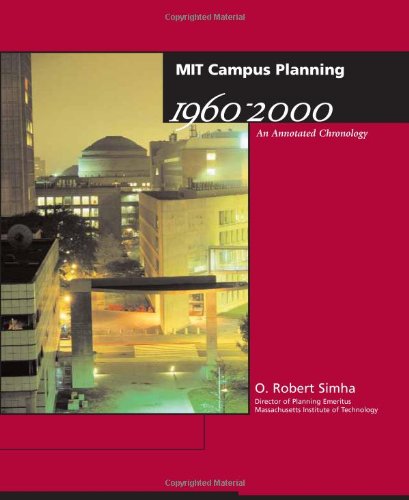
Title
Mit Campus Planning 19602000: An Annotated Chronology (Mit Press),New
Sold by Ergodebooks, an authorized reseller.
Returns accepted within 30 days | support@ergodebooks.com
Shipping Information
- Free Standard Shipping — United States only
- Processing Time: 3–5 business days
- Estimated Delivery: 6–10 business days after dispatch
- Double-boxed, fully insured & discreetly packaged
- Tracking number sent via email once dispatched
Returns & Refund
Returns accepted within 30 days of delivery.
Damaged or Defective Item
Free return shipping + replacement or full refund
Wrong Item Received
Free return shipping + replacement or full refund
Change of Mind
Return shipping at customer's expense · 25% restocking fee applies
Payment Option

The story of forty years of MIT campus planning, told by the man who served as chief planning officer during that time.This is the story of forty years of MIT campus planning, told by the man who served as chief planning officer during that time. The goal of Robert Simha and his colleagues in the MIT Planning Office was to preserve the qualities that defined MIT while managing resources for the future; this effort, MIT President Charles Vest writes in the foreword, constitutes an important part of MIT's institutional memory.The Planning Office was created in 1958 to provide longrange planning and to maintain a campus master plan. Its responsibilities included coordinating academic and administrative planning, developing capital budgeting techniques, implementing campus design criteria, and establishing a space inventory and management systemas well as a more rational procedure for allocating space.Simha chronicles the work of the Planning Office in a series of short essays describing individual projects and overall campus development, including an account of the central role played by the Planning Office in the defeat of a proposed eightlane, doubledecked interstate highway that would have passed through the campus. Simha's department was also the catalyst for the development of Kendall Square from a defunct industrial district into a center for hightech business and research. The Planning Office oversaw the growth of the campus from four million to nine million square feet; because of its thoughtful planning, the MIT community today enjoys green spaces and buildings of architectural distinction where there were once parking lots and factories.Previous edition published by MIT's Office of the Executive Vice President (paper, 2000).
⚠️ WARNING (California Proposition 65):
This product may contain chemicals known to the State of California to cause cancer, birth defects, or other reproductive harm.
For more information, please visit www.P65Warnings.ca.gov.