
Title
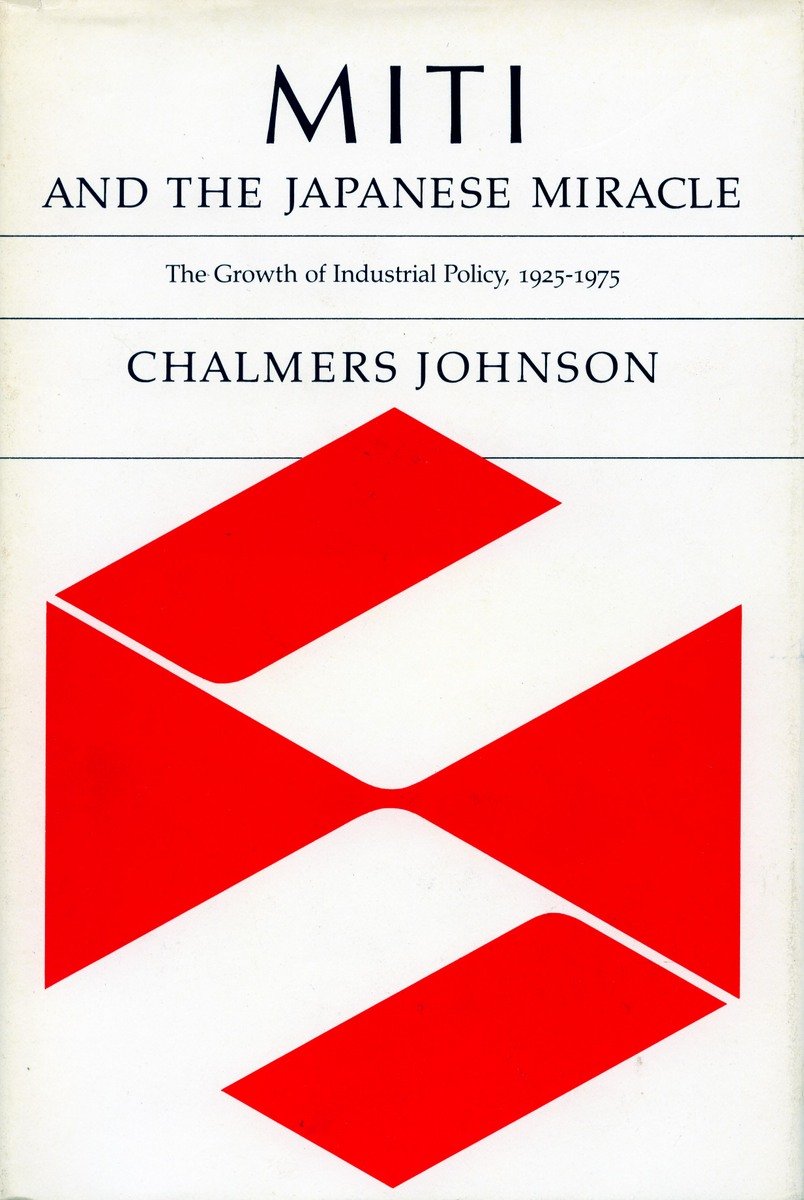
MITI and the Japanese Miracle: The Growth of Industrial Policy, 19251975,New
Sold by Ergodebooks, an authorized reseller.
Returns accepted within 30 days | support@ergodebooks.com
Shipping Information
- Free Standard Shipping — United States only
- Processing Time: 3–5 business days
- Estimated Delivery: 6–10 business days after dispatch
- Double-boxed, fully insured & discreetly packaged
- Tracking number sent via email once dispatched
Returns & Refund
Returns accepted within 30 days of delivery.
Damaged or Defective Item
Free return shipping + replacement or full refund
Wrong Item Received
Free return shipping + replacement or full refund
Change of Mind
Return shipping at customer's expense · 25% restocking fee applies
Payment Option

The focus of this book is on the Japanese economic bureaucracy, particularly on the famous Ministry of International Trade and Industry (MITI), as the leading state actor in the economy. Although MITI was not the only important agent affecting the economy, nor was the state as a whole always predominant, I do not want to be overly modest about the importance of this subject. The particular speed, form, and consequences of Japanese economic growth are not intelligible without reference to the contributions of MITI. Collaboration between the state and big business has long been acknowledged as the defining characteristic of the Japanese economic system, but for too long the state's role in this collaboration has been either condemned as overweening or dismissed as merely supportive, without anyone's ever analyzing the matter.The history of MITI is central to the economic and political history of modern Japan. Equally important, however, the methods and achievements of the Japanese economic bureaucracy are central to the continuing debate between advocates of the communisttype command economies and advocates of the Westerntype mixed market economies. The fully bureaucratized command economies misallocate resources and stifle initiative; in order to function at all, they must lock up their populations behind iron curtains or other more or less impermeable barriers. The mixed market economies struggle to find ways to intrude politically determined priorities into their market systems without catching a bad case of the 'English disease' or being frustrated by the Americantype legal sprawl. The Japanese, of course, do not have all the answers. But given the fact that virtually all solutions to any of the critical problems of the late twentieth centuryenergy supply, environmental protection, technological innovation, and so forthinvolve an expansion of official bureaucracy, the particular Japanese priorities and procedures are instructive. At the very least they should forewarn a foreign observer that the Japanese achievements were not won without a price being paid.
⚠️ WARNING (California Proposition 65):
This product may contain chemicals known to the State of California to cause cancer, birth defects, or other reproductive harm.
For more information, please visit www.P65Warnings.ca.gov.
- Q: What is the main focus of 'MITI and the Japanese Miracle'? A: The book centers on the Japanese economic bureaucracy, particularly the Ministry of International Trade and Industry (MITI), and its crucial role in Japan's economic growth from 1925 to 1975.
- Q: Who is the author of this book? A: The author of 'MITI and the Japanese Miracle' is Chalmers A. Johnson.
- Q: When was this book published? A: The book was published on June 1, 1982.
- Q: What are the key themes discussed in the book? A: Key themes include the collaboration between the state and big business, the role of MITI in Japan's economic system, and the comparison between command economies and mixed market economies.
- Q: How many pages does the book have? A: The book has 410 pages.
- Q: What type of binding does this book have? A: The book is available in paperback binding.
- Q: Is this book in new condition? A: Yes, the book is in new condition.
- Q: What edition of the book is available? A: This is the first edition of 'MITI and the Japanese Miracle'.
- Q: What insights can this book provide about Japan's economic policies? A: The book provides insights into the methods and achievements of Japan's economic bureaucracy, highlighting how they address critical issues like energy supply and technological innovation.
- Q: Is this book suitable for readers interested in economics? A: Yes, this book is suitable for readers interested in economics, especially those looking to understand Japan's unique economic policies and history.