
Title
Mixed Faith And Shared Feeling: Theater In Postreformation London (Published In Cooperation With Folger Shakespeare Library),Used
Sold by Ergodebooks, an authorized reseller.
Returns accepted within 30 days | support@ergodebooks.com
Shipping Information
- Free Standard Shipping — United States only
- Processing Time: 3–5 business days
- Estimated Delivery: 6–10 business days after dispatch
- Double-boxed, fully insured & discreetly packaged
- Tracking number sent via email once dispatched
Returns & Refund
Returns accepted within 30 days of delivery.
Damaged or Defective Item
Free return shipping + replacement or full refund
Wrong Item Received
Free return shipping + replacement or full refund
Change of Mind
Return shipping at customer's expense · 25% restocking fee applies
Payment Option

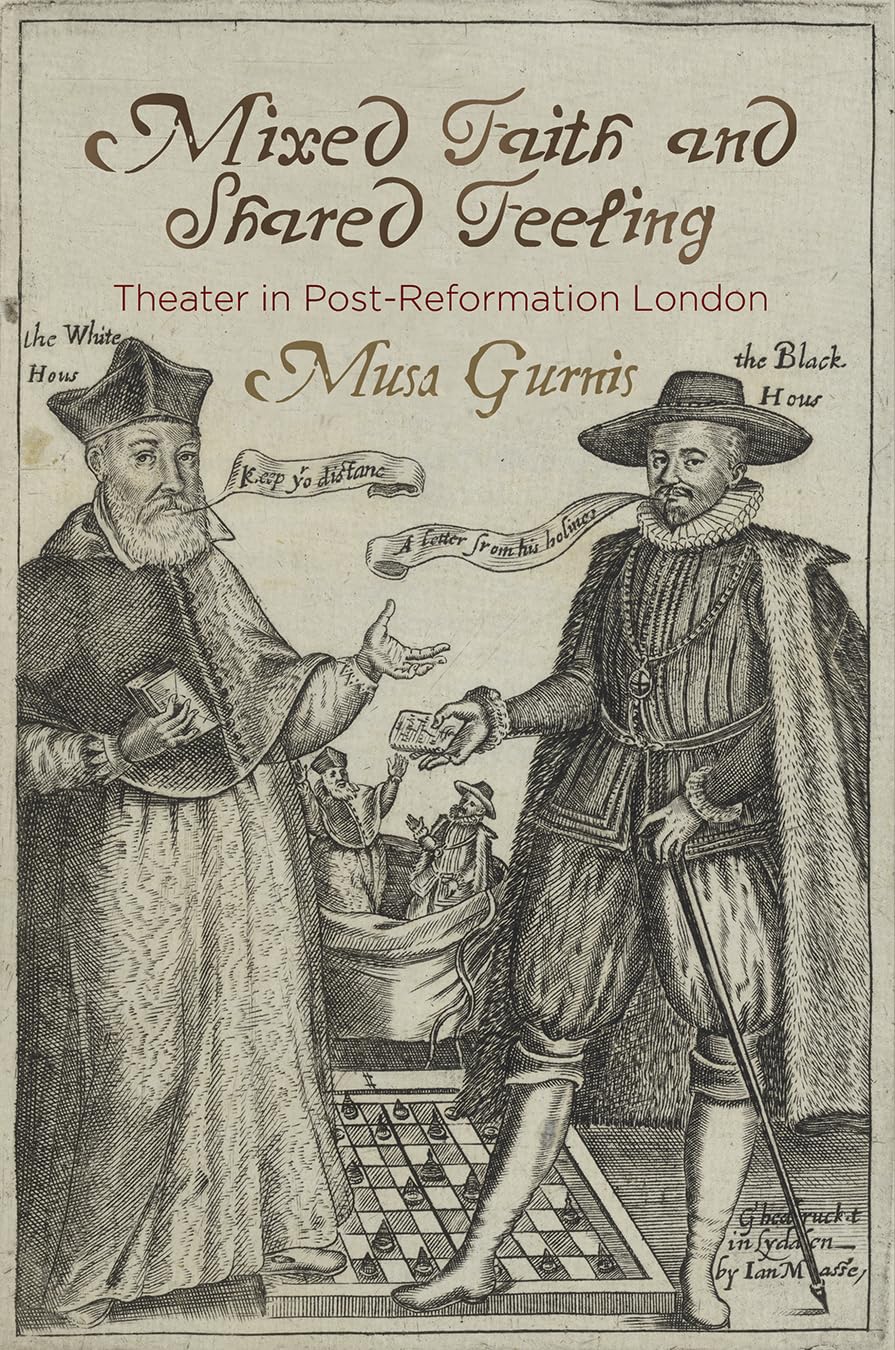
Mixed Faith and Shared Feeling explores the mutually generative relationship between postReformation religious life and London's commercial theaters. It explores the dynamic exchange between the imaginatively transformative capacities of shared theatrical experience, with the particular ideological baggage that individual playgoers bring into the theater. While early modern English drama was shaped by the polyvocal, confessional scene in which it was embedded, Musa Gurnis contends that theater does not simply reflect culture but shapes it. According to Gurnis, shared theatrical experience allowed mixedfaith audiences to vicariously occupy alternative emotional and cognitive perspectives across the confessional spectrum.In looking at individual plays, such as Thomas Middleton's A Game of Chess and Shakespeare's Measure for Measure, Gurnis shows how theatrical process can restructure playgoers' experiences of confessional material and interrupt dominant habits of religious thought. She refutes any assumption that audiences consisted of conforming Church of England Protestants by tracking the complex and changing religious lives of seventy known playgoers. Arguing against work that seeks to draw fixed lines of religious affiliation around individual playwrights or companies, she highlights the common practice of crossconfessional collaboration among playhouse colleagues. Mixed Faith and Shared Feeling demonstrates how postReformation representational practices actively reshaped the ways ideologically diverse Londoners accessed the mixture of religious life across the spectrum of beliefs.
⚠️ WARNING (California Proposition 65):
This product may contain chemicals known to the State of California to cause cancer, birth defects, or other reproductive harm.
For more information, please visit www.P65Warnings.ca.gov.