If you have any questions, you are always welcome to contact us. We'll get back to you as soon as possible, withing 24 hours on weekdays.
Customer service
All questions about your order, return and delivery must be sent to our customer service team by e-mail at yourstore@yourdomain.com
Sale & Press
If you are interested in selling our products, need more information about our brand or wish to make a collaboration, please contact us at press@yourdomain.com
Help
If you have any questions, you are always welcome to contact us. We'll get back to you as soon as possible, withing 24 hours on weekdays.
Customer service
All questions about your order, return and delivery must be sent to our customer service team by e-mail at yourstore@yourdomain.com
Sale & Press
If you are interested in selling our products, need more information about our brand or wish to make a collaboration, please contact us at press@yourdomain.com
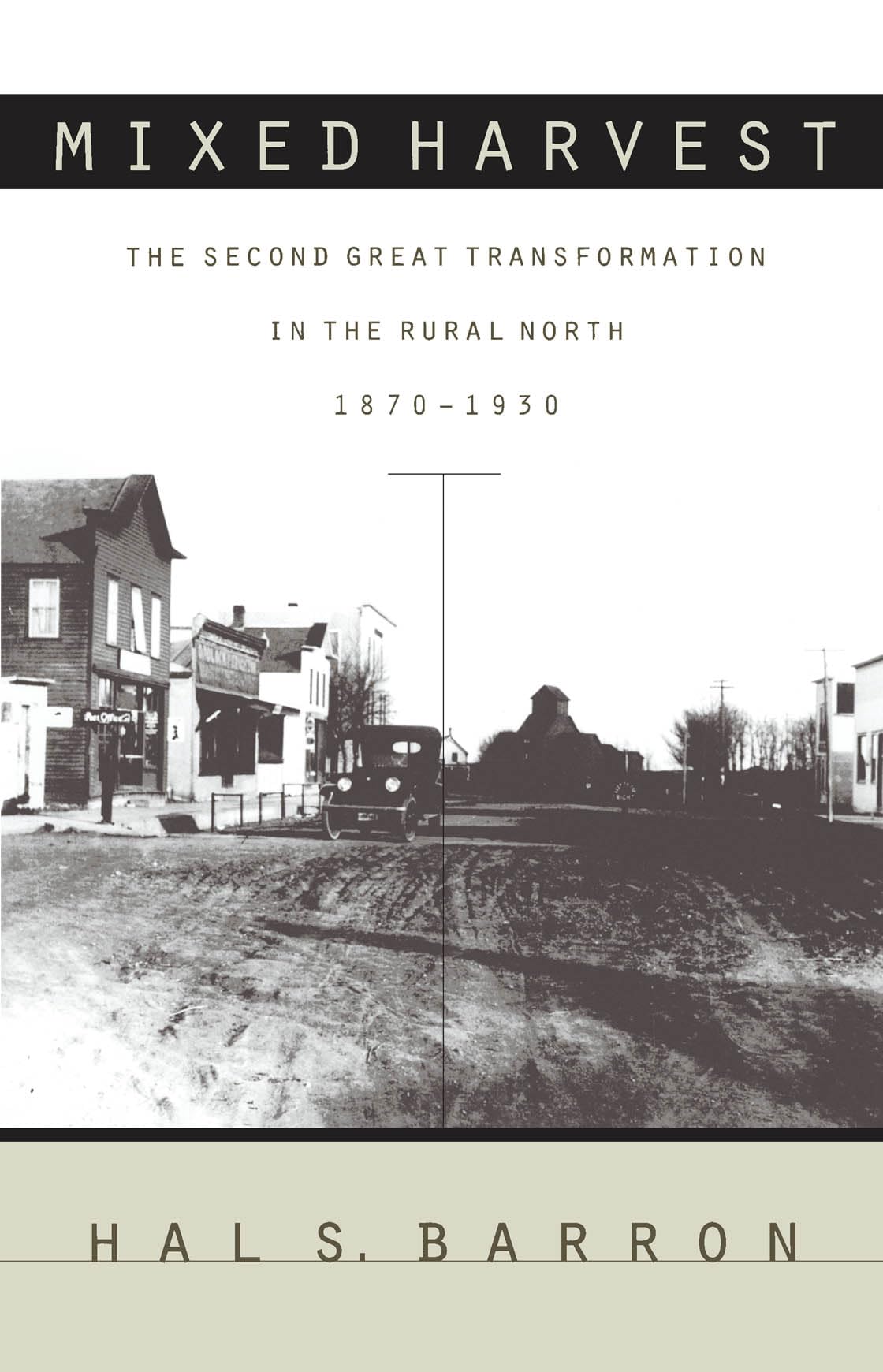
Mixed Harvest explores rural responses to the transformation of the northern United States from an agricultural society into an urban and industrial one. According to Hal S. Barron, country people from New England to North Dakota negotiated the rise of largescale organizational society and consumer culture in ways marked by both resistance and accommodation, change and continuity. Between 1870 and 1930, communities in the rural North faced a number of challenges. Reformers and professionals sought to centralize authority and diminish local control over such important aspects of rural society as schools and roads; largescale business corporations wielded increasing market power, to the detriment of independent family farmers; and an encroaching urbanbased consumer culture threatened rural beliefs in the primacy of their local communities and the superiority of country life. But, Barron argues, by reconfiguring traditional rural values of localism, independence, republicanism, and agrarian fundamentalism, country people successfully created a distinct rural subculture. Consequently, agrarian society continued to provide a counterpoint to the dominant trends in American society well into the twentieth century.
⚠️ WARNING (California Proposition 65):
This product may contain chemicals known to the State of California to cause cancer,
birth defects, or other reproductive harm.
For MAP (Minimum Advertised Price) violations and Intellectual Property (IP) or Trademark concerns, please contact:
support@ergodebooks.com
⚠️ California Proposition 65 Warning: Some products sold on this website may expose you to chemicals known to the State of California to cause cancer, birth defects, or other reproductive harm. For more information, visit www.P65Warnings.ca.gov.