
Title
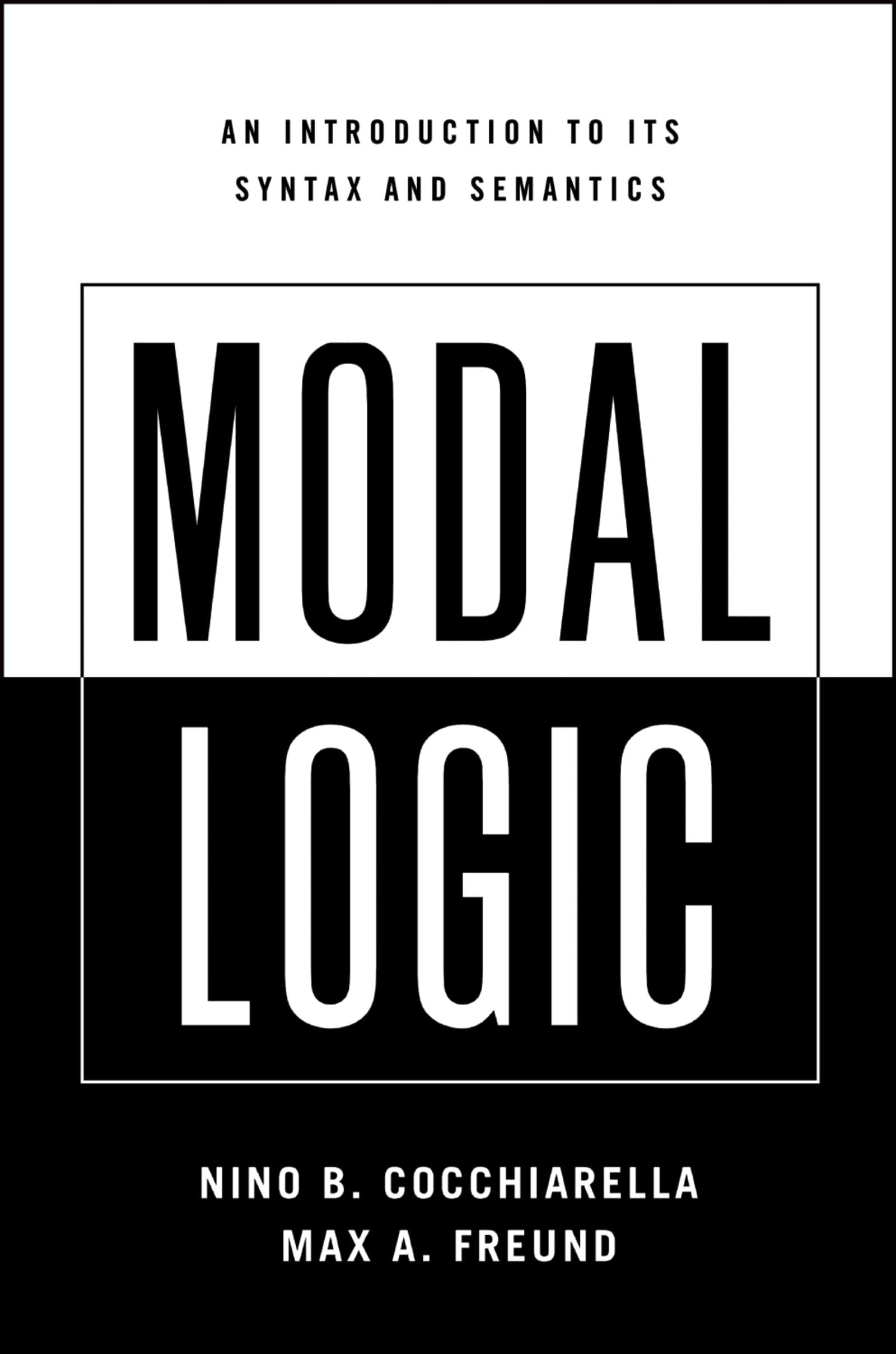
Modal Logic: An Introduction To Its Syntax And Semantics
Sold by Ergodebooks, an authorized reseller.
Returns accepted within 30 days | support@ergodebooks.com
Shipping Information
- Free Standard Shipping — United States only
- Processing Time: 3–5 business days
- Estimated Delivery: 6–10 business days after dispatch
- Double-boxed, fully insured & discreetly packaged
- Tracking number sent via email once dispatched
Returns & Refund
Returns accepted within 30 days of delivery.
Damaged or Defective Item
Free return shipping + replacement or full refund
Wrong Item Received
Free return shipping + replacement or full refund
Change of Mind
Return shipping at customer's expense · 25% restocking fee applies
Payment Option

In this text, a variety of modal logics at the sentential, firstorder, and secondorder levels are developed with clarity, precision and philosophical insight. All of the S1S5 modal logics of Lewis and Langford, among others, are constructed. A matrix, or manyvalued semantics, for sentential modal logic is formalized, and an important result that no finite matrix can characterize any of the standard modal logics is proven. Exercises, some of which show independence results, help to develop logical skills.A separate sentential modal logic of logical necessity in logical atomism is also constructed and shown to be complete and decidable. On the firstorder level of the logic of logical necessity, the modal thesis of antiessentialism is valid and every de re sentence is provably equivalent to a de dicto sentence.An elegant extension of the standard sentential modal logics into several firstorder modal logics is developed. Both a firstorder modal logic for possibilism containing actualism as a proper part as well as a separate modal logic for actualism alone are constructed for a variety of modal systems. Exercises on this level show the connections between modal laws and quantifier logic regarding generalization into, or out of, modal contexts and the conditions required for the necessity of identity and nonidentity.Two types of secondorder modal logics, one possibilist and the other actualist, are developed based on a distinction between existenceentailing concepts and concepts in general. The result is a deeper secondorder analysis of possibilism and actualism as ontological frameworks. Exercises regarding secondorder predicate quantifiers clarify the distinction between existenceentailing concepts and concepts in general.Modal Logic is ideally suited as a core text for graduate and undergraduate courses in modal logic, and as supplementary reading in courses on mathematical logic, formal ontology, and artificial intelligence.
⚠️ WARNING (California Proposition 65):
This product may contain chemicals known to the State of California to cause cancer, birth defects, or other reproductive harm.
For more information, please visit www.P65Warnings.ca.gov.