If you have any questions, you are always welcome to contact us. We'll get back to you as soon as possible, withing 24 hours on weekdays.
Customer service
All questions about your order, return and delivery must be sent to our customer service team by e-mail at yourstore@yourdomain.com
Sale & Press
If you are interested in selling our products, need more information about our brand or wish to make a collaboration, please contact us at press@yourdomain.com
Help
If you have any questions, you are always welcome to contact us. We'll get back to you as soon as possible, withing 24 hours on weekdays.
Customer service
All questions about your order, return and delivery must be sent to our customer service team by e-mail at yourstore@yourdomain.com
Sale & Press
If you are interested in selling our products, need more information about our brand or wish to make a collaboration, please contact us at press@yourdomain.com
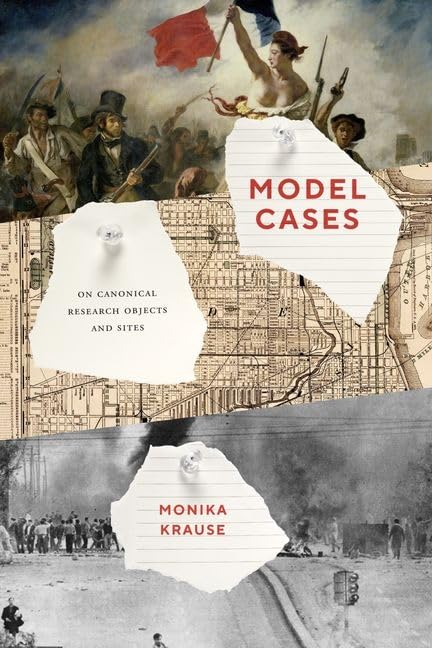
In Model Cases, Monika Krause asks about the concrete material research objects behind shared conversations about classes of objects, periods, and regions in the social sciences and humanities. It is well known that biologists focus on particular organisms, such as mice, fruit flies, or particular viruses when they study general questions about life, development, and disease. Krause shows that scholars in the social sciences and humanities also draw on some cases more than others, selecting research objects influenced by a range of ideological but also mundane factors, such as convenience, historicist ideas about development over time, schemas in the general population, and schemas particular to specific scholarly communities.Some research objects are studied repeatedly and shape our understanding of more general ideas in disproportionate ways: The French Revolution has profoundly influenced our concepts of revolution, of citizenship, and of political modernity, just like studies of doctors have set the agenda for research on the professions. Based on an extensive analysis of the role of model cases in different fields, Krause argues that they can be useful for scholarly communities if they are acknowledged and reflected as particular objects; she also highlights the importance of research strategies based on neglected research objects and neglected combinations of research objects and scholarly concerns.
⚠️ WARNING (California Proposition 65):
This product may contain chemicals known to the State of California to cause cancer,
birth defects, or other reproductive harm.
For MAP (Minimum Advertised Price) violations and Intellectual Property (IP) or Trademark concerns, please contact:
support@ergodebooks.com
⚠️ California Proposition 65 Warning: Some products sold on this website may expose you to chemicals known to the State of California to cause cancer, birth defects, or other reproductive harm. For more information, visit www.P65Warnings.ca.gov.