
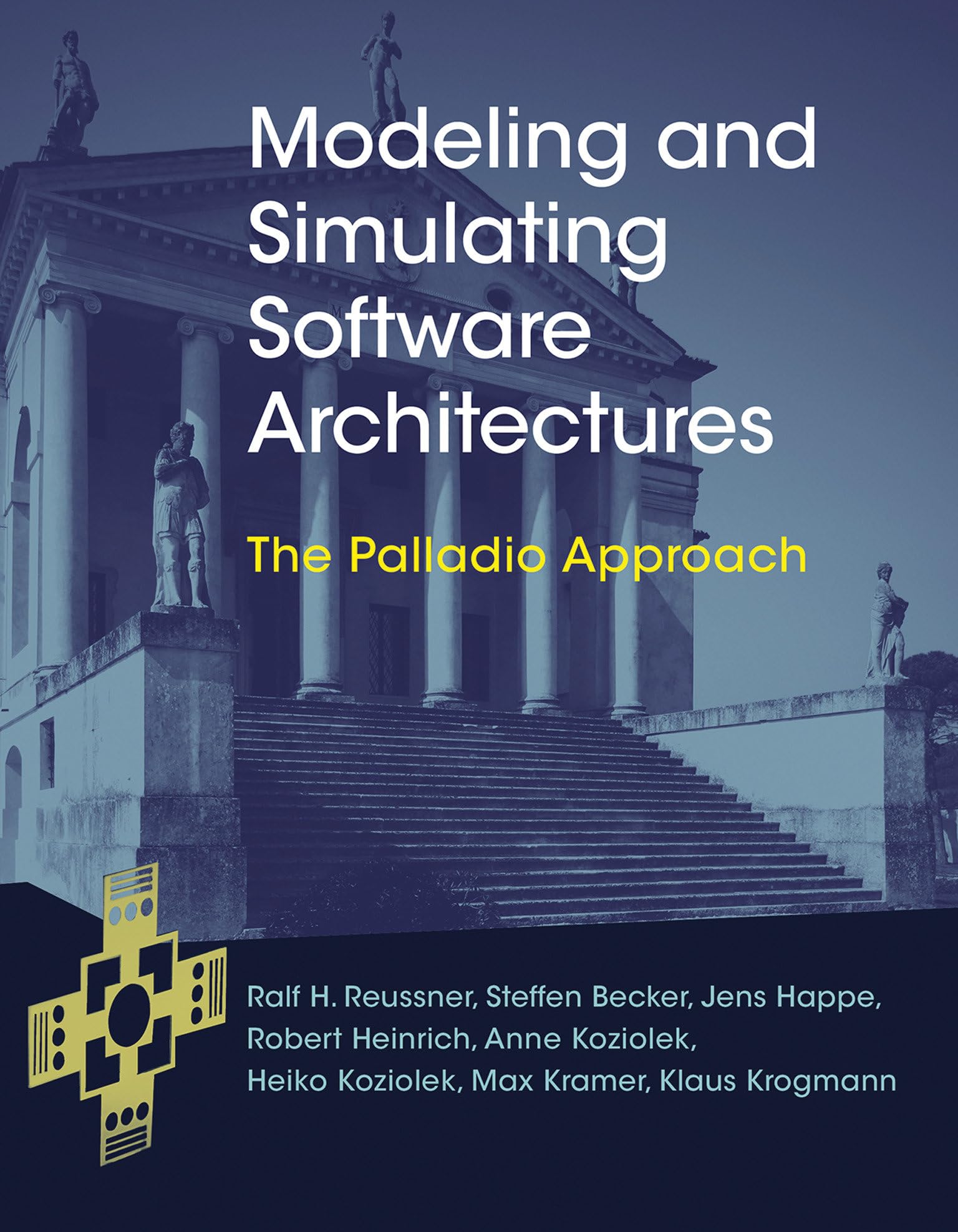
Title
Modeling and Simulating Software Architectures: The Palladio Approach,Used
Sold by Ergodebooks, an authorized reseller.
Returns accepted within 30 days | support@ergodebooks.com
Shipping Information
- Free Standard Shipping — United States only
- Processing Time: 3–5 business days
- Estimated Delivery: 6–10 business days after dispatch
- Double-boxed, fully insured & discreetly packaged
- Tracking number sent via email once dispatched
Returns & Refund
Returns accepted within 30 days of delivery.
Damaged or Defective Item
Free return shipping + replacement or full refund
Wrong Item Received
Free return shipping + replacement or full refund
Change of Mind
Return shipping at customer's expense · 25% restocking fee applies
Payment Option

A new, quantitative architecture simulation approach to software design that circumvents costly testing cycles by modeling quality of service in early design states.Too often, software designers lack an understanding of the effect of design decisions on such quality attributes as performance and reliability. This necessitates costly trialanderror testing cycles, delaying or complicating rollout. This book presents a new, quantitative architecture simulation approach to software design, which allows software engineers to model quality of service in early design stages. It presents the first simulator for software architectures, Palladio, and shows students and professionals how to model reusable, parametrized components and configured, deployed systems in order to analyze service attributes.The text details the key concepts of Palladio's domainspecific modeling language for software architecture quality and presents the corresponding development stage. It describes how quality information can be used to calibrate architecture models from which detailed simulation models are automatically derived for quality predictions. Readers will learn how to approach systematically questions about scalability, hardware resources, and efficiency. The text features a running example to illustrate tasks and methods as well as three case studies from industry. Each chapter ends with exercises, suggestions for further reading, and takeaways that summarize the key points of the chapter. The simulator can be downloaded from a companion website, which offers additional material. The book can be used in graduate courses on software architecture, quality engineering, or performance engineering. It will also be an essential resource for software architects and software engineers and for practitioners who want to apply Palladio in industrial settings.
⚠️ WARNING (California Proposition 65):
This product may contain chemicals known to the State of California to cause cancer, birth defects, or other reproductive harm.
For more information, please visit www.P65Warnings.ca.gov.