
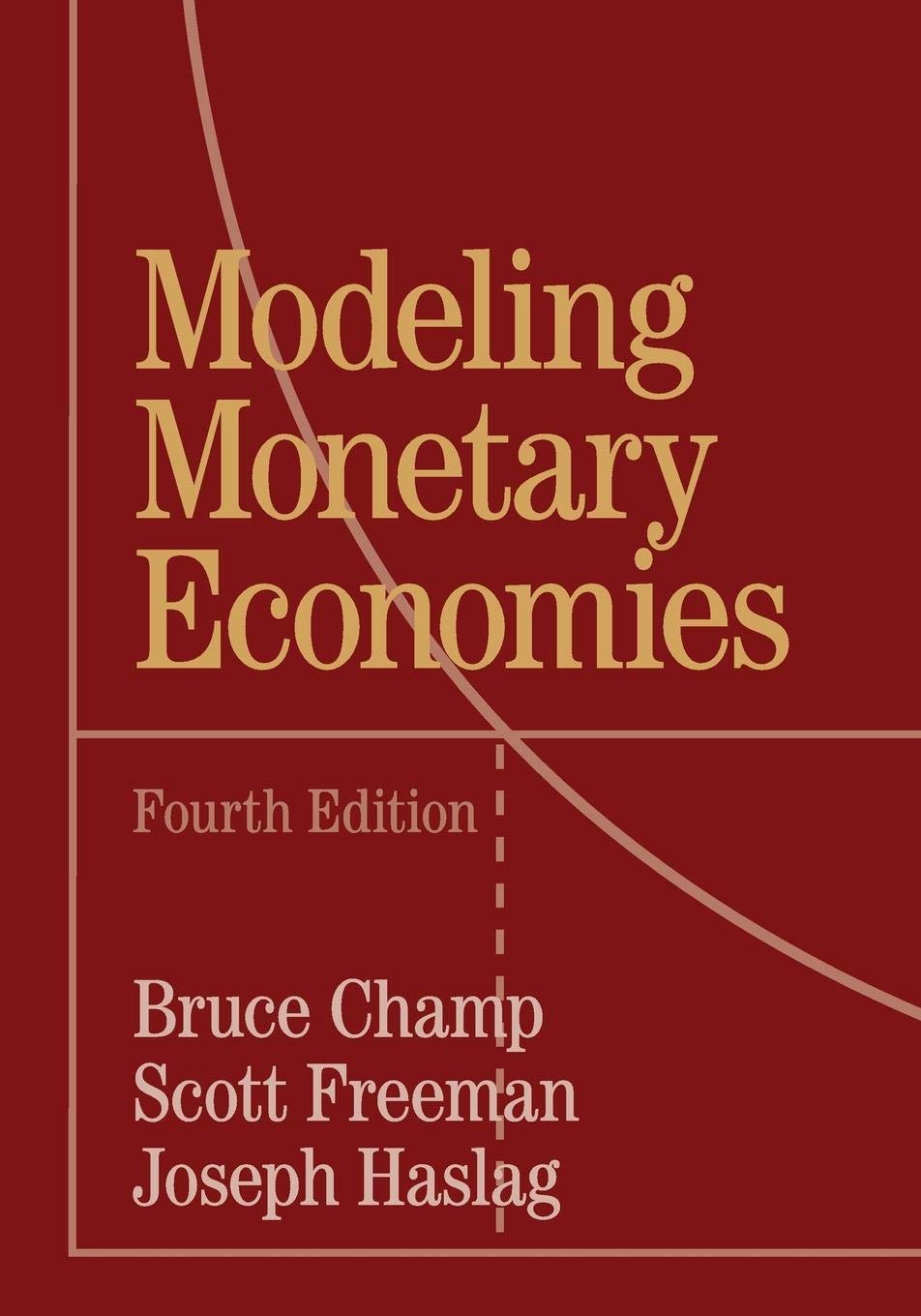
Title
Modeling Monetary Economies
Sold by Ergodebooks, an authorized reseller.
Returns accepted within 30 days | support@ergodebooks.com
Shipping Information
- Free Standard Shipping — United States only
- Processing Time: 3–5 business days
- Estimated Delivery: 6–10 business days after dispatch
- Double-boxed, fully insured & discreetly packaged
- Tracking number sent via email once dispatched
Returns & Refund
Returns accepted within 30 days of delivery.
Damaged or Defective Item
Free return shipping + replacement or full refund
Wrong Item Received
Free return shipping + replacement or full refund
Change of Mind
Return shipping at customer's expense · 25% restocking fee applies
Payment Option

Too Often Monetary Economics Has Been Taught As A Collection Of Facts About Institutions For Students To Memorize. By Teaching From First Principles Instead, This Advanced Undergraduate Textbook Builds On A Simple, Clear Monetary Model And Applies This Framework Consistently To A Wide Variety Of Monetary Questions. Starting With The Case In Which Trade Is Mutually Beneficial, The Book Demonstrates That Money Makes People Better Off, And That Government Money Competes Against Other Means Of Payments, Including Other Types Of Government Money. After Developing Each Of These Topics, The Book Tackles The Issue Of Money Competing Against Other Stores Of Value, Examining Issues Associated With Trade, Finance, And Modern Banking. The Book Then Moves From Simple Economies To Modern Economies, Addressing The Role Banks Play In Making More Trades Possible, Concluding With The Information Problems Plaguing Modern Banking, Which Result In Financial Crises.
⚠️ WARNING (California Proposition 65):
This product may contain chemicals known to the State of California to cause cancer, birth defects, or other reproductive harm.
For more information, please visit www.P65Warnings.ca.gov.
- Q: What is the page count of 'Modeling Monetary Economies'? A: The book contains four hundred pages. This extensive length allows for an in-depth exploration of monetary economics.
- Q: What are the dimensions of this textbook? A: The dimensions are seven point zero one inches in length, zero point nine two inches in width, and ten inches in height.
- Q: What type of binding does this book have? A: The book is available in paperback binding. This makes it lightweight and portable for students.
- Q: Who is the author of 'Modeling Monetary Economies'? A: The author is Bruce Champ. He is known for his expertise in monetary economics.
- Q: What category does this book belong to? A: This book is categorized under Macroeconomics. It addresses various aspects of monetary theory and practice.
- Q: What level of students is this book intended for? A: This textbook is designed for advanced undergraduate students. It builds on fundamental principles of monetary economics.
- Q: How does this book help in understanding monetary economics? A: It uses a clear monetary model to apply concepts consistently. This approach enhances comprehension of complex monetary questions.
- Q: Is 'Modeling Monetary Economies' suitable for beginners? A: No, this book is not intended for beginners. It is aimed at advanced learners who have a foundational understanding of economics.
- Q: What topics are covered in this textbook? A: The book covers trade, finance, and modern banking. It also discusses the competition between money and other stores of value.
- Q: Are there any additional resources provided in the book? A: The book does not specify additional resources. However, it provides comprehensive explanations and examples.
- Q: What is the recommended care for this paperback book? A: Store it in a cool, dry place to prevent damage. Avoid exposure to moisture and direct sunlight.
- Q: Can this book be used for self-study? A: Yes, this book is suitable for self-study. It is designed to facilitate independent learning of monetary economics.
- Q: What should I do if the book arrives damaged? A: Contact the seller for a return or exchange. Ensure to report any damage within the specified return period.
- Q: Is there a warranty for this textbook? A: No, textbooks typically do not come with a warranty. Check the return policy for any issues.
- Q: How can I ensure the book stays in good condition? A: Avoid bending the cover and handle it carefully. Use a bookmark to prevent dog-earing pages.
- Q: What are the differences between this book and other monetary economics textbooks? A: This book emphasizes first principles and practical applications. Many textbooks focus solely on theoretical concepts.