
Title
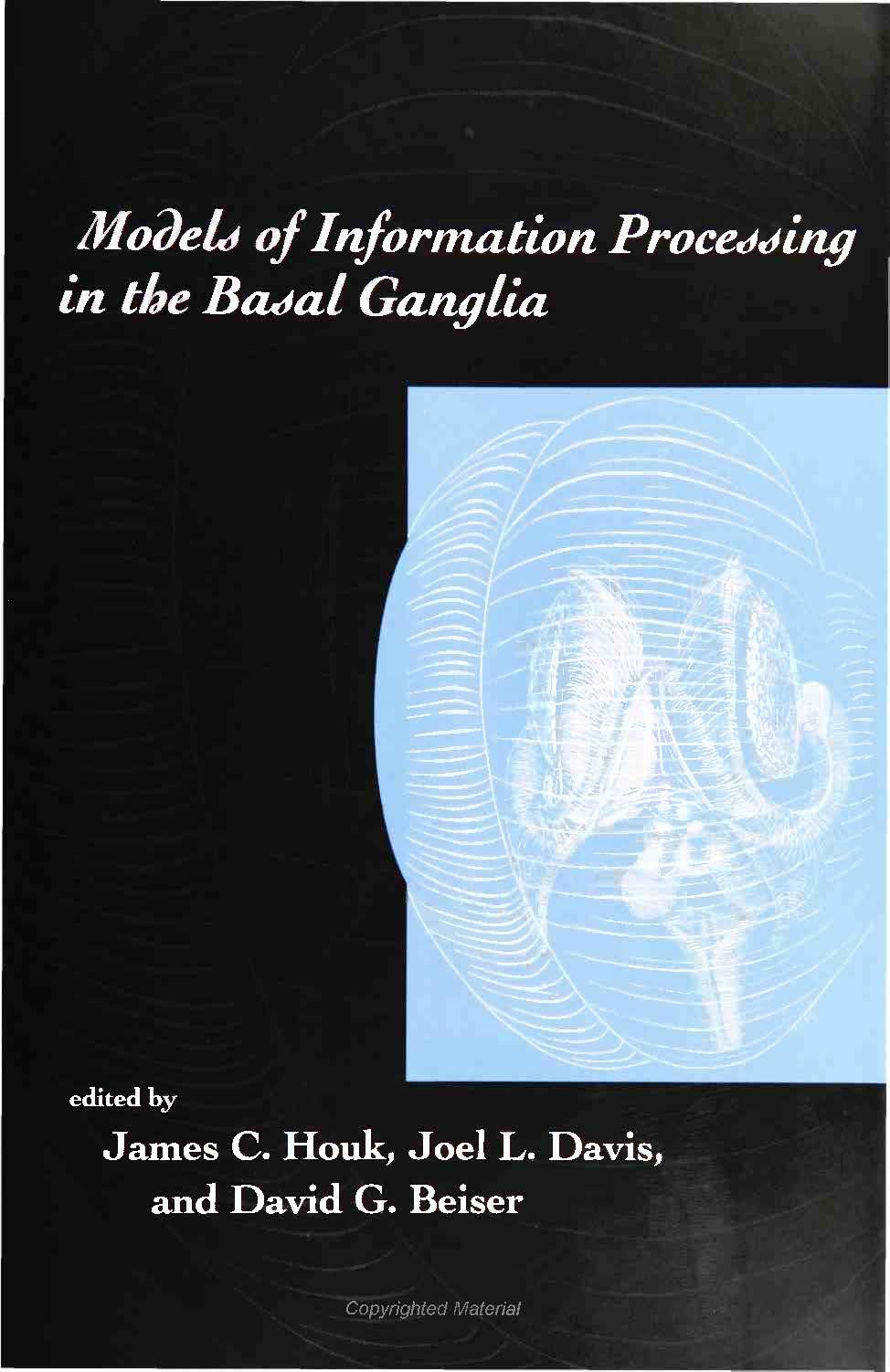
Models of Information Processing in the Basal Ganglia (Computational Neuroscience),Used
Sold by Ergodebooks, an authorized reseller.
Returns accepted within 30 days | support@ergodebooks.com
Shipping Information
- Free Standard Shipping — United States only
- Processing Time: 3–5 business days
- Estimated Delivery: 6–10 business days after dispatch
- Double-boxed, fully insured & discreetly packaged
- Tracking number sent via email once dispatched
Returns & Refund
Returns accepted within 30 days of delivery.
Damaged or Defective Item
Free return shipping + replacement or full refund
Wrong Item Received
Free return shipping + replacement or full refund
Change of Mind
Return shipping at customer's expense · 25% restocking fee applies
Payment Option

This book brings together the biology and computational features of the basal ganglia and their related cortical areas along with select examples of how this knowledge can be integrated into neural network models.Recent years have seen a remarkable expansion of knowledge about the anatomical organization of the part of the brain known as the basal ganglia, the signal processing that occurs in these structures, and the many relations both to molecular mechanisms and to cognitive functions. This book brings together the biology and computational features of the basal ganglia and their related cortical areas along with select examples of how this knowledge can be integrated into neural network models. Organized in four parts fundamentals, motor functions and working memories, reward mechanisms, and cognitive and memory operations the chapters present a unique admixture of theory, cognitive psychology, anatomy, and both cellular and systems level physiology written by experts in each of these areas. The editors have provided commentaries as a helpful guide to each part. Many new discoveries about the biology of the basal ganglia are summarized, and their impact on the computational role of the forebrain in the planning and control of complex motor behaviors discussed. The various findings point toward an unexpected role for the basal ganglia in the contextual analysis of the environment and in the adaptive use of this information for the planning and execution of intelligent behaviors. Parallels are explored between these findings and new connectionist approaches to difficult control problems in robotics and engineering.ContributorsJames L. Adams, P. Apicella, Michael Arbib, Dana H. Ballard, Andrew G. Barto, J. Brian Burns, Christopher I. Connolly, Peter F. Dominey, Richard P. Dum, John Gabrieli, M. GarciaMunoz, Patricia S. GoldmanRakic, Ann M. Graybiel, P. M. Groves, Mary M. Hayhoe, J. R. Hollerman, George Houghton, James C. Houk, Stephen Jackson, Minoru Kimura, A. B. Kirillov, Rolf Kotter, J. C. Linder, T. Ljungberg, M. S. Manley, M. E. Martone, J. Mirenowicz, C. D. Myre, Jeff Pelz, Nathalie Picard, R. Romo, S. F. Sawyer, E Scarnat, Wolfram Schultz, Peter L. Strick, Charles J. Wilson, Jeff Wickens, Donald J. Woodward, S. J. Young
⚠️ WARNING (California Proposition 65):
This product may contain chemicals known to the State of California to cause cancer, birth defects, or other reproductive harm.
For more information, please visit www.P65Warnings.ca.gov.