
Title
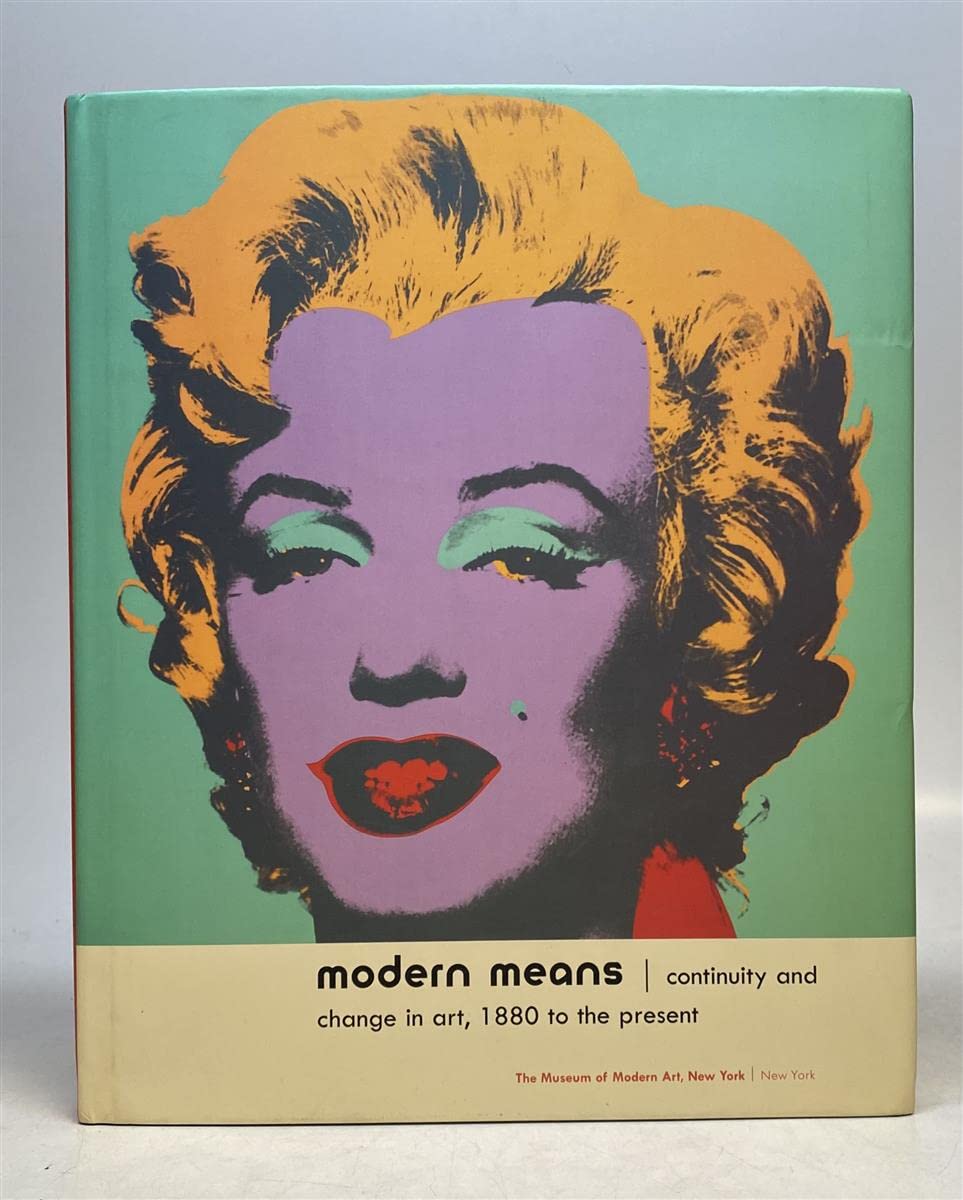
Modern Means: Continuity And Change In Art, 1880 To Now,Used
Sold by Ergodebooks, an authorized reseller.
Returns accepted within 30 days | support@ergodebooks.com
Shipping Information
- Free Standard Shipping — United States only
- Processing Time: 3–5 business days
- Estimated Delivery: 6–10 business days after dispatch
- Double-boxed, fully insured & discreetly packaged
- Tracking number sent via email once dispatched
Returns & Refund
Returns accepted within 30 days of delivery.
Damaged or Defective Item
Free return shipping + replacement or full refund
Wrong Item Received
Free return shipping + replacement or full refund
Change of Mind
Return shipping at customer's expense · 25% restocking fee applies
Payment Option

This study of the modern and contemporary periods approaches art from intertwining historic and thematic perspectives. Four fundamental and pervasive themes, flowering during certain moments yet enduring throughout the years, are explored through examples of work in every medium represented in the Museum's collection. The first section, 'Primal,' treats work from 18801920 that explores primal forces such as sexuality, dreams, illness, death, and regeneration. Artists include Odilon Redon, Edvard Munch, Gustav Klimt, Henri Rousseau, and German Expressionist artists of Die Brcke. The second section, 'Reductive,' considers the period 19201950, and examines the work by Piet Mondrian, Kasimir Malevich, and Wassily Kandinsky, exploring the impulse toward a visual language that expresses thought and emotion without representation or other associations to the world around us. Section three, 'Everyday,' looks at production from 19501970, when artists like Andy Warhol, Roy Lichtenstein, Gerhard Richter, and Richard Hamilton turned to commonplace objects to explore the influence of commercial culture on the arts. Section four, 'Mutability,' covers the later 1970s to the present, when uncertainty expressed in visual forms evoked metamorphosis and disequilibrium, as seen in the work of Salvador Dali, Yves Tanguy, Antoni T pies, Jean Dubuffet, Joseph Beuys, Eva Hesse, Mario Merz, and others.
⚠️ WARNING (California Proposition 65):
This product may contain chemicals known to the State of California to cause cancer, birth defects, or other reproductive harm.
For more information, please visit www.P65Warnings.ca.gov.