If you have any questions, you are always welcome to contact us. We'll get back to you as soon as possible, withing 24 hours on weekdays.
Customer service
All questions about your order, return and delivery must be sent to our customer service team by e-mail at yourstore@yourdomain.com
Sale & Press
If you are interested in selling our products, need more information about our brand or wish to make a collaboration, please contact us at press@yourdomain.com
Help
If you have any questions, you are always welcome to contact us. We'll get back to you as soon as possible, withing 24 hours on weekdays.
Customer service
All questions about your order, return and delivery must be sent to our customer service team by e-mail at yourstore@yourdomain.com
Sale & Press
If you are interested in selling our products, need more information about our brand or wish to make a collaboration, please contact us at press@yourdomain.com
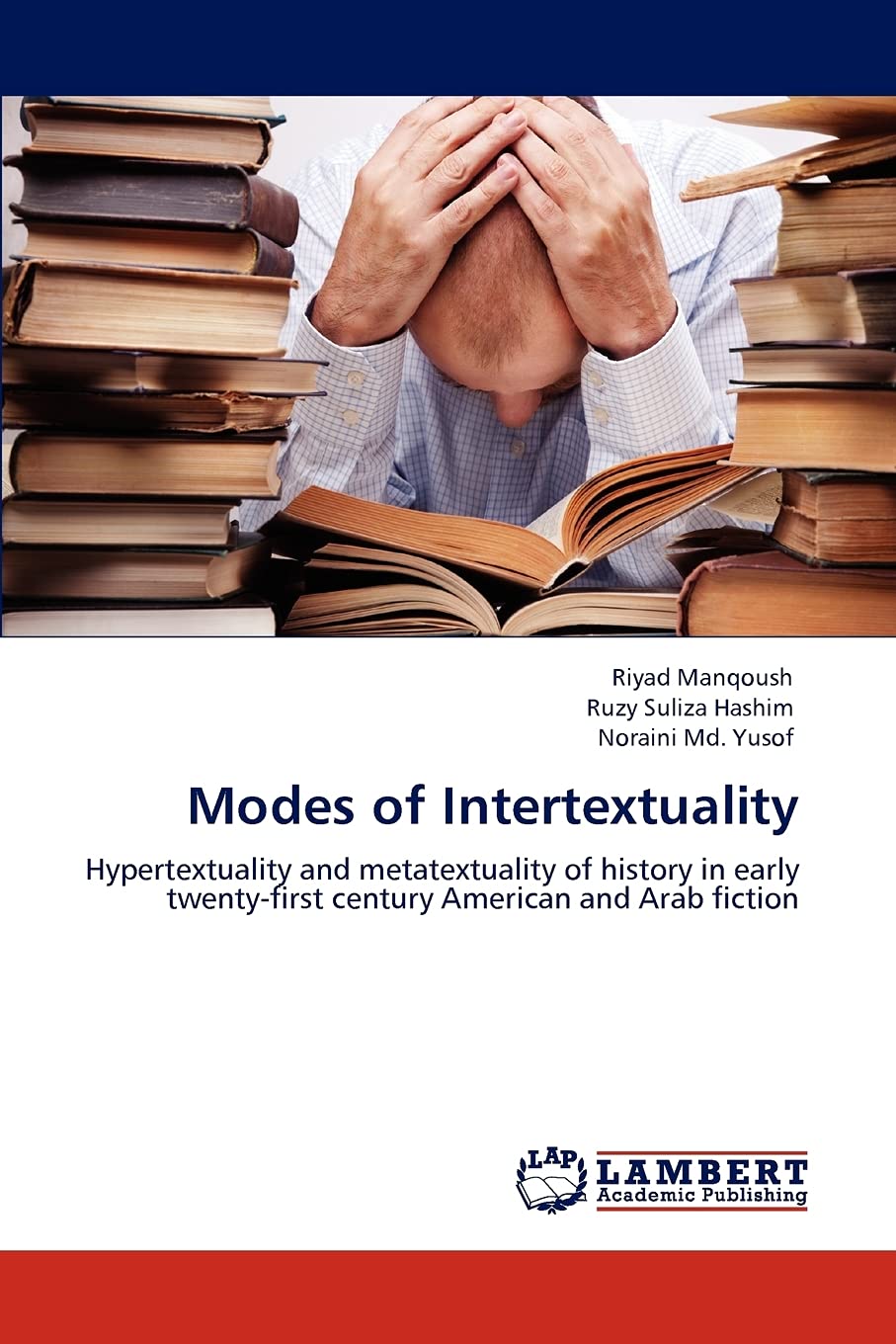
The repercussions of September 11, 2001, and the US occupation of Iraq, 2003, provide the backdrop in a number of American and Arab fiction. This book compares two novels each from the American and Arab literary traditions to examine their use of history as an intertext. John Updikes Terrorist (2006), Lorraine Adams Harbor (2004), Hussein alSaqqafs Qissat Irhabi (2007) and Mohammad Ismails Sahra alMawt wa alSalam (2005) employ events of 9/11 and the US occupation of Iraq to show differing ideologies at play. In the analysis of these novels, the comparative paradigm and the interdisciplinary approach have been combined to be used as the methodology, and the theory of intertextuality has been utilised as the tool of analysis. By appropriating the modes of intertextualityhypertextuality and metatextualityin the four narratives, the book exposes the ways in which dissimilar American and Arab ideologies are played out in these literary texts. While American fiction shows Islamophobic and Arabophobic traits, Arab fiction displays characteristics of Americophobia and Judeophobia.
⚠️ WARNING (California Proposition 65):
This product may contain chemicals known to the State of California to cause cancer,
birth defects, or other reproductive harm.
For MAP (Minimum Advertised Price) violations and Intellectual Property (IP) or Trademark concerns, please contact:
support@ergodebooks.com
⚠️ California Proposition 65 Warning: Some products sold on this website may expose you to chemicals known to the State of California to cause cancer, birth defects, or other reproductive harm. For more information, visit www.P65Warnings.ca.gov.