
Title
Modes of Therapeutic Action,New
Sold by Ergodebooks, an authorized reseller.
Returns accepted within 30 days | support@ergodebooks.com
Shipping Information
- Free Standard Shipping — United States only
- Processing Time: 3–5 business days
- Estimated Delivery: 6–10 business days after dispatch
- Double-boxed, fully insured & discreetly packaged
- Tracking number sent via email once dispatched
Returns & Refund
Returns accepted within 30 days of delivery.
Damaged or Defective Item
Free return shipping + replacement or full refund
Wrong Item Received
Free return shipping + replacement or full refund
Change of Mind
Return shipping at customer's expense · 25% restocking fee applies
Payment Option

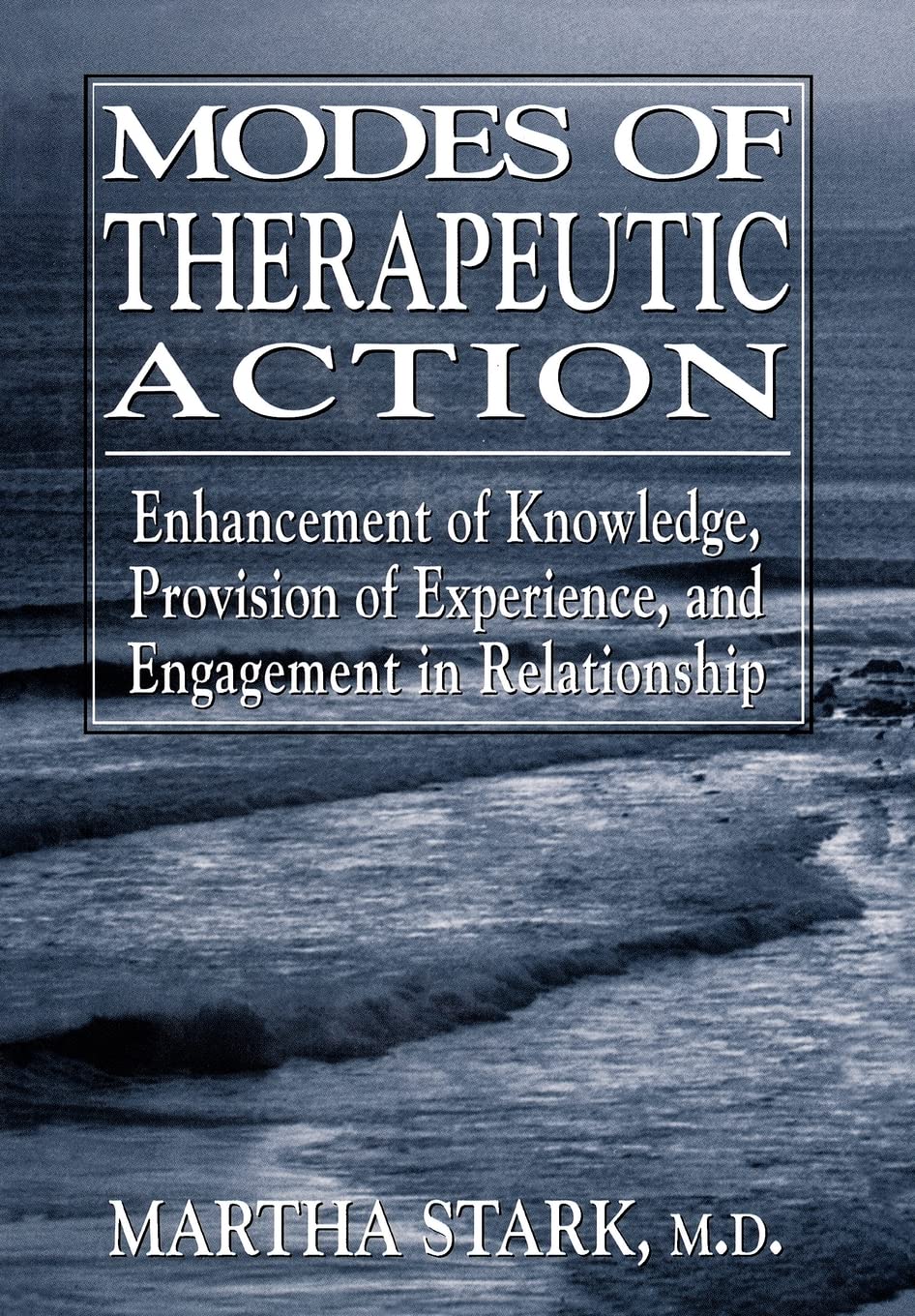
How do we position ourselves, moment by moment, in relation to our patients and how do these positions inform both what we come to know about our patients and how we intervene? Do we participate as neutral object, as empathic selfobject, or as authentic subject? Do we strive to enhance the patient's knowledge, to provide a corrective experience, or to work at the intimate edge? In an effort to answer these and other clinically relevant questions about the process of psychotherapeutic change, Martha Stark has developed a comprehensive theory of therapeutic action that integrates the interpretive perspective of classical psychoanalysis (Model 1), the correctiveprovision perspective of self psychology and those object relations theories emphasizing the internal 'absence of good' (Model 2), and the relational perspective of contemporary psychoanalysis and those object relations theories emphasizing the internal 'presence of bad' (Model 3). Model I is about knowledge and insight. It is a oneperson psychology because its focus is on the patient and the internal workings of her mind. Model 2 is about corrective experience. It is a oneandahalfperson psychology because its emphasis is not so much on the relationship per se, but on the filling in of the patient's deficits by way of the therapist's corrective provision; what ultimately matters is not who the therapist is, but, rather, what she can offer. Model 3 is about relationship, the real relationship. It is a twoperson psychology because its focus is on patients and therapists who relate to each other as real people; it is about mutuality, reciprocity, and intersubjectivity. Whereas Model 2 is about 'give' and involves the therapist's bringing the best of who she is into the room, Model 3 is about 'giveandtake' and involves the therapist's bringing all of who she is into the room. As Dr. Stark repeatedly demonstrates in numerous clinical vignettes, the three modes of therapeutic actionDknowledge, experience, and relationshipDare not mutually exclusive but mutually enhancing. If, as therapists, we can tolerate the necessary uncertainty that comes with the recognition that there is an infinite variety of possibilities for change, then we will be able to enhance the therapeutic potential of each moment and optimize our effectiveness as clinicians.
⚠️ WARNING (California Proposition 65):
This product may contain chemicals known to the State of California to cause cancer, birth defects, or other reproductive harm.
For more information, please visit www.P65Warnings.ca.gov.