If you have any questions, you are always welcome to contact us. We'll get back to you as soon as possible, withing 24 hours on weekdays.
Customer service
All questions about your order, return and delivery must be sent to our customer service team by e-mail at yourstore@yourdomain.com
Sale & Press
If you are interested in selling our products, need more information about our brand or wish to make a collaboration, please contact us at press@yourdomain.com
Help
If you have any questions, you are always welcome to contact us. We'll get back to you as soon as possible, withing 24 hours on weekdays.
Customer service
All questions about your order, return and delivery must be sent to our customer service team by e-mail at yourstore@yourdomain.com
Sale & Press
If you are interested in selling our products, need more information about our brand or wish to make a collaboration, please contact us at press@yourdomain.com
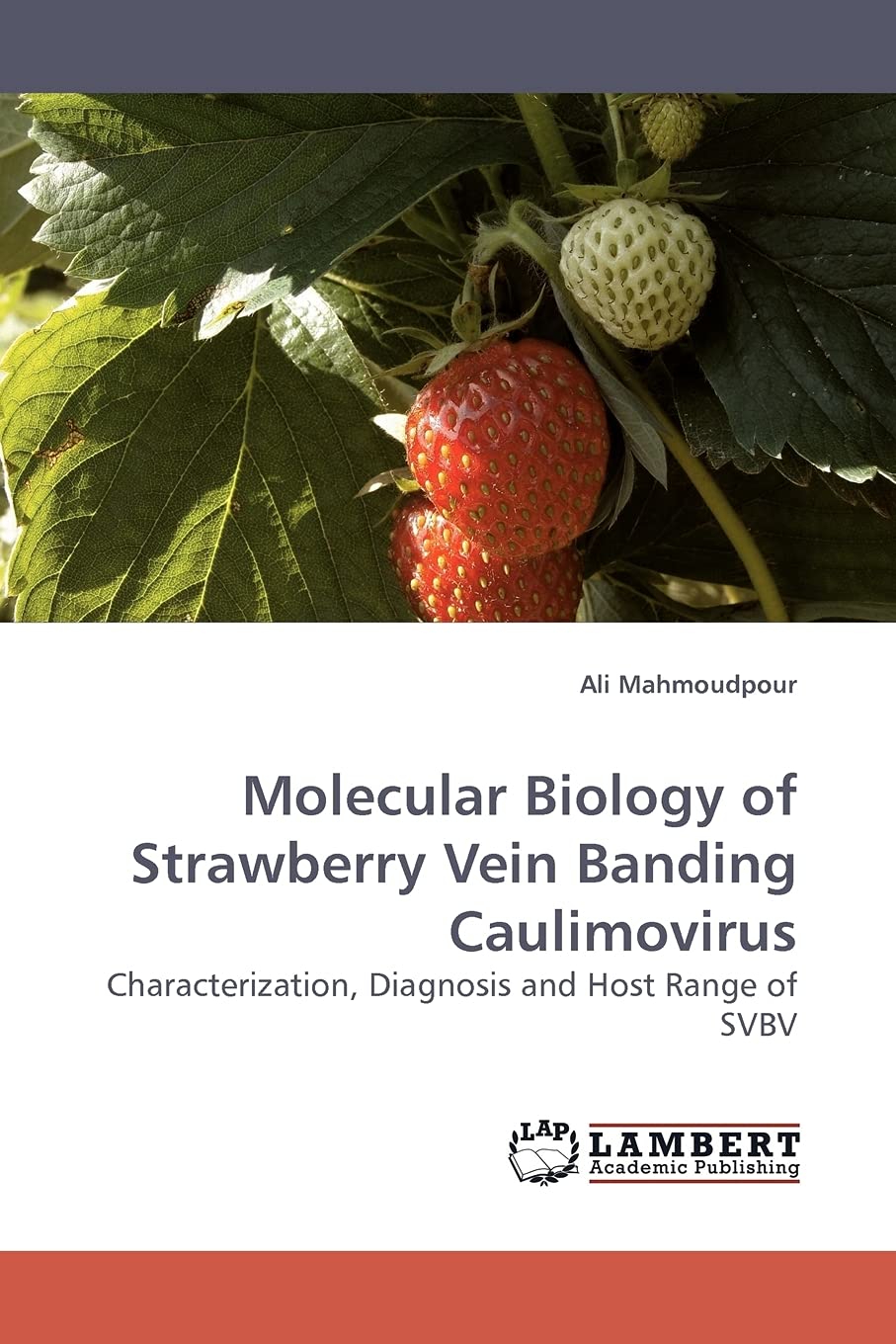
SVBV Strawberry vein banding virus (SVBV), a member of Caulimoviridae, has a doublestranded DNA genome 7.9 kilobase pairs in size, and a spherical particle approximaltely 45 nanometers in diameter. SVBV is transmitted by aphids, as well as by dodder and grafting. It is not saptransmissible. An important means of virus spread is through the propagation of infected plant materials. The use of certified virus free plants for generating strawberry seedlings has minimized economic losses caused by SVBV and other strawberry infecting viruses. After demonstrating the infectivity of genomic clone (pSVBVE3) a new construct using a binary vector was prepared to be used in agroinoculation. This means of inoculation paved the road to confirm many biological characteristics and furthermore expanding host range studies. Sequence data was used to design a sensitive protocol for diagnosis of virus infection through PCR.
⚠️ WARNING (California Proposition 65):
This product may contain chemicals known to the State of California to cause cancer,
birth defects, or other reproductive harm.
For MAP (Minimum Advertised Price) violations and Intellectual Property (IP) or Trademark concerns, please contact:
support@ergodebooks.com
⚠️ California Proposition 65 Warning: Some products sold on this website may expose you to chemicals known to the State of California to cause cancer, birth defects, or other reproductive harm. For more information, visit www.P65Warnings.ca.gov.