If you have any questions, you are always welcome to contact us. We'll get back to you as soon as possible, withing 24 hours on weekdays.
Customer service
All questions about your order, return and delivery must be sent to our customer service team by e-mail at yourstore@yourdomain.com
Sale & Press
If you are interested in selling our products, need more information about our brand or wish to make a collaboration, please contact us at press@yourdomain.com
Help
If you have any questions, you are always welcome to contact us. We'll get back to you as soon as possible, withing 24 hours on weekdays.
Customer service
All questions about your order, return and delivery must be sent to our customer service team by e-mail at yourstore@yourdomain.com
Sale & Press
If you are interested in selling our products, need more information about our brand or wish to make a collaboration, please contact us at press@yourdomain.com
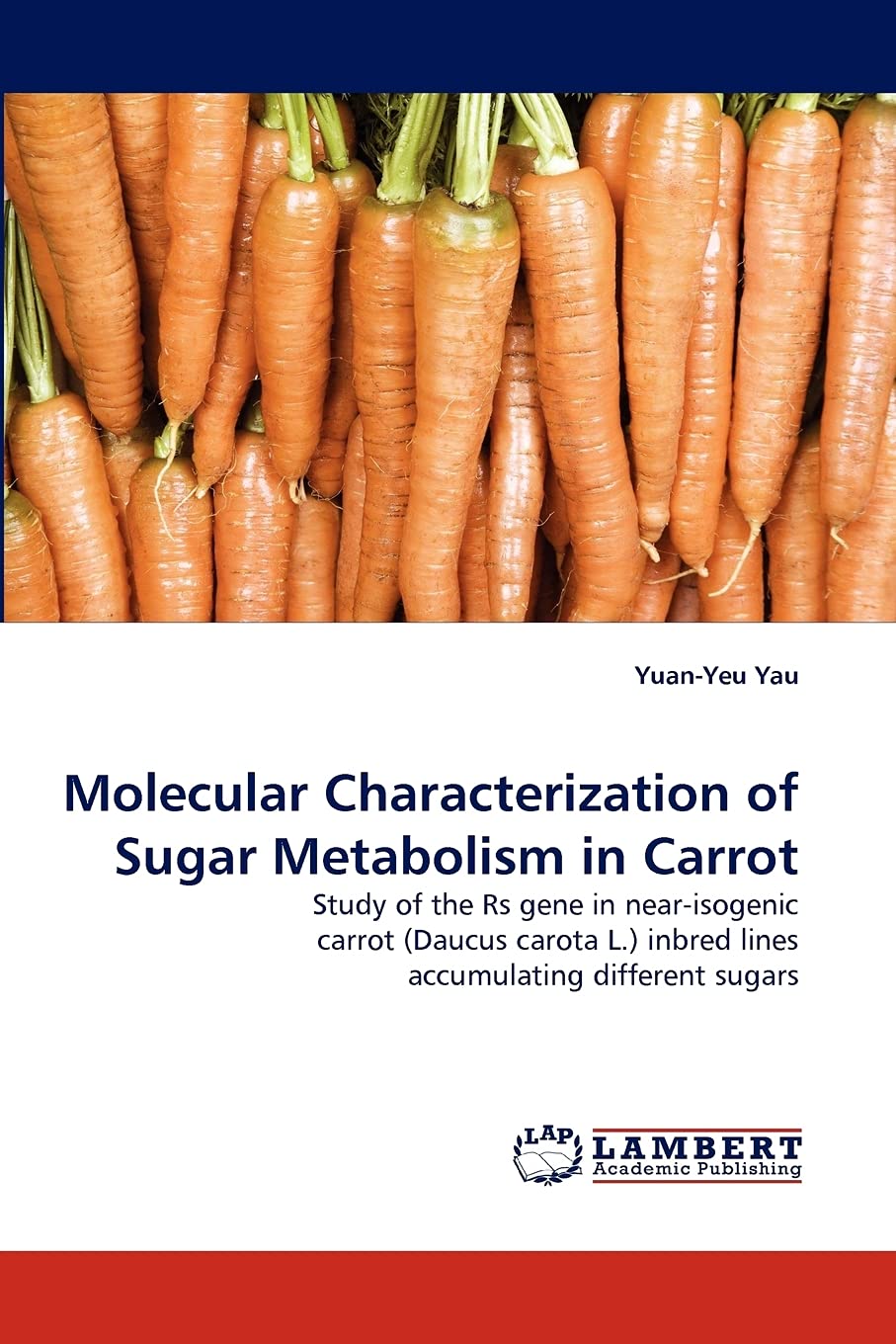
Carrots are among a few crops storing free sugars (sucrose, fructose and glucose) in their roots, not starch. The sugar types are controlled by a single dominant gene Rs (for reducing sugar). In this PhD dissertation turned book, the author described the use of molecular technology to study the genes for several sugar metabolism enzymes in two nearisogenic carrot lines, Rs/Rs and rs/rs, which accumulate glucose plus fructose and sucrose, respectively. Using molecular approaches, the author reveals the candidate gene responsible for the sugar type accumulation in mature carrot roots. In addition, the author also described how to further deploy a strategy to rapidly identify and predict the sugar types in the mature carrot roots from earlystage seedlings by a simple polymerase chain reaction (PCR) using primers designed from the DNA sequences of the mutant (rs) and the wild type (Rs) alleles. Research on genetic transformation of carrot was also performed and discussed. This book will interest biology researchers, students and an audience interested in learning how to use modern molecular technology to study genes associated with specific traits.
⚠️ WARNING (California Proposition 65):
This product may contain chemicals known to the State of California to cause cancer,
birth defects, or other reproductive harm.
For MAP (Minimum Advertised Price) violations and Intellectual Property (IP) or Trademark concerns, please contact:
support@ergodebooks.com
⚠️ California Proposition 65 Warning: Some products sold on this website may expose you to chemicals known to the State of California to cause cancer, birth defects, or other reproductive harm. For more information, visit www.P65Warnings.ca.gov.