If you have any questions, you are always welcome to contact us. We'll get back to you as soon as possible, withing 24 hours on weekdays.
Customer service
All questions about your order, return and delivery must be sent to our customer service team by e-mail at yourstore@yourdomain.com
Sale & Press
If you are interested in selling our products, need more information about our brand or wish to make a collaboration, please contact us at press@yourdomain.com
Help
If you have any questions, you are always welcome to contact us. We'll get back to you as soon as possible, withing 24 hours on weekdays.
Customer service
All questions about your order, return and delivery must be sent to our customer service team by e-mail at yourstore@yourdomain.com
Sale & Press
If you are interested in selling our products, need more information about our brand or wish to make a collaboration, please contact us at press@yourdomain.com
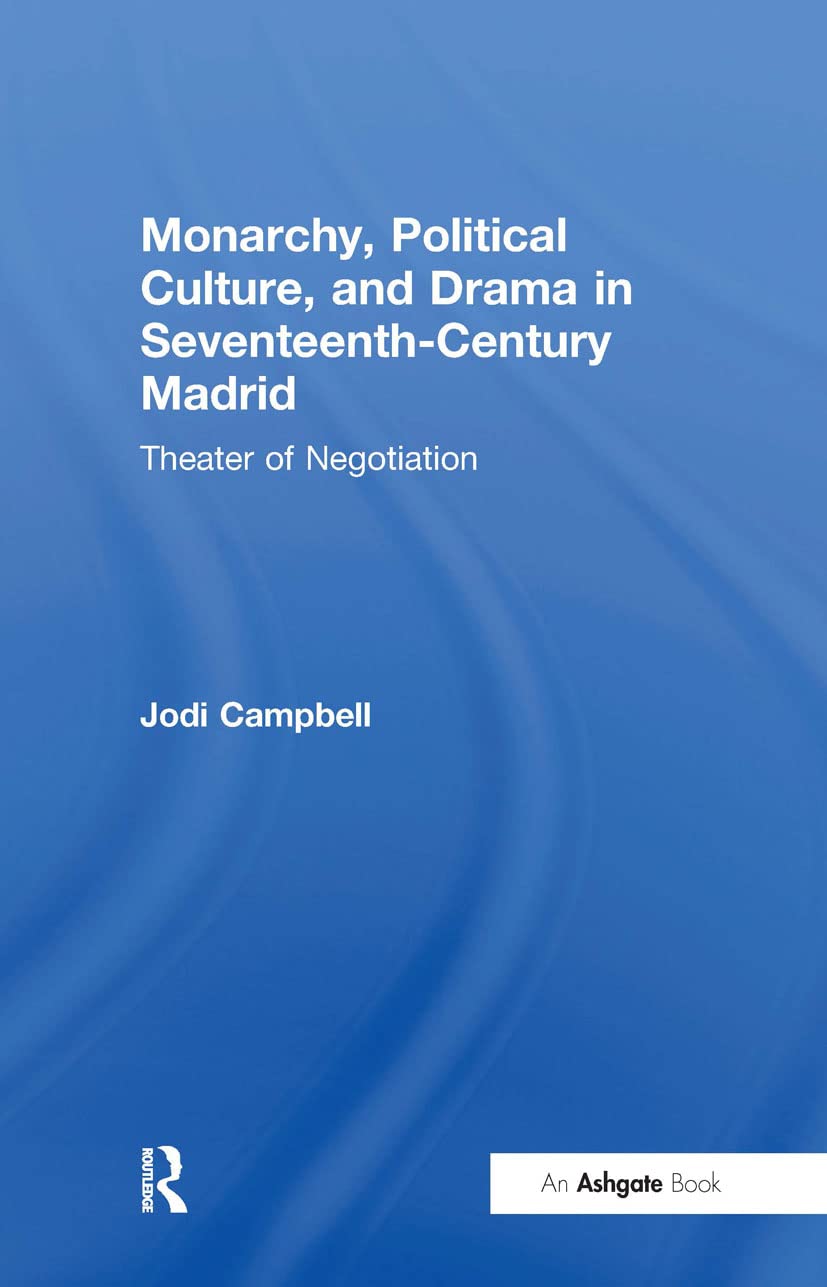
In Early Modern Spain, Theater Reached The Height Of Its Popularity During The Same Decades In Which Spanish Monarchs Were Striving To Consolidate Their Power. Jodi Campbell Uses The Dramatic Production Of Seventeenthcentury Madrid To Understand How Ordinary Spaniards Perceived The Political Developments Of This Period. Through A Study Of Thirtythree Plays By Four Of The Most Popular Playwrights Of Madrid (Pedro Caldern De La Barca, Francisco De Rojas Zorrilla, Juan De Matos Fragoso, And Juan Bautista Diamante), Campbell Analyzes Portrayals Of Kingship During What Is Traditionally Considered To Be The Age Of Absolutism And Highlights The Differences Between The Image Of Kingship Cultivated By The Monarchy And That Presented On Spanish Stages. A Surprising Number Of Plays Performed And Published In Madrid In The Seventeenth Century, Campbell Shows, Featured Themes About Kingship: Debates Over The Qualities That Make A Good King, Tests Of A King'S Abilities, And Stories About The Conflicts That Could Arise Between The Personal Interests Of A King And The Best Interest Of His Subjects. Rather Than Supporting The Absolutist And Centralizing Policies Of The Monarchy, Popular Theater Is Shown Here To Favor The Idea Of Reciprocal Obligations Between Subjects And Monarch. This Study Contributes New Evidence To The Trend Of Recent Scholarship That Revises Our Views Of Early Modern Spanish Absolutism, Arguing For The Significance Of The Perspectives Of Ordinary People To The Realm Of Politics.
⚠️ WARNING (California Proposition 65):
This product may contain chemicals known to the State of California to cause cancer,
birth defects, or other reproductive harm.
For MAP (Minimum Advertised Price) violations and Intellectual Property (IP) or Trademark concerns, please contact:
support@ergodebooks.com
⚠️ California Proposition 65 Warning: Some products sold on this website may expose you to chemicals known to the State of California to cause cancer, birth defects, or other reproductive harm. For more information, visit www.P65Warnings.ca.gov.