
Title
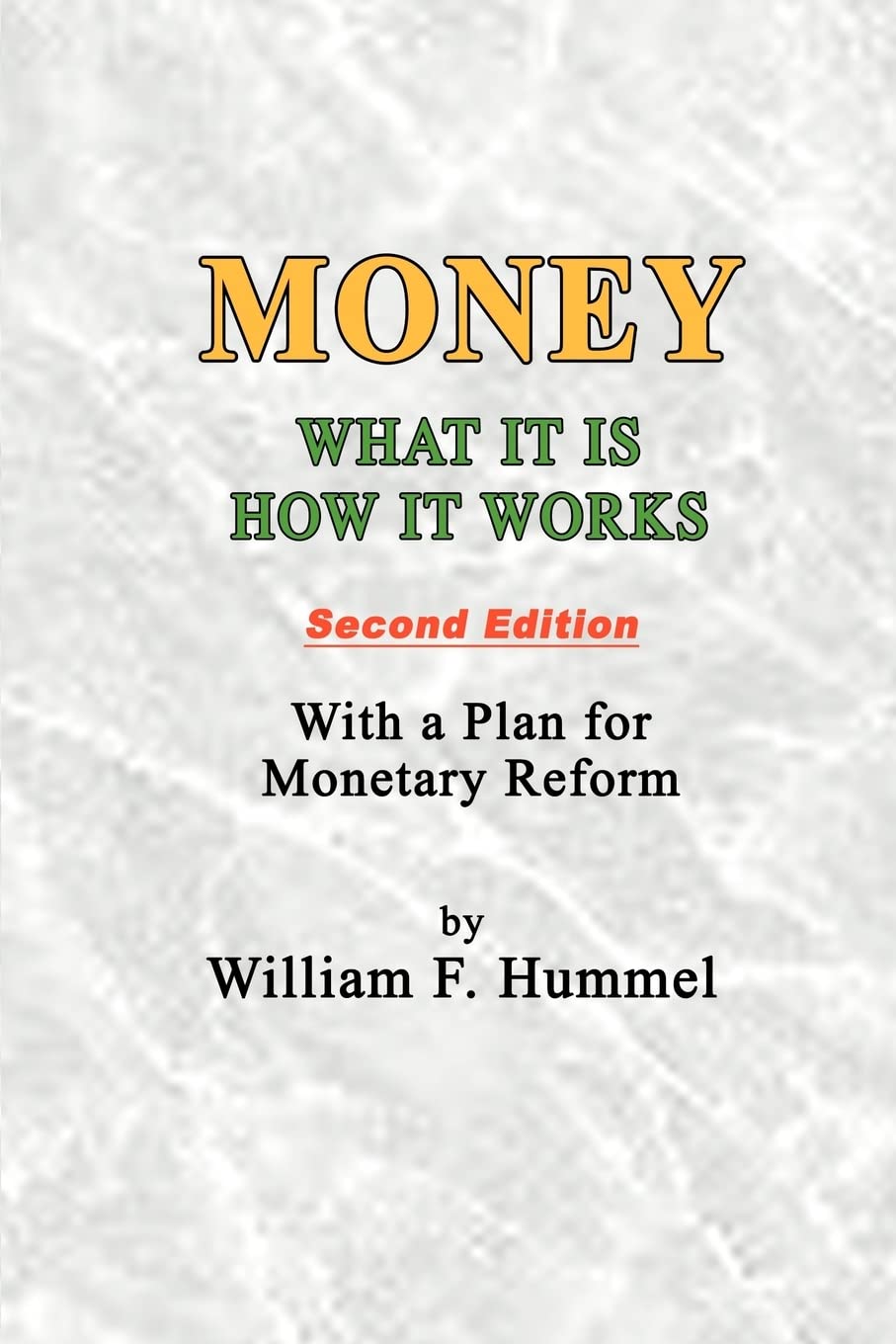
Money What It Is How It Works: Second Edition
Sold by Ergodebooks, an authorized reseller.
Returns accepted within 30 days | support@ergodebooks.com
Shipping Information
- Free Standard Shipping — United States only
- Processing Time: 3–5 business days
- Estimated Delivery: 6–10 business days after dispatch
- Double-boxed, fully insured & discreetly packaged
- Tracking number sent via email once dispatched
Returns & Refund
Returns accepted within 30 days of delivery.
Damaged or Defective Item
Free return shipping + replacement or full refund
Wrong Item Received
Free return shipping + replacement or full refund
Change of Mind
Return shipping at customer's expense · 25% restocking fee applies
Payment Option

For Centuries, Money Was Viewed As Tokens With Intrinsic Value, Like Gold Or Silver Coins. Paper Currencies Were Often Used As Substitutes, But They Were Only Accepted On The Promise They Could Be Converted On Demand Into Hard Money. The Era Of Hard Money Ended In The Mid20Th Century. Today Every Major Industrial Nation Creates Its Own Currency In The Form Of Intrinsically Worthless Tokens Known As Fiat Money. Most Other Forms Of Money Are Viable Only To The Extent They Can Be Converted On Demand Into The Government'S Fiat Money. Operating In A Fractional Reserve Regime, Banks Expand The Money Supply By Creating Deposits As They Issue Loans To Borrowers. Bank Money Is Now The Principal Form Of Money Used Within The Private Sector. Some Economists Believe Fractional Reserve Banking Creates Serious Problems For The Economy In Terms Of Inflation And The Misuse Of Credit. The Last Essay In This Book Examines In Some Detail The Basic Properties Of A Fullybacked Depository System And Proposes A Particular Implementation.
⚠️ WARNING (California Proposition 65):
This product may contain chemicals known to the State of California to cause cancer, birth defects, or other reproductive harm.
For more information, please visit www.P65Warnings.ca.gov.
- Q: What are the dimensions of the book? A: The book measures six inches in length, nine point zero two inches in height, and zero point twenty five inches in width.
- Q: How many pages does this book have? A: The book contains one hundred pages, providing a concise overview of its topics.
- Q: What is the binding type of this book? A: This book is bound in paperback, making it lightweight and easy to handle.
- Q: Who is the author of this book? A: The book is authored by William Hummel, a knowledgeable figure in the field of monetary policy.
- Q: What is the primary subject of the book? A: The book focuses on money and monetary policy, exploring its evolution and implications.
- Q: Is this book suitable for beginners in economics? A: Yes, this book is suitable for beginners as it explains complex concepts in an accessible manner.
- Q: Can I read this book if I have no background in finance? A: Yes, the book is designed for readers without a finance background, making it user-friendly.
- Q: What is the reading level for this book? A: The reading level is appropriate for adults and older teens interested in economic topics.
- Q: Does this book contain any illustrations or graphs? A: No, the book does not include illustrations or graphs, focusing solely on textual content.
- Q: How should I store this book? A: Store the book upright on a shelf in a dry environment to prevent damage.
- Q: Is this book environmentally friendly? A: The book is printed on standard paper; however, eco-friendly practices depend on the publisher.
- Q: Can I lend this book to others? A: Yes, you can lend this book to others as it is designed for sharing and educational purposes.
- Q: What if the book arrives damaged? A: If the book arrives damaged, you should contact customer support for return or replacement options.
- Q: Is there a warranty for the book? A: Typically, there is no warranty for books; however, you may check with the retailer for specific policies.
- Q: What if I want to return the book? A: You can return the book within the specified return period outlined by the retailer.
- Q: Does the book include a bibliography or references? A: Yes, the book includes references and a bibliography for further reading on the subject.