
Title
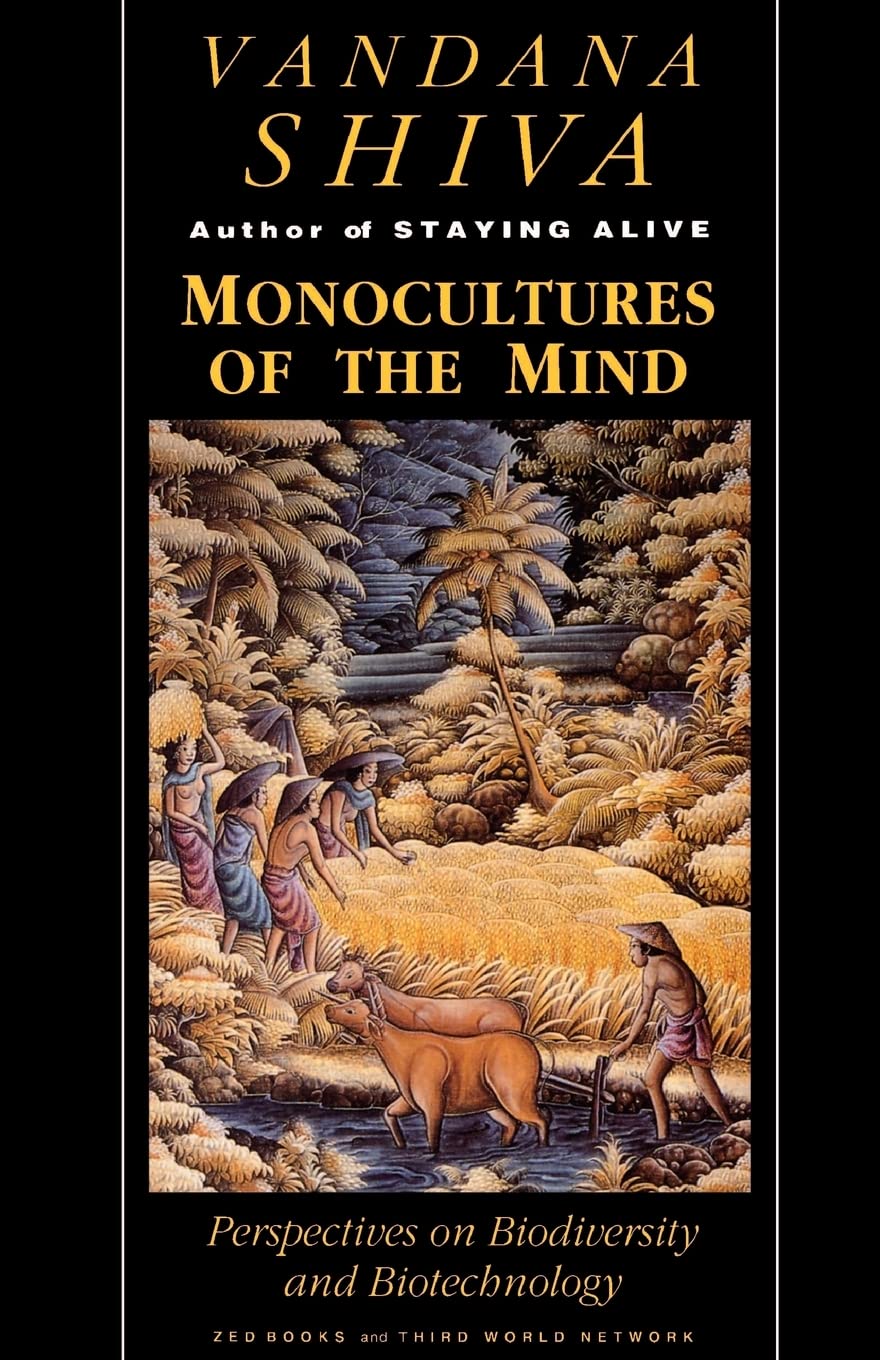
Monocultures of the Mind: Perspectives on Biodiversity and Biotechnology,Used
Sold by Ergodebooks, an authorized reseller.
Returns accepted within 30 days | support@ergodebooks.com
Shipping Information
- Free Standard Shipping — United States only
- Processing Time: 3–5 business days
- Estimated Delivery: 6–10 business days after dispatch
- Double-boxed, fully insured & discreetly packaged
- Tracking number sent via email once dispatched
Returns & Refund
Returns accepted within 30 days of delivery.
Damaged or Defective Item
Free return shipping + replacement or full refund
Wrong Item Received
Free return shipping + replacement or full refund
Change of Mind
Return shipping at customer's expense · 25% restocking fee applies
Payment Option

Vandana Shiva has established herself as a leading independent thinker and voice for the South in that critically important nexus where questions of development strategy, the environment and the posititon of women in society coincide. In this new volume, she brings together her thinking on the protection of biodiversity, the implications of biotechnology, and the consequences for agriculture of the global preeminence of Westernstyle scientific knowledge.In lucid and accessible fashion, she examines the current threats to the planet's biodiversity and the environmental and human consequences of its erosion and replacement by monocultural production. She shows how the new Biodiversity Convention has been gravely undermined by a mixture of diplomatic dilution during the process of negotiation and Northern hitech interests making money out of the new biotechnologies. She explains what these technologies involve and gives examples of their impact in practice. She questions their claims to improving natural species for the good of all and highlights the ethical and environmental problems posed.Underlying her arguments is the view that the North's particular approach to scientific understanding has led to a system of monoculture in agriculture a model that is not being foisted on the South, displacing its societies' ecologically sounder, indigenous and ageold experiences of truly sustainable food cultivation, forest management and animal husbandry. This rapidly accelerating process of technology and system transfer is impoverishing huge numbers of people, disrupting the social systems that provide them with security and dignity, and will ultimately result in a sterile planet in both North and South, In a policy intervention of potentially great significance, she calls instead for a halt, at international as well as local level, to the aid and market incentives to both largescale destruction of habitats where biodiversity thrives and the introduction of centralised, homogenous systems of cultivation.
⚠️ WARNING (California Proposition 65):
This product may contain chemicals known to the State of California to cause cancer, birth defects, or other reproductive harm.
For more information, please visit www.P65Warnings.ca.gov.
- Q: What is the page count of this book? A: One hundred eighty-four pages. This length provides a concise yet thorough exploration of biodiversity and biotechnology.
- Q: What are the dimensions of the book? A: The book measures five and a half inches by eight and a half inches. This size makes it portable and easy to read.
- Q: What type of binding does this book have? A: It has a paperback binding. This makes the book lightweight and flexible for readers.
- Q: Who is the author of this book? A: The author is Vandana Shiva. She is a prominent thinker and advocate for biodiversity and environmental issues.
- Q: What is the main focus of the book? A: The main focus is on biodiversity and biotechnology. It discusses the implications of technology on agriculture and ecosystems.
- Q: How should I read this book? A: You can read it like any other book, ideally in a quiet environment for better focus. The content is accessible for a general audience.
- Q: Is this book suitable for beginners in environmental studies? A: Yes, it is suitable for beginners. The writing is lucid and the concepts are explained in an understandable manner.
- Q: What age group is this book appropriate for? A: It is appropriate for adults and older teens. The themes discussed are complex and may require prior knowledge.
- Q: How do I take care of this book? A: Store it in a dry place away from direct sunlight. This helps prevent fading and damage to the pages.
- Q: Can I clean the cover of this book? A: Yes, you can wipe the cover gently with a soft cloth. Avoid using any cleaning solutions that could damage the material.
- Q: What if my book arrives damaged? A: You can contact customer support for assistance. They typically have a return or exchange policy for damaged items.
- Q: Is there a return policy for this book? A: Yes, there is a return policy. Check the retailer's website for specific details regarding timeframes and conditions.
- Q: What makes this book different from others in its category? A: It offers unique perspectives from Vandana Shiva on biodiversity and technology. The insights are based on her extensive experience and research.
- Q: Is this book recommended for academic use? A: Yes, it is recommended for academic use. The book provides valuable insights into environmental economics and biotechnology.
- Q: Does this book discuss ethical implications of biotechnology? A: Yes, it addresses ethical concerns related to biotechnology. It highlights the consequences of monoculture and the exploitation of natural resources.
- Q: What are some key themes in this book? A: Key themes include biodiversity conservation, the impact of biotechnology, and the socio-economic effects of agricultural policies. These themes are crucial for understanding current environmental challenges.