
Title
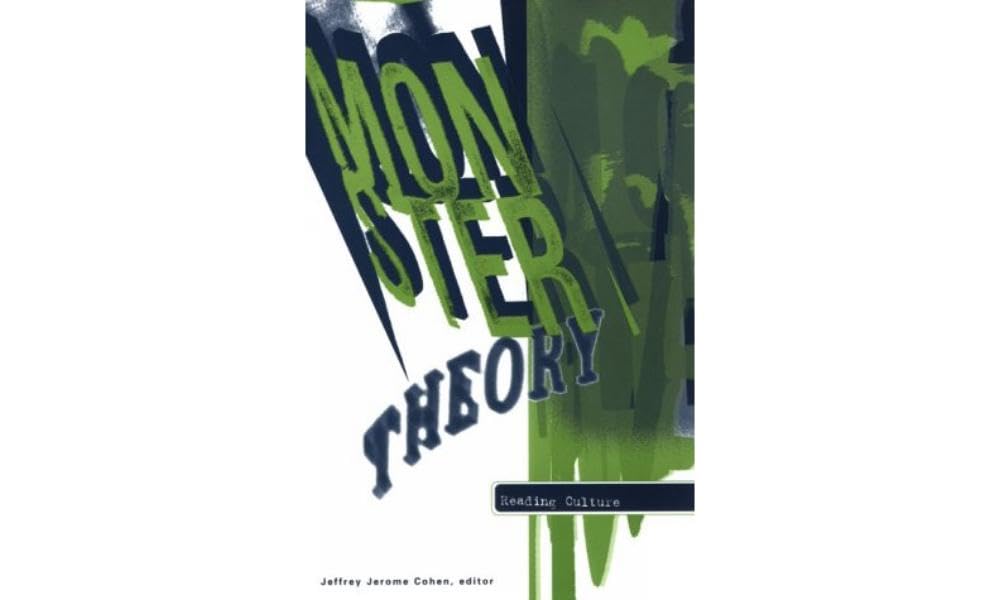
Monster Theory: Reading Culture,New
Sold by Ergodebooks, an authorized reseller.
Returns accepted within 30 days | support@ergodebooks.com
Shipping Information
- Free Standard Shipping — United States only
- Processing Time: 3–5 business days
- Estimated Delivery: 6–10 business days after dispatch
- Double-boxed, fully insured & discreetly packaged
- Tracking number sent via email once dispatched
Returns & Refund
Returns accepted within 30 days of delivery.
Damaged or Defective Item
Free return shipping + replacement or full refund
Wrong Item Received
Free return shipping + replacement or full refund
Change of Mind
Return shipping at customer's expense · 25% restocking fee applies
Payment Option

Explores Concepts Of Monstrosity In Western Civilization From Beowulf To Jurassic Park.We Live In A Time Of Monsters. Monsters Provide A Key To Understanding The Culture That Spawned Them. So Argue The Essays In This Wideranging And Fascinating Collection That Asks The Question, What Happens When Critical Theorists Take The Study Of Monsters Seriously As A Means Of Examining Our Culture?In Viewing The Monstrous Body As A Metaphor For The Cultural Body, The Contributors To Monster Theory Consider Beasts, Demons, Freaks, And Fiends As Symbolic Expressions Of Cultural Unease That Pervade A Society And Shape Its Collective Behavior. Through A Historical Sampling Of Monsters, These Essays Argue That Our Fascination For The Monstrous Testifies To Our Continued Desire To Explore Difference And Prohibition.Contributors: Mary Baine Campbell, Brandeis U; David L. Clark, Mcmaster U; Frank Grady, U Of Missouri, St. Louis; David A. Hedrich Hirsch, U Of Illinois; Lawrence D. Kritzman, Dartmouth College; Kathleen Perry Long, Cornell U; Stephen Pender; Allison Pingree, Harvard U; Anne Lake Prescott, Barnard College; John O'Neill, York U; William Sayers, George Washington U; Michael Uebel, U Of Virginia; Ruth Waterhouse.
⚠️ WARNING (California Proposition 65):
This product may contain chemicals known to the State of California to cause cancer, birth defects, or other reproductive harm.
For more information, please visit www.P65Warnings.ca.gov.
- Q: How many pages are in 'Monster Theory: Reading Culture'? A: This book contains three hundred thirty-six pages. It's a comprehensive exploration of monstrosity in Western civilization.
- Q: What are the dimensions of 'Monster Theory: Reading Culture'? A: The book measures five point eight eight inches in length, zero point nine one inches in width, and nine point zero two inches in height.
- Q: What type of binding does this book have? A: This book is published in paperback binding. This makes it more flexible and lightweight compared to hardcover editions.
- Q: What themes does 'Monster Theory: Reading Culture' explore? A: The book explores themes of monstrosity, cultural unease, and the symbolic expressions of societal behaviors. It examines concepts from Beowulf to Jurassic Park.
- Q: Who is the author of 'Monster Theory: Reading Culture'? A: The author is Jeffrey Jerome Cohen. He is known for his contributions to critical theory and cultural studies.
- Q: Is 'Monster Theory: Reading Culture' suitable for academic use? A: Yes, it is suitable for academic use. The essays are written by various scholars and provide in-depth analysis of cultural concepts.
- Q: What kind of readers would enjoy 'Monster Theory: Reading Culture'? A: Readers interested in literary criticism, cultural studies, and the analysis of monstrosity would enjoy this book. It's ideal for students and scholars alike.
- Q: Is this book appropriate for young readers? A: No, this book is not specifically designed for young readers. It includes complex themes and critical analysis that may not be suitable for children.
- Q: How should I care for 'Monster Theory: Reading Culture'? A: To care for this book, keep it in a dry, cool place and avoid direct sunlight. Handle it gently to preserve the binding and pages.
- Q: What should I do if 'Monster Theory: Reading Culture' arrives damaged? A: If the book arrives damaged, you should contact the retailer for their return policy. Most retailers will offer a replacement or refund.
- Q: Can I find 'Monster Theory: Reading Culture' at my local library? A: Yes, many libraries may carry this book. It’s advisable to check your local library’s catalog or request it through interlibrary loan.
- Q: What type of audience is 'Monster Theory: Reading Culture' meant for? A: It is meant for an audience interested in criticism and theory, particularly those studying literature, culture, and monsters.
- Q: Is this book part of a series? A: No, 'Monster Theory: Reading Culture' is not part of a series. It is a standalone collection of essays.
- Q: Who are some contributors to 'Monster Theory: Reading Culture'? A: Contributors include Mary Baine Campbell, David L. Clark, and Allison Pingree, among others. They provide diverse perspectives on monstrosity.
- Q: What is the condition of the book? A: The book is described as 'Used Book in Good Condition.' It may show some signs of wear but is still readable and intact.