
Title
Moonlight in Duneland: The Illustrated Story of the Chicago South Shore and South Bend Railroad (Quarry Books),Used
Sold by Ergodebooks, an authorized reseller.
Returns accepted within 30 days | support@ergodebooks.com
Shipping Information
- Free Standard Shipping — United States only
- Processing Time: 3–5 business days
- Estimated Delivery: 6–10 business days after dispatch
- Double-boxed, fully insured & discreetly packaged
- Tracking number sent via email once dispatched
Returns & Refund
Returns accepted within 30 days of delivery.
Damaged or Defective Item
Free return shipping + replacement or full refund
Wrong Item Received
Free return shipping + replacement or full refund
Change of Mind
Return shipping at customer's expense · 25% restocking fee applies
Payment Option

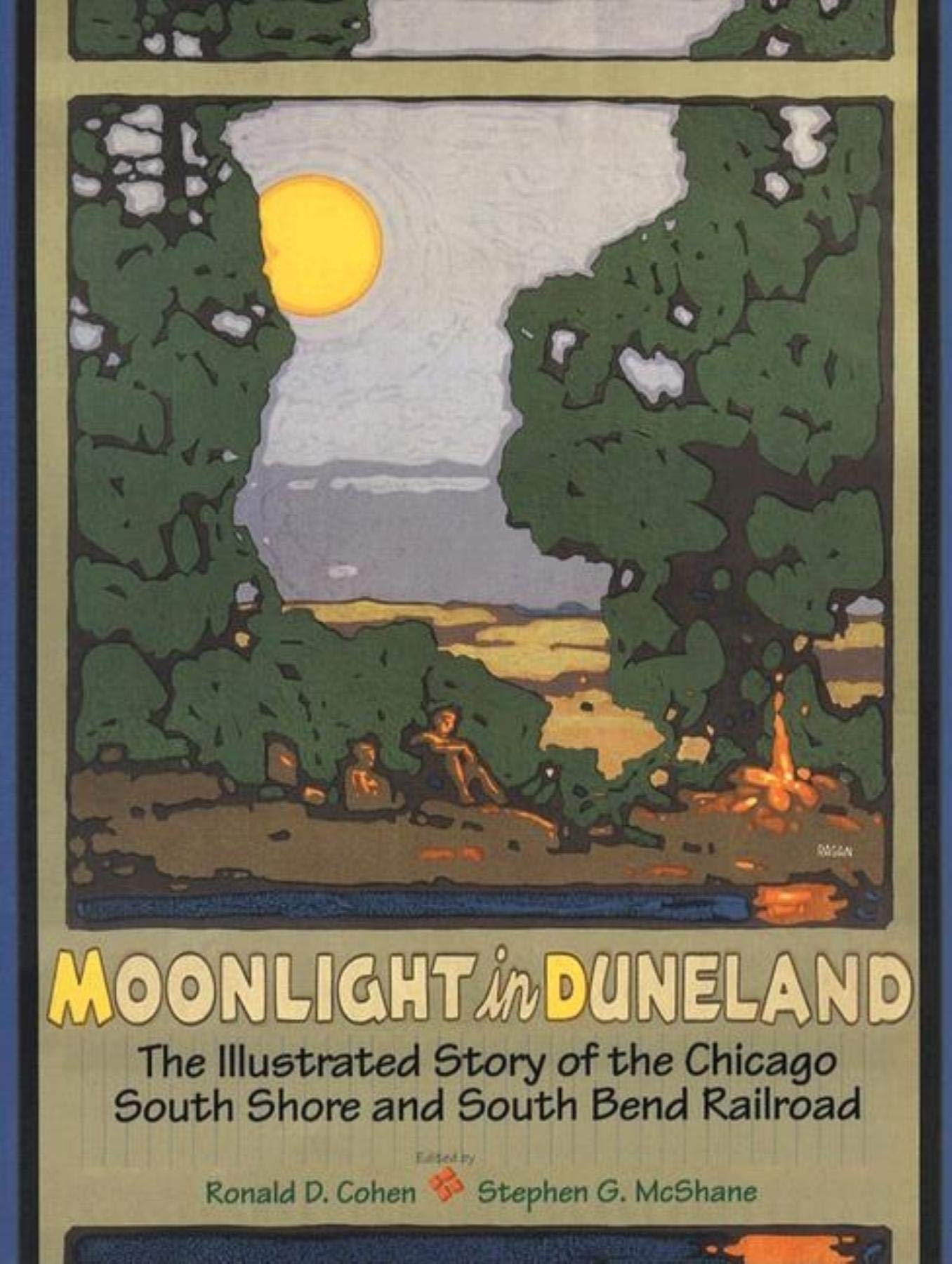
Known as the "Little Train That Could" or "The Last Interurban", the Chicago, South Shore, and South Bend Railroad has served the Northwest Indiana/Chicago area as a major commercial and recreational transportation link for 90 years. The South Shore Line has reflected the triumphs and misfortunes of the Calumet Region throughout the twentieth century. For its first two decades, it survived good times and bad until its landmark purchase by Samuel Insulls Midland Utilities in 1925. Insull launched an aggressive marketing campaign producing booklets, movies, and in particular a set of colorful, artistic posters, which attracted many from Illinois to Northwest Indianas steel mills and sand dunes.As many as fifty color lithographed posters displayed in railroad depots, on Chicago "L" platforms, and elsewhere, highlighted fun in the Indiana Dunes, local flora and fauna, and the strength of heavy industry, all characteristic of the Calumet Region. Prominent Chicago artists rendered these scenes and many won acclaim for high artistic standards. Indeed, Oscar Rabe Hansons Homeward Bound by South Shore Line won both the Art Directors Club and Barron Collier medals in 1927.Moonlight in Duneland tells the story of that poster campaign through the reproduction of more than forty known surviving posters. Additional advertising items from the 1920s and 1970s are sprinkled throughout the book, along with original art by Dale Fleming and Mitchell A. Markovitz. In addition, four essays describe the background of Insulls marketing genius and its artists. William D. Middletons essay details Insulls purchase of the South Shore Line and its rebirth. Bob Harris, in "Not Just Selling Railroad Tickets: The Role of the South Shore Line Poster Art in the Development of Northwest Indiana," describes the handson, intense involvement of the railroad and its ad campaign in the industrial, residential, and recreational development of the Region. In "Commercial Illustration, Poster Painters, Railway Men," Mitchell A. Markovitz provides a glimpse into the poster artists world, along with a personal memoir of his own experiences as a South Shore Line poster artist. Finally, John Paul Laue explains how a group of dedicated South Shore Line enthusiasts saved the road when it was threatened again with extinction in the 1970s in "South Shore Recreation: A Fun Way to Save a Railroad."While Moonlight in Duneland pays tribute to eras gone by, it also debuts a new period of growth in Calumet Region pride and development. Sponsored by the Northwest Indiana Forum, new poster art has been commissioned to advertise the many wonders of the area. Several of those images grace the pages of this book, providing the reason for the slogan, "A Region in Renaissance."
⚠️ WARNING (California Proposition 65):
This product may contain chemicals known to the State of California to cause cancer, birth defects, or other reproductive harm.
For more information, please visit www.P65Warnings.ca.gov.
- Q: What is the page count of Moonlight in Duneland? A: The book has one hundred sixty pages. It features illustrations and essays that enhance the storytelling about the Chicago South Shore and South Bend Railroad.
- Q: What is the binding type of this book? A: The binding type is paperback. This makes it lightweight and easy to handle, ideal for casual reading.
- Q: What are the dimensions of Moonlight in Duneland? A: The book measures ten inches in length, thirteen inches in height, and zero point forty-nine inches in width. These dimensions make it suitable for display on shelves.
- Q: How do I read Moonlight in Duneland? A: You can read the book like any standard paperback. It can be enjoyed by anyone interested in railroad history or the Calumet Region.
- Q: Is this book appropriate for children? A: Yes, the book is suitable for older children and adults. The content focuses on historical themes and artistic representations.
- Q: Can I use this book for research? A: Yes, it can be a valuable source for research on railroad history and regional development. The essays provide additional context and insights.
- Q: How should I store Moonlight in Duneland? A: Store the book upright on a shelf away from direct sunlight. This helps preserve the cover and pages from fading and damage.
- Q: How do I clean the book if it gets dirty? A: You can wipe the cover gently with a dry cloth. Avoid using water or cleaning solutions that could damage the pages.
- Q: Is there a warranty for Moonlight in Duneland? A: No, there is no warranty for this book. However, it is not typically necessary for printed materials.
- Q: What if my book arrives damaged? A: If your book arrives damaged, contact the seller for a return or replacement. Most sellers have customer service policies to handle such issues.
- Q: How does this book compare to others in railroad literature? A: Moonlight in Duneland focuses specifically on the Chicago South Shore and South Bend Railroad, setting it apart from broader railroad histories.
- Q: Is Moonlight in Duneland suitable for history buffs? A: Yes, it is an excellent choice for history buffs. The book delves into a unique aspect of transportation history in the Midwest.
- Q: What themes are explored in this book? A: The book explores themes of transportation, art, and regional pride. It highlights the cultural impact of the South Shore Line.
- Q: Who is the author of Moonlight in Duneland? A: The author is Ronald D. Cohen. He brings a wealth of knowledge about the subject through his writing.
- Q: Are there illustrations in the book? A: Yes, the book contains over forty illustrations of surviving posters and additional advertising items. These enhance the historical narrative.
- Q: What type of essays are included in the book? A: The book includes essays that discuss marketing strategies, artistic contributions, and historical significance of the South Shore Line.