If you have any questions, you are always welcome to contact us. We'll get back to you as soon as possible, withing 24 hours on weekdays.
Customer service
All questions about your order, return and delivery must be sent to our customer service team by e-mail at yourstore@yourdomain.com
Sale & Press
If you are interested in selling our products, need more information about our brand or wish to make a collaboration, please contact us at press@yourdomain.com
Help
If you have any questions, you are always welcome to contact us. We'll get back to you as soon as possible, withing 24 hours on weekdays.
Customer service
All questions about your order, return and delivery must be sent to our customer service team by e-mail at yourstore@yourdomain.com
Sale & Press
If you are interested in selling our products, need more information about our brand or wish to make a collaboration, please contact us at press@yourdomain.com
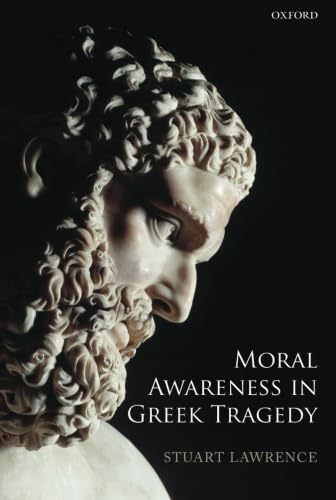
Lawrence's volume provides a detailed discussion and analyses of the moral awareness of major characters in Greek tragedy, focusing particularly on the characters' recognition of moral issues and crises, their ability to reflect on them, and their consciousness of doing so.Beginning with a definition of morality and examining the implications of analysing the moral performance of fictional characters, Lawrence considers concepts of the self and the problem of autonomy and personal responsibility in the context of divine intervention, which is a crucial feature of the genre. The volume then moves on to the individual plays (Aeschylus' Seven Against Thebes and Oresteia; Sophocles' Ajax, Trachiniae, Oedipus Tyrannus, Electra, and Philoctetes; and Euripides' Medea, Hecuba, Hippolytus, Heracles, Electra, and Bacchae), focusing in each case on a crisis or crises faced by a major character and examining the background which led to it. Lawrence then considers the individual character's moral response and relates it to the critical issues formulated in the volume's opening discussions.The book will be important to any student of Classical Studies and those in Philosophy or Literature interested in a theoretical discussion of the morality of literary characters.
⚠️ WARNING (California Proposition 65):
This product may contain chemicals known to the State of California to cause cancer,
birth defects, or other reproductive harm.
For MAP (Minimum Advertised Price) violations and Intellectual Property (IP) or Trademark concerns, please contact:
support@ergodebooks.com
⚠️ California Proposition 65 Warning: Some products sold on this website may expose you to chemicals known to the State of California to cause cancer, birth defects, or other reproductive harm. For more information, visit www.P65Warnings.ca.gov.