
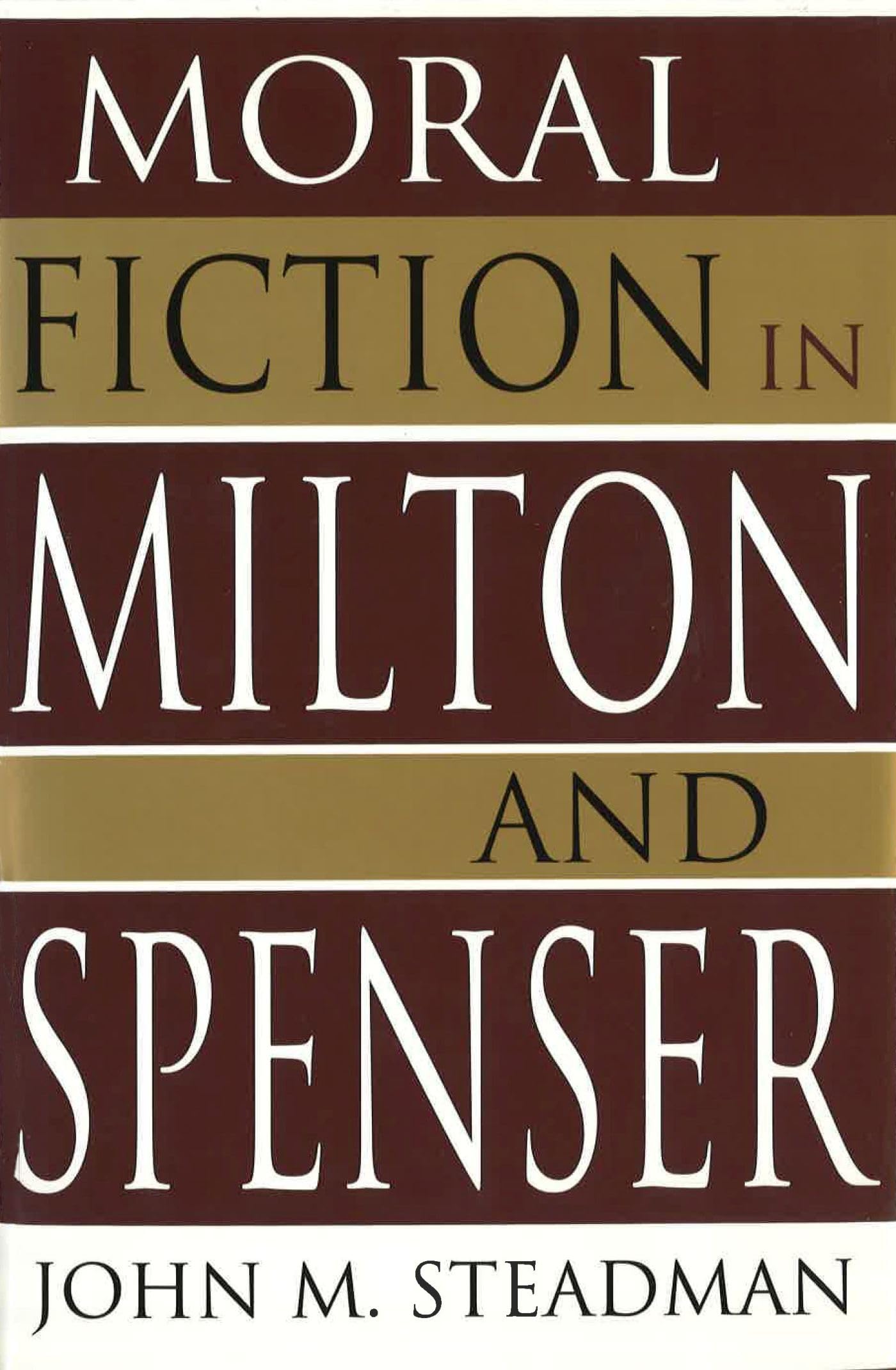
Title
Moral Fiction In Milton And Spenser (Volume 1),Used
Sold by Ergodebooks, an authorized reseller.
Returns accepted within 30 days | support@ergodebooks.com
Shipping Information
- Free Standard Shipping — United States only
- Processing Time: 3–5 business days
- Estimated Delivery: 6–10 business days after dispatch
- Double-boxed, fully insured & discreetly packaged
- Tracking number sent via email once dispatched
Returns & Refund
Returns accepted within 30 days of delivery.
Damaged or Defective Item
Free return shipping + replacement or full refund
Wrong Item Received
Free return shipping + replacement or full refund
Change of Mind
Return shipping at customer's expense · 25% restocking fee applies
Payment Option

In Moral Fiction in Milton and Spenser, John M. Steadman examines how Milton and Spenserand Renaissance poets in generalapplied their art toward the depiction of moral and historical 'truth.' Steadman centers his study on the various poetic techniques of illusion that these poets employed in their effort to bridge the gap between truth and imaginative fiction. In developing this theme, the author considers the poetry of Milton and Spenser, touching also on works by Tasso, Boiardo, Ariosto, DuBartas, Puttenham, Sidney, and others, against the background of Renaissance epic theory and practice.Emphasizing the significant affinities and the crucial differences between the seventeenthcentury heroic poet and his sixteenthcentury 'original,' Steadman analyzes the diverse ways in which Milton and Spenser exploited traditional invocation formulas and the commonplaces of the poet's divine imagination. Steadman suggests that these poets, along with most other Renaissance poets, did not actually regard themselves as divinely inspired but, rather, resorted to a common fiction to create the appearance of having special insight into the truth.The first section of this study traces the persona of the inspired poet in DuBartas's La Sepmaine and in The Faerie Queene and Paradise Lost. Reevaluating the views of twentiethcentury critics, it emphasizes the priority of conscious fiction over autobiographical 'fact' in these poets' adaptations of this topos. The second section develops the contrast between the two principal heroic poems of the English Renaissance, The Faerie Queene and Paradise Lost, in terms of the contrasting aesthetic principles underlying the romance genre and the neoclassical epic.Complementing the findings of earlier critics of Spenser and Milton, Moral Fiction in Milton and Spenser will be a welcome addition to the study of Renaissance literature.
⚠️ WARNING (California Proposition 65):
This product may contain chemicals known to the State of California to cause cancer, birth defects, or other reproductive harm.
For more information, please visit www.P65Warnings.ca.gov.