
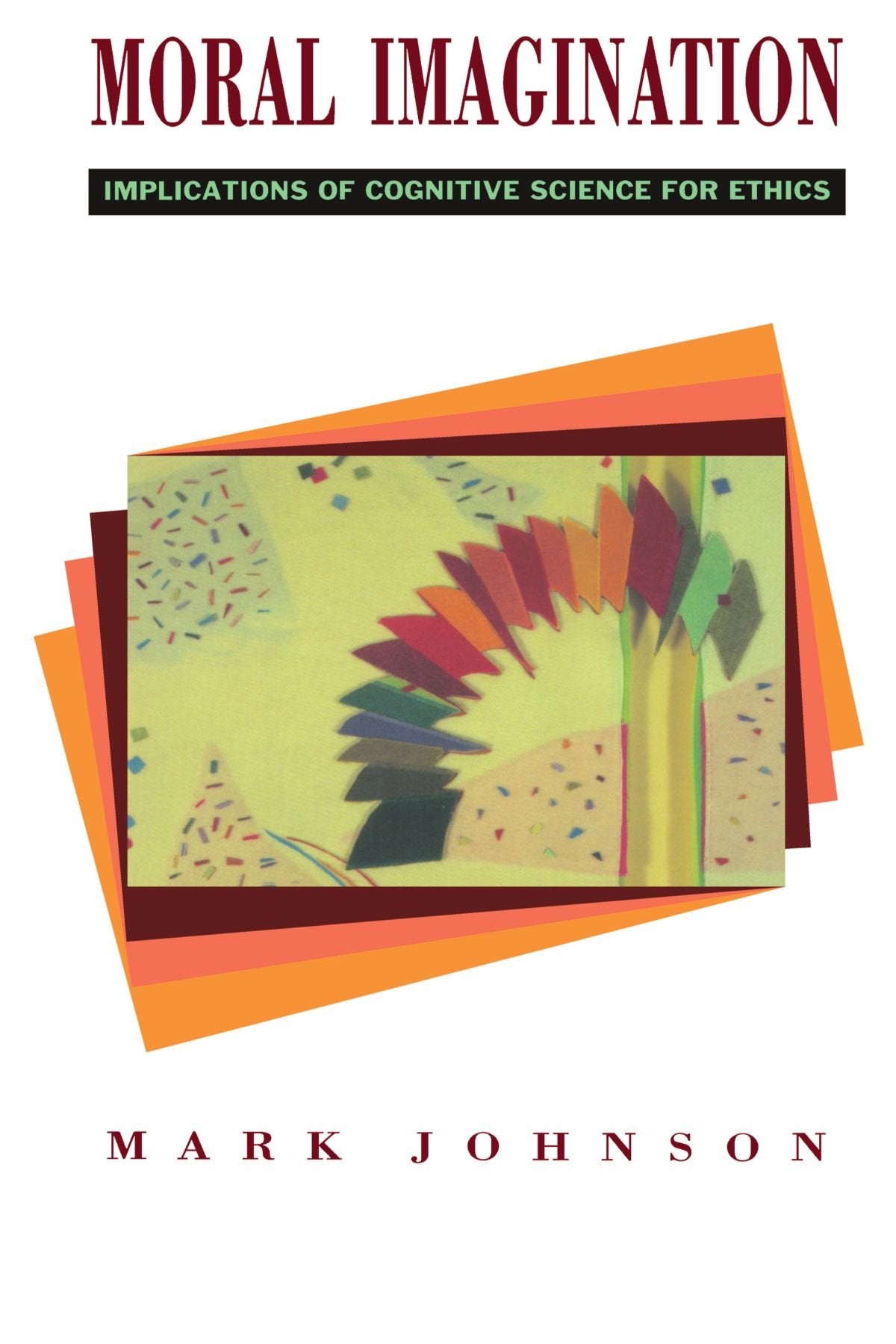
Title
Moral Imagination: Implications of Cognitive Science for Ethics,Used
Sold by Ergodebooks, an authorized reseller.
Returns accepted within 30 days | support@ergodebooks.com
Shipping Information
- Free Standard Shipping — United States only
- Processing Time: 3–5 business days
- Estimated Delivery: 6–10 business days after dispatch
- Double-boxed, fully insured & discreetly packaged
- Tracking number sent via email once dispatched
Returns & Refund
Returns accepted within 30 days of delivery.
Damaged or Defective Item
Free return shipping + replacement or full refund
Wrong Item Received
Free return shipping + replacement or full refund
Change of Mind
Return shipping at customer's expense · 25% restocking fee applies
Payment Option

Using pathbreaking discoveries of cognitive science, Mark Johnson argues that humans are fundamentally imaginative moral animals, challenging the view that morality is simply a system of universal laws dictated by reason. According to the Western moral tradition, we make ethical decisions by applying universal laws to concrete situations. But Johnson shows how research in cognitive science undermines this view and reveals that imagination has an essential role in ethical deliberation.Expanding his innovative studies of human reason in Metaphors We Live By and The Body in the Mind, Johnson provides the tools for more practical, realistic, and constructive moral reflection.
⚠️ WARNING (California Proposition 65):
This product may contain chemicals known to the State of California to cause cancer, birth defects, or other reproductive harm.
For more information, please visit www.P65Warnings.ca.gov.
- Q: What is the main argument of 'Moral Imagination'? A: 'Moral Imagination' by Mark Johnson argues that morality is not just a system of universal laws dictated by reason, but fundamentally involves human imagination, which plays a crucial role in ethical deliberation.
- Q: How does cognitive science relate to ethics in this book? A: The book explores how discoveries in cognitive science challenge traditional views of morality, showing that ethical decisions are influenced by imaginative reasoning rather than solely by applying universal laws.
- Q: What are the key themes in 'Moral Imagination'? A: Key themes include the role of imagination in moral reasoning, the critique of universal moral laws, and the integration of cognitive science into ethical reflection.
- Q: Who is the author of this book and what is his background? A: The author, Mark Johnson, is a prominent philosopher known for his work in cognitive science and ethics, previously having authored influential texts such as 'Metaphors We Live By'.
- Q: What is the publication date of 'Moral Imagination'? A: 'Moral Imagination: Implications of Cognitive Science for Ethics' was published on November 1, 1994.
- Q: What is the format of this book? A: The book is available in paperback format, making it accessible for readers who prefer a physical copy.
- Q: How many pages does 'Moral Imagination' have? A: 'Moral Imagination' contains 302 pages, providing an in-depth exploration of its themes and arguments.
- Q: Is 'Moral Imagination' suitable for beginners in ethical studies? A: Yes, while it presents complex ideas, the book is written to be approachable for readers new to ethics and cognitive science.
- Q: What makes this book unique compared to other ethics texts? A: 'Moral Imagination' uniquely integrates insights from cognitive science into ethical discussions, challenging conventional views and providing a fresh perspective on moral reasoning.
- Q: Can this book be used in academic settings or courses on ethics? A: Yes, 'Moral Imagination' is suitable for academic study and can serve as a valuable resource in courses focused on ethics, cognitive science, and philosophy.