
Title
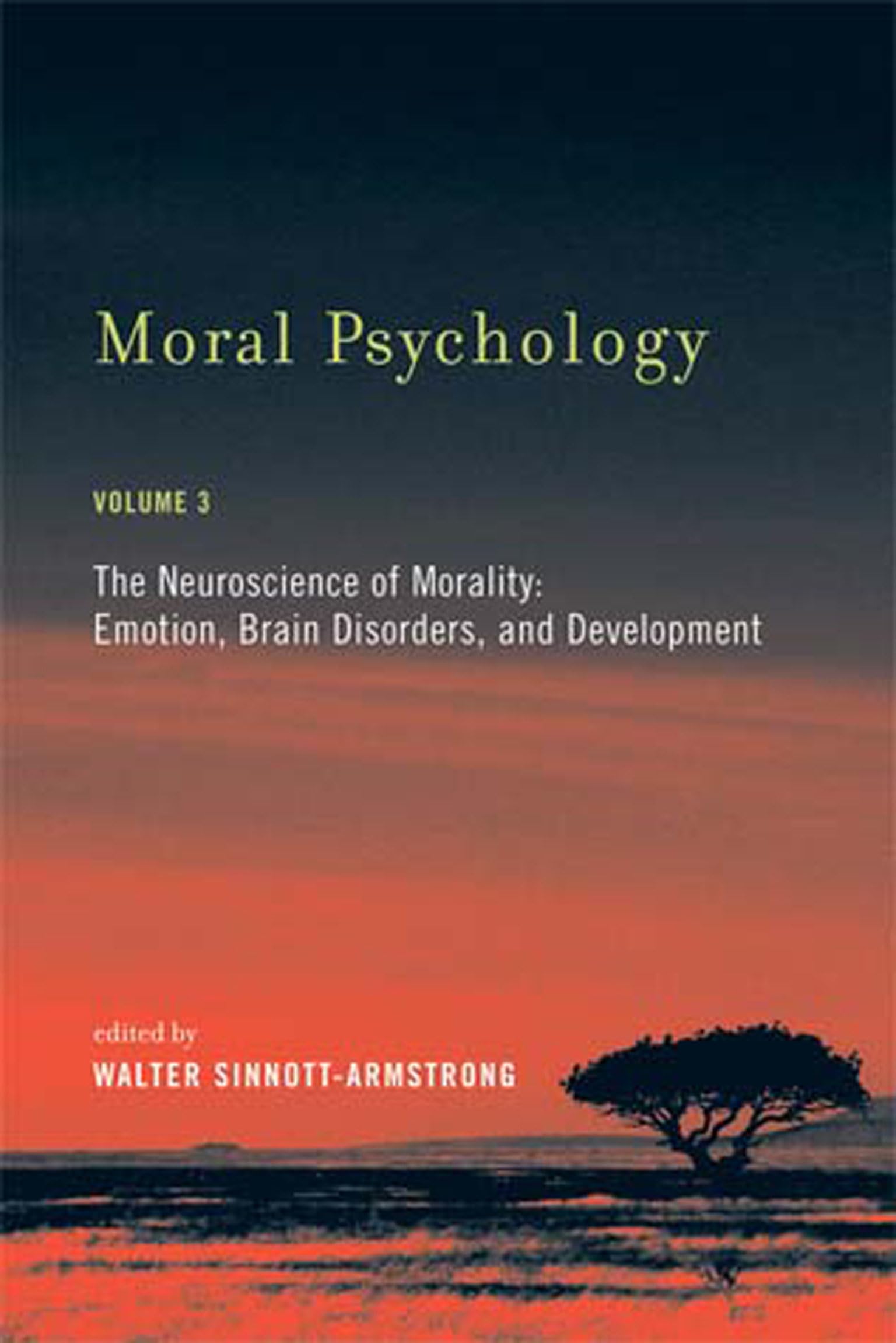
Moral Psychology, Volume 3: The Neuroscience Of Morality: Emotion, Brain Disorders, And Development (Bradford Books)
Sold by Ergodebooks, an authorized reseller.
Returns accepted within 30 days | support@ergodebooks.com
Shipping Information
- Free Standard Shipping — United States only
- Processing Time: 3–5 business days
- Estimated Delivery: 6–10 business days after dispatch
- Double-boxed, fully insured & discreetly packaged
- Tracking number sent via email once dispatched
Returns & Refund
Returns accepted within 30 days of delivery.
Damaged or Defective Item
Free return shipping + replacement or full refund
Wrong Item Received
Free return shipping + replacement or full refund
Change of Mind
Return shipping at customer's expense · 25% restocking fee applies
Payment Option

For Much Of The Twentieth Century, Philosophy And Science Went Their Separate Ways. In Moral Philosophy, Fear Of The Socalled Naturalistic Fallacy Kept Moral Philosophers From Incorporating Developments In Biology And Psychology. Since The 1990S, However, Many Philosophers Have Drawn On Recent Advances In Cognitive Psychology, Brain Science, And Evolutionary Psychology To Inform Their Work. This Collaborative Trend Is Especially Strong In Moral Philosophy, And These Three Volumes Bring Together Some Of The Most Innovative Work By Both Philosophers And Psychologists In This Emerging Interdisciplinary Field. The Neuroscience Of Morality Is In Its Infancy, With The First Brain Imaging Studies Of Moral Development Undertaken Only In 2001.The Contributors To Volume 3 Sample The Best Work In This Very New Field, Discussing A Variety Of Approaches, Including Functional Imaging, Lesion Studies, Abnormal Psychology, And Developmental Neuroscience. Each Chapter Includes An Essay, Comments On The Essay By Other Scholars, And A Reply By The Author(S) Of The Original Essay. Topics Include The Neural Basis Of Moral Emotions And Moral Judgments As Well As Comparisons Of Normal Adult Moral Judgments With Those Made By Children, Adolescents, And People With Psychopathy, Brain Damage, And Autism.Contributors To Volume 3Abigail Baird, William Casebeer, Cordelia Fine, Nathan Fox, Uta Frith, Jordan Grafman, Joshua Greene, Catherine Hynes, Fatima Azavedo Ignacio, Richard Joyce, Jerome Kagan, Leonard Katz, Kent Kiehl, Jeanette Kennett, Melanie Killen, Daniel Lapsley, Heidi Maibom, Victoria Mcgeer, John Mikhail, Jorge Moll, Shaun Nichols, Ricardo De Oliveirasouza, Adina Roskies, Jana Schaich Borg, Katrina Sifferd, Walter Sinnottarmstrong, Michael Smith, Mark Timmons, Frederick De Vignemont, Paul Whalen, Roland Zahn
⚠️ WARNING (California Proposition 65):
This product may contain chemicals known to the State of California to cause cancer, birth defects, or other reproductive harm.
For more information, please visit www.P65Warnings.ca.gov.
- Q: How many pages does this book have? A: This book has five hundred sixty-nine pages. It provides a comprehensive exploration of moral psychology and neuroscience.
- Q: What is the binding type of this book? A: This book is paperback bound. This makes it lightweight and flexible, ideal for reading and transport.
- Q: Who is the author of this book? A: The author of this book is Walter Sinnott-Armstrong. He is recognized for his contributions to moral psychology and philosophy.
- Q: What are the dimensions of this book? A: The book measures eight point nine five inches in length, six point one inches in width, and one point zero two inches in height. These dimensions make it easy to handle.
- Q: What is the publication year of this book? A: The book was published in twenty twenty-three. It reflects the latest research in the field of moral psychology.
- Q: Is this book suitable for beginners in psychology? A: Yes, this book is suitable for beginners. It introduces key concepts in moral psychology and neuroscience in an accessible manner.
- Q: Can this book be used for academic studies? A: Yes, this book is appropriate for academic studies. It contains contributions from leading scholars in the field of moral psychology.
- Q: Are there illustrations in this book? A: Yes, the book includes six illustrations. These visuals help clarify complex concepts discussed in the text.
- Q: Is this book recommended for advanced readers? A: Yes, advanced readers will find valuable insights in this book. It discusses intricate theories and research findings in moral psychology.
- Q: What is the main topic of this book? A: The main topic of this book is the neuroscience of morality. It examines the intersection of emotion, brain disorders, and moral development.
- Q: What kind of features does this book have? A: The book features new and mint condition quality, with same-day dispatch for orders received before noon. It also offers guaranteed packaging.
- Q: How should I store this book? A: Store this book in a cool, dry place. Keeping it away from direct sunlight will preserve its condition.
- Q: Can I return this book if I change my mind? A: Yes, you can return the book if you change your mind. The seller offers a no-quibbles return policy.
- Q: Is there a warranty for this book? A: No, books typically do not come with a warranty. However, the quality is guaranteed upon purchase.
- Q: What if the book arrives damaged? A: If the book arrives damaged, contact the seller immediately for a replacement or refund. Customer satisfaction is prioritized.
- Q: Is this book appropriate for young adults? A: Yes, this book is appropriate for young adults interested in psychology. It provides a thoughtful exploration of moral issues.