
Title
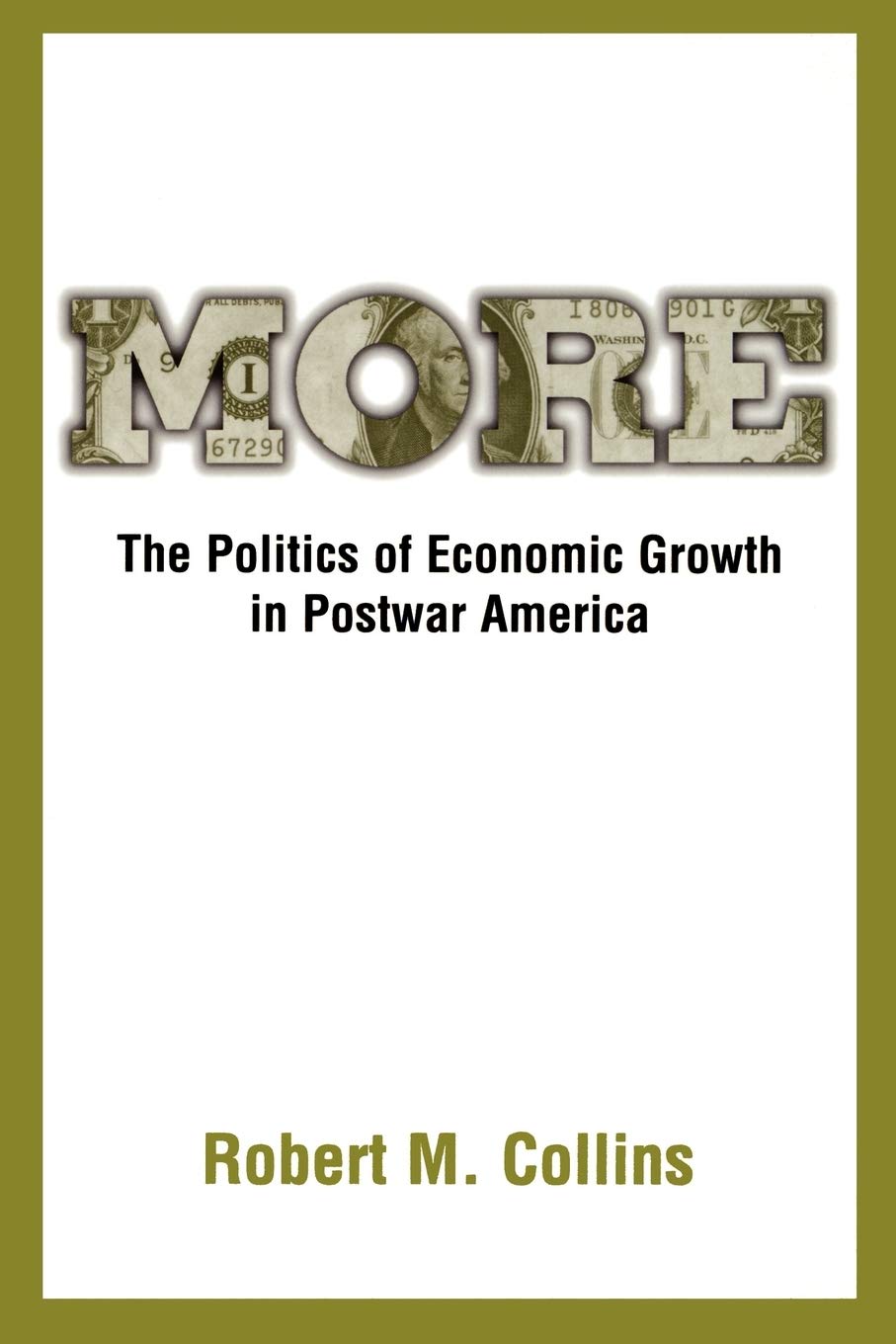
More: The Politics Of Economic Growth In Postwar America
Sold by Ergodebooks, an authorized reseller.
Returns accepted within 30 days | support@ergodebooks.com
Shipping Information
- Free Standard Shipping — United States only
- Processing Time: 3–5 business days
- Estimated Delivery: 6–10 business days after dispatch
- Double-boxed, fully insured & discreetly packaged
- Tracking number sent via email once dispatched
Returns & Refund
Returns accepted within 30 days of delivery.
Damaged or Defective Item
Free return shipping + replacement or full refund
Wrong Item Received
Free return shipping + replacement or full refund
Change of Mind
Return shipping at customer's expense · 25% restocking fee applies
Payment Option

James Carville Famously Reminded Bill Clinton Throughout 1992 That It'S The Economy, Stupid. Yet, For The Last Forty Years, Historians Of Modern America Have Ignored The Economy To Focus On Cultural, Social, And Political Themes, From The Birth Of Modern Feminism To The Fall Of The Berlin Wall. Now A Scholar Has Stepped Forward To Place The Economy Back In Its Rightful Place, At The Center Of His Historical Narrative.In More, Robert M. Collins Reexamines The History Of The United States From Franklin Delano Roosevelt To Bill Clinton, Focusing On The Federal Government'S Determined Pursuit Of Economic Growth. After Tracing The Emergence Of Growth As A Priority During Fdr'S Presidency, Collins Explores The Record Of Successive Administrations, Highlighting Both Their Success In Fostering Growth And Its Partisan Uses. Collins Reveals That The Obsession With Growth Appears Not Only As A Matter Of Policy, But As An Expression Of Cold War Ideologyboth A Means To Pay For The Arms Buildup And Proof Of The Superiority Of The United States' Market Economy. But Under Johnson, This Enthusiasm Sparked A Crisis: Spending On Vietnam Unleashed Runaway Inflation, While The Nation Struggled With The Moral Consequences Of Its Prosperity, Reflected In Books Such As John Kenneth Galbraith'S The Affluent Society And Rachel Carson'S Silent Spring. More Continues Up To The End Of The 1990S, As Collins Explains The Real Impact Of Reagan'S Policies And Astutely Assesses Clinton'S Disciplined Growthmanship, Which Combined Deficit Reduction And A Relaxed But Watchful Monetary Policy By The Federal Reserve.Writing With Eloquence And Analytical Clarity, Robert M. Collins Offers A Startlingly New Framework For Understanding The History Of Postwar America.
⚠️ WARNING (California Proposition 65):
This product may contain chemicals known to the State of California to cause cancer, birth defects, or other reproductive harm.
For more information, please visit www.P65Warnings.ca.gov.
- Q: What is the page count of this book? A: This book has three hundred twenty pages. It provides a comprehensive overview of economic growth in postwar America.
- Q: What is the binding type of this book? A: The binding type is paperback. This makes it lightweight and portable, ideal for reading on the go.
- Q: What are the dimensions of this book? A: The dimensions are nine point three three inches long, six point zero four inches wide, and zero point nine one inches thick. This size is convenient for handling and reading.
- Q: How do I read this book effectively? A: To read this book effectively, consider taking notes on key themes and historical events. This can enhance your understanding of the economic policies discussed.
- Q: Is this book suitable for beginners in economic history? A: Yes, this book is suitable for beginners. It presents complex concepts in an accessible manner, making it easy for non-experts to grasp.
- Q: What age group is this book appropriate for? A: This book is appropriate for adults and older teens. The themes and discussions are intended for a mature audience interested in economic policy.
- Q: How should I store this book to keep it in good condition? A: Store this book in a cool, dry place away from direct sunlight. This will help preserve its binding and pages.
- Q: Can I clean the book if it gets dirty? A: Yes, you can gently wipe the cover with a soft, dry cloth. Avoid using water or cleaning solutions to protect the book's surface.
- Q: What should I do if my book arrives damaged? A: If your book arrives damaged, contact customer service for assistance. They can guide you on how to return or replace it.
- Q: Is there a warranty for this book? A: No, there is no warranty for this book. However, returns may be accepted based on the retailer's policy.
- Q: How does this book compare to other economic history books? A: This book offers a unique perspective by placing economic growth at the forefront of postwar American history compared to others that focus more on cultural aspects.
- Q: Is this book useful for academic research? A: Yes, this book is useful for academic research. It provides a detailed analysis of economic policies and their historical implications.
- Q: What themes does this book explore? A: This book explores themes of economic growth, policy impact, and Cold War ideology. It provides insights into the political and economic landscape of postwar America.
- Q: Is there a glossary or index in the book? A: Yes, the book includes an index. This can help readers locate specific topics or terms related to economic policy.
- Q: Who is the author of the book? A: The author is Robert M. Collins, a scholar known for his work on American economic history and policy analysis.
- Q: What publisher released this book? A: The book is published by Oxford University Press, USA. This publisher is known for its academic and scholarly publications.