
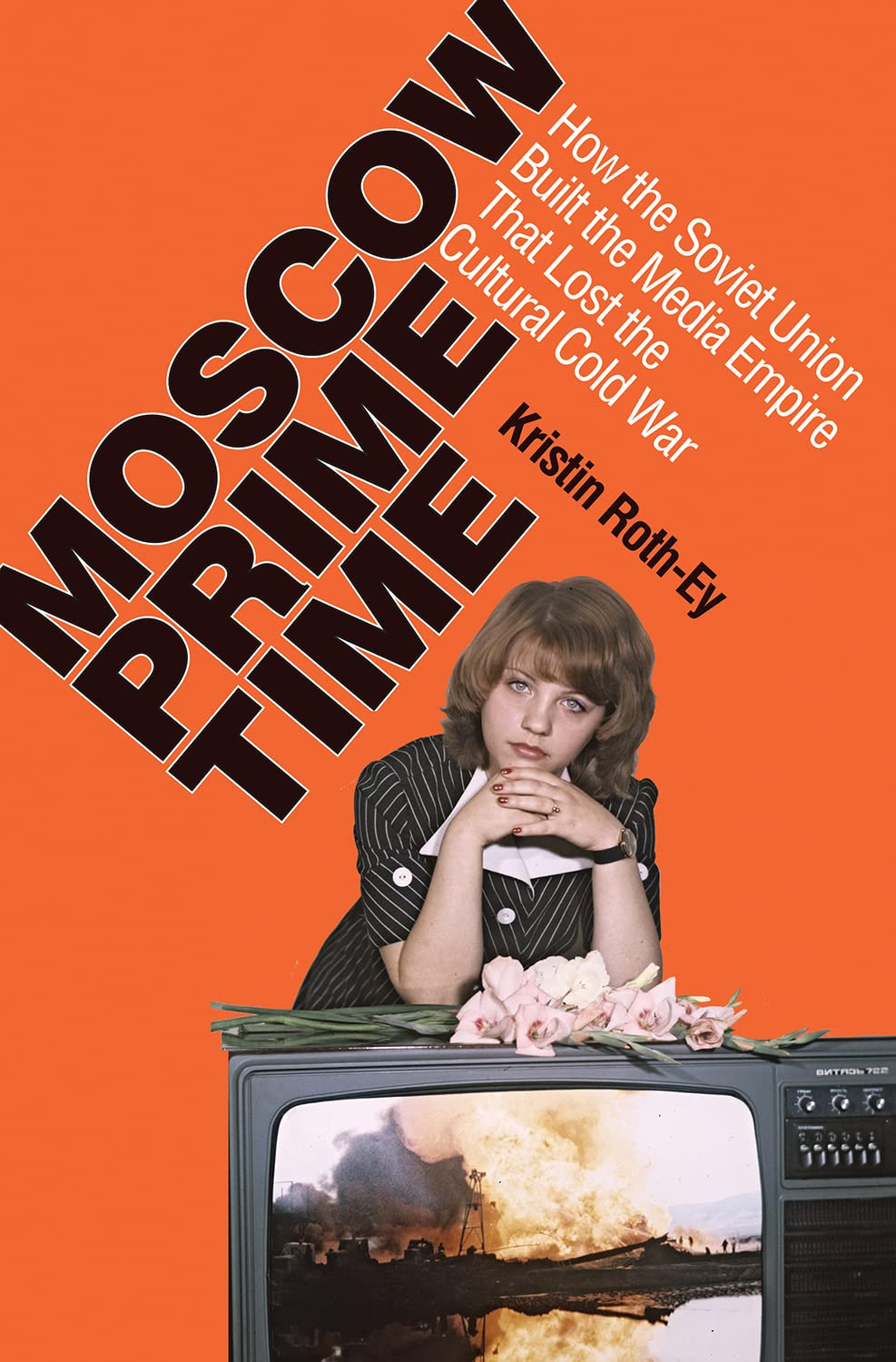
Title
Moscow Prime Time: How The Soviet Union Built The Media Empire That Lost The Cultural Cold War,New
Sold by Ergodebooks, an authorized reseller.
Returns accepted within 30 days | support@ergodebooks.com
Shipping Information
- Free Standard Shipping — United States only
- Processing Time: 3–5 business days
- Estimated Delivery: 6–10 business days after dispatch
- Double-boxed, fully insured & discreetly packaged
- Tracking number sent via email once dispatched
Returns & Refund
Returns accepted within 30 days of delivery.
Damaged or Defective Item
Free return shipping + replacement or full refund
Wrong Item Received
Free return shipping + replacement or full refund
Change of Mind
Return shipping at customer's expense · 25% restocking fee applies
Payment Option

When Nikita Khrushchev Visited Hollywood In 1959 Only To Be Scandalized By A Group Of Scantily Clad Actresses, His Message Was Blunt: Soviet Culture Would Soon Consign The Mass Culture Of The West, Epitomized By Hollywood, To The 'Dustbin Of History.' In Moscow Prime Time, A Portrait Of The Soviet Broadcasting And Film Industries And Of Everyday Soviet Consumers From The End Of World War Ii Through The 1970S, Kristin Rothey Shows Us How And Why Khrushchevs Ambitious Vision Ultimately Failed To Materialize.The Ussr Surged Full Force Into The Modern Media Age After World War Ii, Building Cultural Infrastructuresand Audiencesthat Were Among The Worlds Largest. Soviet People Were Enthusiastic Radio Listeners, Tv Watchers, And Moviegoers, And The Great Bulk Of What They Were Consuming Was Not The Dissident Culture That Made Headlines In The West, But Orthodox, Madeintheussr Content. This, Then, Was Soviet Cultures Real Prime Time And A Major Achievement For A Regime That Had Long Touted Easy, Everyday Access To A Socialist Cultural Experience As A Birthright. Yet Soviet Success Also Brought Complex And Unintended Consequences.Emphasizing Such Factors As The Rise Of The Singlefamily Household And Of A More Sophisticated Consumer Culture, The Long Reach And Seductive Influence Of Foreign Media, And The Workings Of Professional Pride And Raw Ambition In The Media Industries, Rothey Shows A Soviet Media Empire Transformed From Within In The Postwar Era. The Result, She Finds, Was Something Dynamic And Volatile: A New Soviet Culture, With Its Center Of Gravity Shifted From The Lecture Hall To The Living Room, And A New Brand Of Cultural Experience, At Once Personal, Immediate, And Eclectica New Soviet Culture Increasingly Similar, In Fact, To That Of Its Selfdefined Enemy, The Mass Culture Of The West. By The 1970S, The Soviet Media Empire, Stretching Far Beyond Its Founders Wildest Dreams, Was Busily Undermining The Very Promise Of A Unique Soviet Cultureand Visibly Losing The Cultural Cold War. Moscow Prime Time Is The First Book To Untangle The Paradoxes Of Soviet Success And Failure In The Postwar Media Age.
⚠️ WARNING (California Proposition 65):
This product may contain chemicals known to the State of California to cause cancer, birth defects, or other reproductive harm.
For more information, please visit www.P65Warnings.ca.gov.
- Q: How many pages does the book have? A: This book has three hundred twenty-eight pages. It provides an in-depth exploration of Soviet media history.
- Q: What is the binding type of this book? A: This book is a paperback. This makes it lightweight and easy to handle.
- Q: What are the dimensions of the book? A: The dimensions are six point one two inches by zero point seven five inches by nine point two five inches. This size makes it convenient for reading.
- Q: Who is the author of the book? A: The author is Kristin Roth-Ey. She offers a detailed account of Soviet culture and media.
- Q: What genre does this book fall under? A: This book falls under the Performing Arts genre. It delves into media's role in cultural dynamics.
- Q: How do I read this book effectively? A: To read this book effectively, approach it chapter by chapter. Engaging with the historical context enhances understanding.
- Q: Is this book suitable for academic study? A: Yes, this book is suitable for academic study. It provides rich insights into Soviet media and culture.
- Q: What age group is this book appropriate for? A: This book is appropriate for adults and mature teens. It discusses complex themes related to history and culture.
- Q: How should I store this book? A: Store this book in a cool, dry place to prevent damage. Avoid direct sunlight to preserve the cover and pages.
- Q: Is this book safe to handle for children? A: No, this book is not recommended for young children. It contains advanced themes not suitable for younger audiences.
- Q: Can this book be returned if I don't like it? A: Yes, this book can be returned based on the retailer's return policy. Check the specific terms for details.
- Q: What if the book arrives damaged? A: If the book arrives damaged, contact customer service for a replacement. Keep all packaging materials for the return process.
- Q: How do I clean the cover of the book? A: To clean the cover, use a dry cloth to gently wipe it. Avoid using liquids which can damage the material.
- Q: Does this book include illustrations? A: No, this book does not include illustrations. It focuses on textual analysis of media in the Soviet Union.
- Q: Is this book part of a series? A: No, this book is not part of a series. It stands alone as a comprehensive study on Soviet media.