
Title
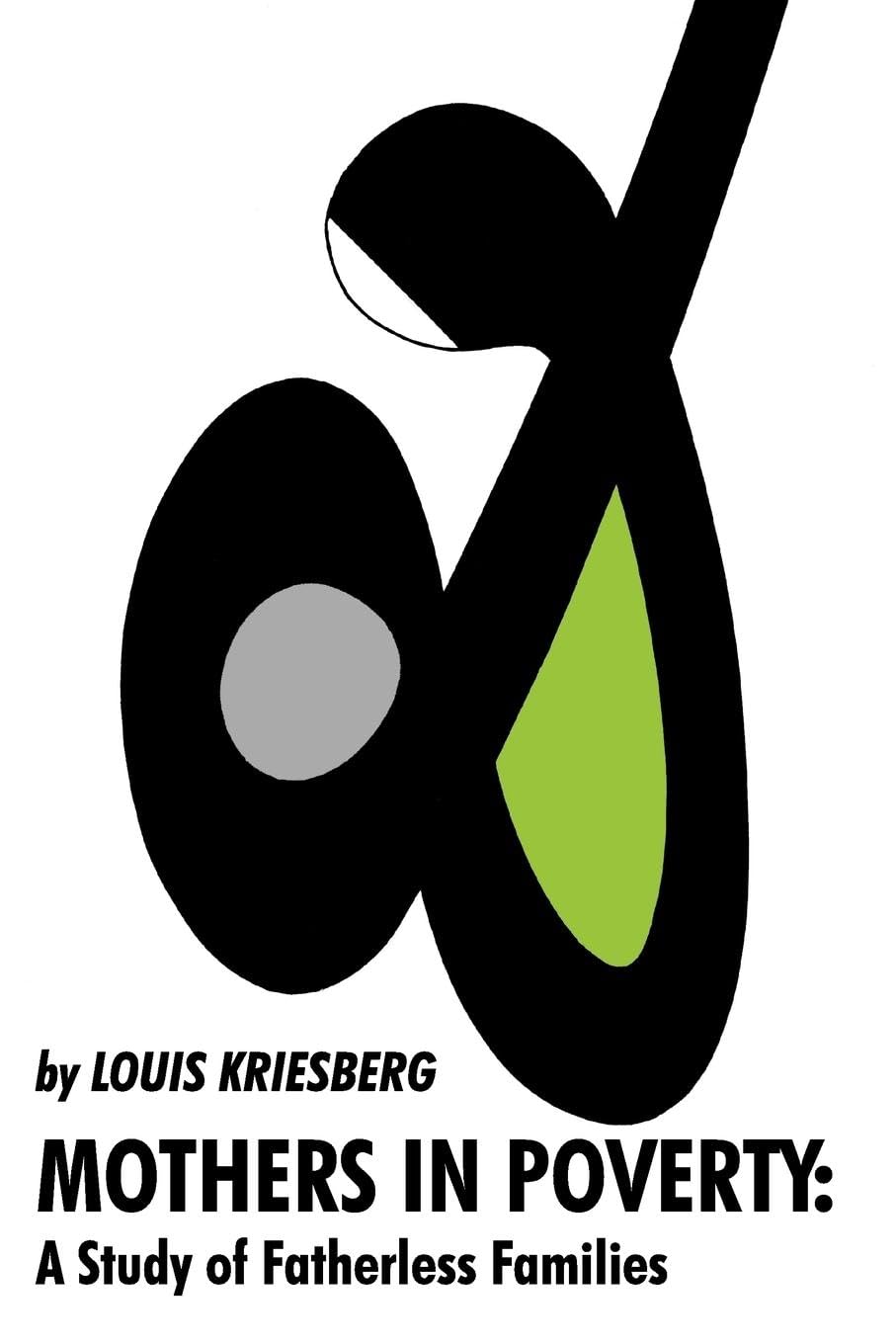
Mothers in Poverty: A Study of Fatherless Families,Used
Sold by Ergodebooks, an authorized reseller.
Returns accepted within 30 days | support@ergodebooks.com
Shipping Information
- Free Standard Shipping — United States only
- Processing Time: 3–5 business days
- Estimated Delivery: 6–10 business days after dispatch
- Double-boxed, fully insured & discreetly packaged
- Tracking number sent via email once dispatched
Returns & Refund
Returns accepted within 30 days of delivery.
Damaged or Defective Item
Free return shipping + replacement or full refund
Wrong Item Received
Free return shipping + replacement or full refund
Change of Mind
Return shipping at customer's expense · 25% restocking fee applies
Payment Option

Professor Kriesberg explores in this book the many myths about the poor, the welfare dependents, and the husbandless mothers. The evidence marshalled does not support the idea that people continue on welfare generation after generation, that the children of broken families have disrupted marriages themselves, that the poor seek out public housing and public assistance because they prefer such dependency, or that husbandless mothers all have lower educational goals for their children than do married mothers. Beginning with major theoretical issues, Professor Kriesberg developed specific hypotheses about the life of the poor and the culture of poverty; the hypotheses were tested with data from a study of families in and around four public housing projects in Syracuse.Issues discussed in the book include the social worlds of the housing projects and the relations between the tenants and the residents of surrounding neighborhoods; the recruitment and selection of families into public housing; and the alternatives the female heads of families face in obtaining money for their families. Two chapters are devoted to an analysis of childrearing patterns that affect the child's later independence and educational achievements, focusing upon intergenerational processes and contemporary conditions such as housing, income, and family structure. Here the complex interplay of parental values, beliefs, and actual conduct is studied. Finally the sociological and policy implications of the findings are set forth with specific proposals concerning the reduction of poverty.This indepth analysis of poverty with its emphasis on fatherless families will be of interest to sociologists and social workers and those concerned with poverty, employment, women's rights, civil rights, education, and urban development.
⚠️ WARNING (California Proposition 65):
This product may contain chemicals known to the State of California to cause cancer, birth defects, or other reproductive harm.
For more information, please visit www.P65Warnings.ca.gov.