If you have any questions, you are always welcome to contact us. We'll get back to you as soon as possible, withing 24 hours on weekdays.
Customer service
All questions about your order, return and delivery must be sent to our customer service team by e-mail at yourstore@yourdomain.com
Sale & Press
If you are interested in selling our products, need more information about our brand or wish to make a collaboration, please contact us at press@yourdomain.com
Help
If you have any questions, you are always welcome to contact us. We'll get back to you as soon as possible, withing 24 hours on weekdays.
Customer service
All questions about your order, return and delivery must be sent to our customer service team by e-mail at yourstore@yourdomain.com
Sale & Press
If you are interested in selling our products, need more information about our brand or wish to make a collaboration, please contact us at press@yourdomain.com
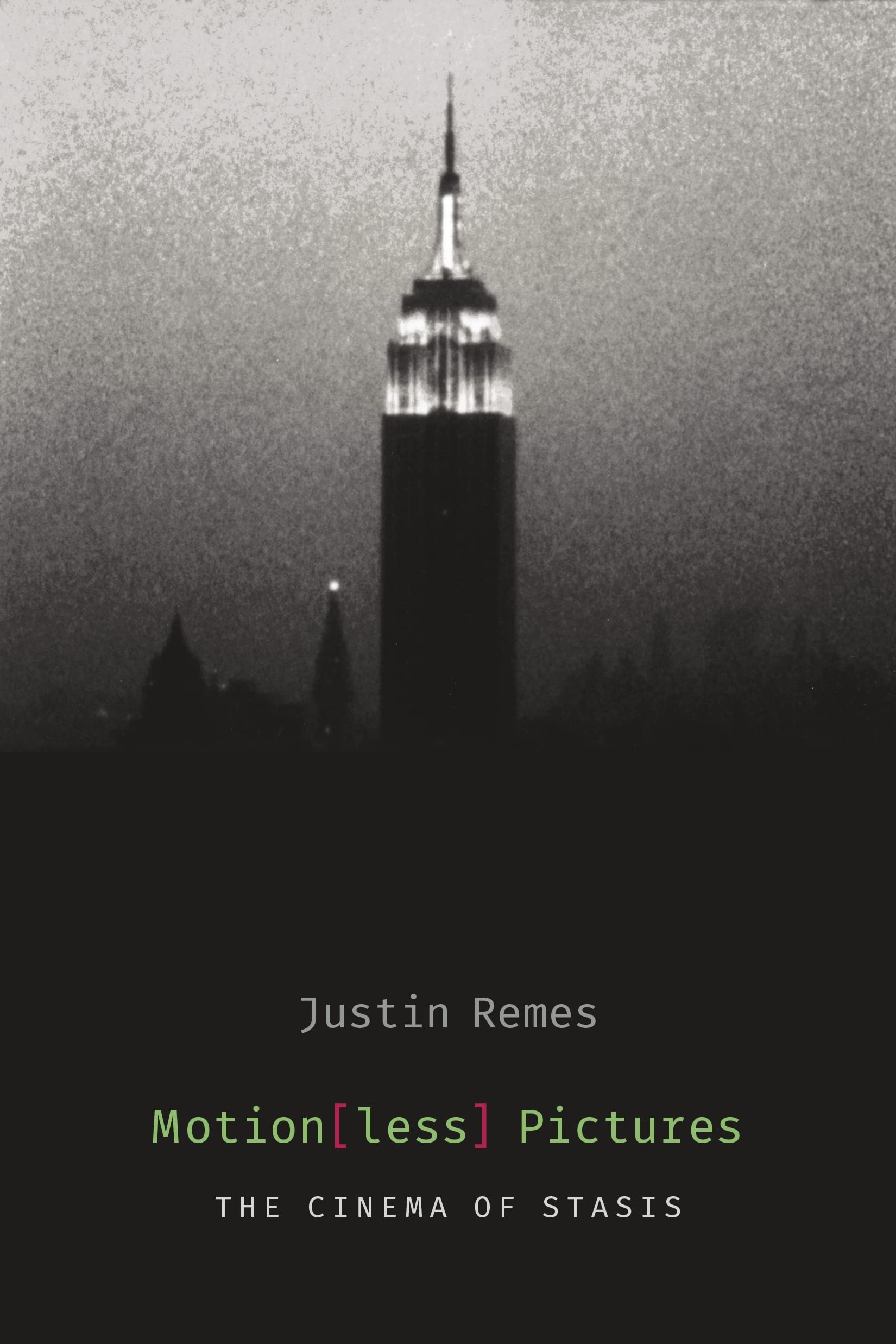
Conducting the first comprehensive study of films that do not move, Justin Remes challenges the primacy of motion in cinema and tests the theoretical limits of film aesthetics and representation. Reading experimental films such as Andy Warhol's Empire (1964), the Fluxus work Disappearing Music for Face (1965), Michael Snow's So Is This (1982), and Derek Jarman's Blue (1993), he shows how motionless films defiantly showcase the static while collapsing the boundaries between cinema, photography, painting, and literature.Analyzing four categories of static filmfurniture films, designed to be viewed partially or distractedly; protracted films, which use extremely slow motion to impress stasis; textual films, which foreground the static display of letters and written words; and monochrome films, which display a field of monochrome color as their imageRemes maps the interrelations between movement, stillness, and duration and their complication of cinema's conventional function and effects. Arguing all films unfold in time, he suggests duration is more fundamental to cinema than motion, initiating fresh inquiries into film's manipulation of temporality, from rigidly structured works to those with more ambiguous and openended frameworks. Remes's discussion integrates the writings of Roland Barthes, Gilles Deleuze, Tom Gunning, Rudolf Arnheim, Raymond Bellour, and Noel Carroll and will appeal to students of film theory, experimental cinema, intermedia studies, and aesthetics.
⚠️ WARNING (California Proposition 65):
This product may contain chemicals known to the State of California to cause cancer,
birth defects, or other reproductive harm.
For MAP (Minimum Advertised Price) violations and Intellectual Property (IP) or Trademark concerns, please contact:
support@ergodebooks.com
⚠️ California Proposition 65 Warning: Some products sold on this website may expose you to chemicals known to the State of California to cause cancer, birth defects, or other reproductive harm. For more information, visit www.P65Warnings.ca.gov.