

Title

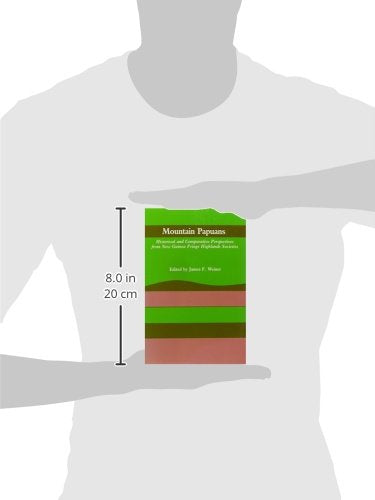
Mountain Papuans: Historical and Comparative Perspectives from New Guinea Fringe Highlands Societies,Used
Sold by Ergodebooks, an authorized reseller.
Returns accepted within 30 days | support@ergodebooks.com
Shipping Information
- Free Standard Shipping — United States only
- Processing Time: 3–5 business days
- Estimated Delivery: 6–10 business days after dispatch
- Double-boxed, fully insured & discreetly packaged
- Tracking number sent via email once dispatched
Returns & Refund
Returns accepted within 30 days of delivery.
Damaged or Defective Item
Free return shipping + replacement or full refund
Wrong Item Received
Free return shipping + replacement or full refund
Change of Mind
Return shipping at customer's expense · 25% restocking fee applies
Payment Option

An important contribution to the Melanesian literature, Mountain Papuans examines three societies of the southern New Guinean Fringer Highlands. These societiesthe Daribi, Foi, and Etoroare distinguished from Cental Highlands societies by low population density, a complex subsistence system, and the marked elaboration of males ethos and male cult activity. In focusing on both the common and distinctive characteristics of these societies, contributing editor James F. Weiner and ethnologists Roy Wagner, Charles M. Langlas, Raymond C. Kelly, and Andrew J. Strathern not only describe a culture area, but also question generalizations that have been made about Highlands societies themselves. Challenging the assumption that highdensity, highintensity Central Highlands societies represent the most complex examples of social evolution in interior New Guinea, Mountain Papuans argues that the lowdensity, lowintensity southern Fringe Highlands societies can be considered equally evolved and specialized.The individual contributions to this volume employ a processual, diachronic perspective. Wagner focuses on the Daribi community as the working out of the organizational and conceptual implications of swidden horticulture. Langlas and Weiner show how the idioms of coresidence and sharing of land give shape to the Foi longhouse community. Kelly explores the Etoro system of pig husbandry, comparing it to Highlands systems and using that comparison to consider the role of the pig in the development of Highlands socioeconomic systems. As these analyses unfold, the distinctive features of southern Fringe Highlands subsistence, settlement patterns, community organization, and environment emerge as aspects of a single process of sociocultural articulation.
⚠️ WARNING (California Proposition 65):
This product may contain chemicals known to the State of California to cause cancer, birth defects, or other reproductive harm.
For more information, please visit www.P65Warnings.ca.gov.