
Title
Moving Money: The Future Of Consumer Payments,New
Sold by Ergodebooks, an authorized reseller.
Returns accepted within 30 days | support@ergodebooks.com
Shipping Information
- Free Standard Shipping — United States only
- Processing Time: 3–5 business days
- Estimated Delivery: 6–10 business days after dispatch
- Double-boxed, fully insured & discreetly packaged
- Tracking number sent via email once dispatched
Returns & Refund
Returns accepted within 30 days of delivery.
Damaged or Defective Item
Free return shipping + replacement or full refund
Wrong Item Received
Free return shipping + replacement or full refund
Change of Mind
Return shipping at customer's expense · 25% restocking fee applies
Payment Option

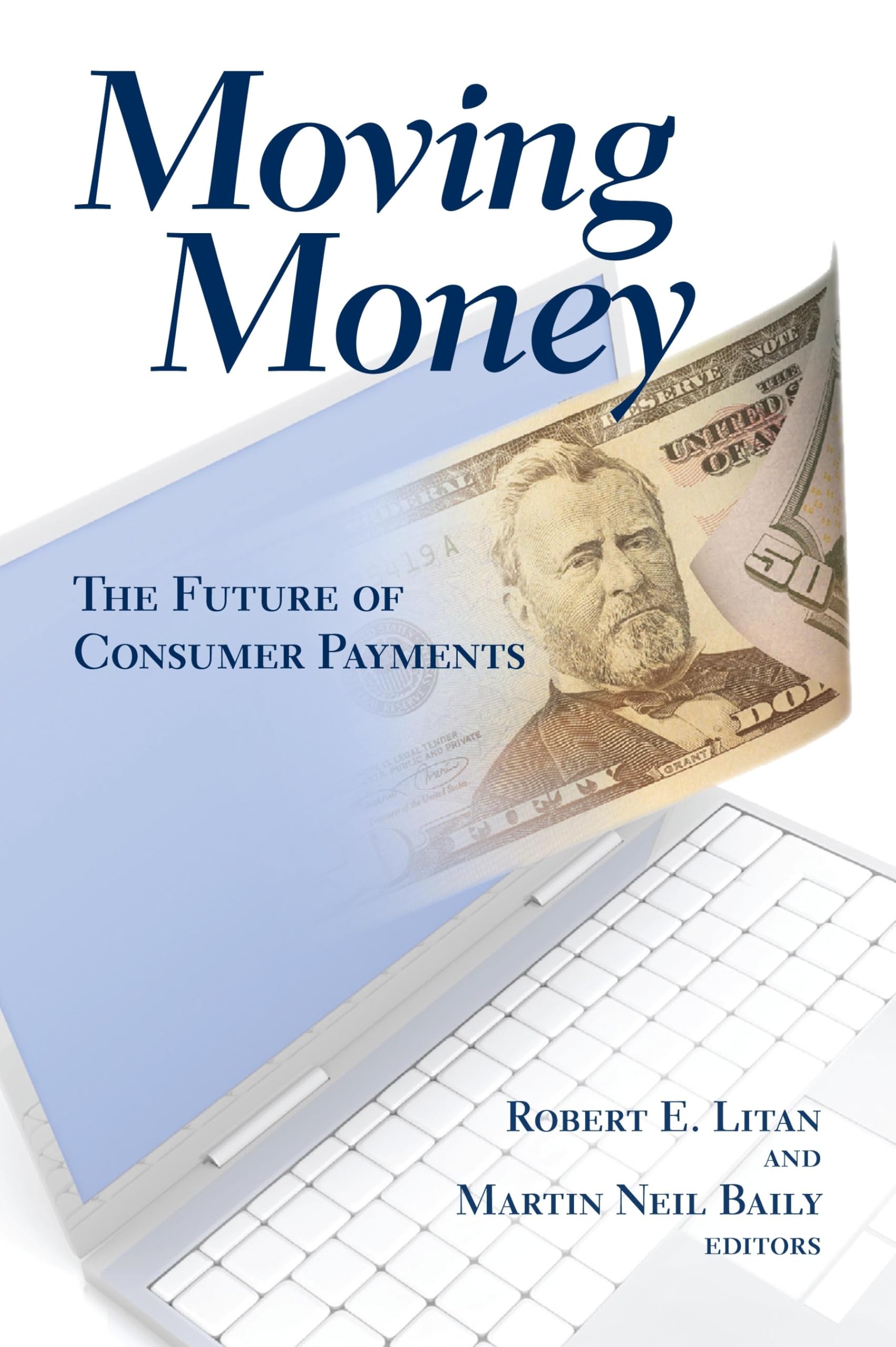
Once We Paid For Things With Bills, Coins, Or Checks. Today We Pay With Zeroes And Onesdigital Entries On Credit And Debit Cards, Or Electronic Messages Sent Over The Internet. In Moving Money, Distinguished Analysts Explore This Trend, Its Development And Likely Future, And The Ramifications Of This Transformation.This Is A Book About Money As A Medium Of Exchangein The Past, In The Present, But Particularly In The Future. What Forms Has Money Taken Over The Years? Moreover, How Have Those Means Of Payment Changed In Recent Years, And How Will They Develop In The Future? And What (If Anything) Should Policymakers Do To Facilitate Those Changes, Or At Least Allow Them To Develop And Mature? Brookings Economists Robert E. Litan And Martin Neil Baily And A Distinguished Group Of Experts Dissect These Issues And Peer Into The Future Of Consumer Payments.The Landscape Of The Consumer Payments Industry Will Be Shaped At Least In Part By Public Policies. Historically, Governments Have Had Monopolies On The Manufacture Of Money. Any Form Of Payment Clearly Requires Trust On The Part Of Both The Seller And The Buyer, And The Government Must Establish And Enforce Laws To Secure This Relationship. More Controversial Is The Issue Of Whether, And To What Extent, Government Is Also Needed To Protect The Market In Private Sector Payments Systems.Why Do These Issues Matter? The Payments Industry Is A Large And Important Sector Of Developed Economies. In The United States, Privatesector Payments Providers Generate Approximately $280 Billion A Year In Revenue, While The Government Invests Substantial Resources Into Making Money (Minting Coins And Printing Bills) Or Moving It (Via Checks And Various Electronic Transfers). And The Way We Pay For Things Influences Our Purchaseswhat We Spend Money On, How Much We Spend, And Where We Spend It. Thus The Future Of Consumer Payments Is Intertwined With The Health Of National Economies.Contributors: Martin Neil Baily (Brookings), Thomas P. Brown (O'Melveny & Myers), Kenneth Chenault (American Express Company), Vijay D'Silva (Mckinsey And Company), Nicholas Economides (New York University), David S. Evans (Market Platform Dynamics), Robert E. Litan (Brookings And Kaufmann Foundation), Drazen Prelec (Massachusetts Institute Of Technology), Richard Schmalensee (Massachusetts Institute Of Technology)'
⚠️ WARNING (California Proposition 65):
This product may contain chemicals known to the State of California to cause cancer, birth defects, or other reproductive harm.
For more information, please visit www.P65Warnings.ca.gov.