
Title
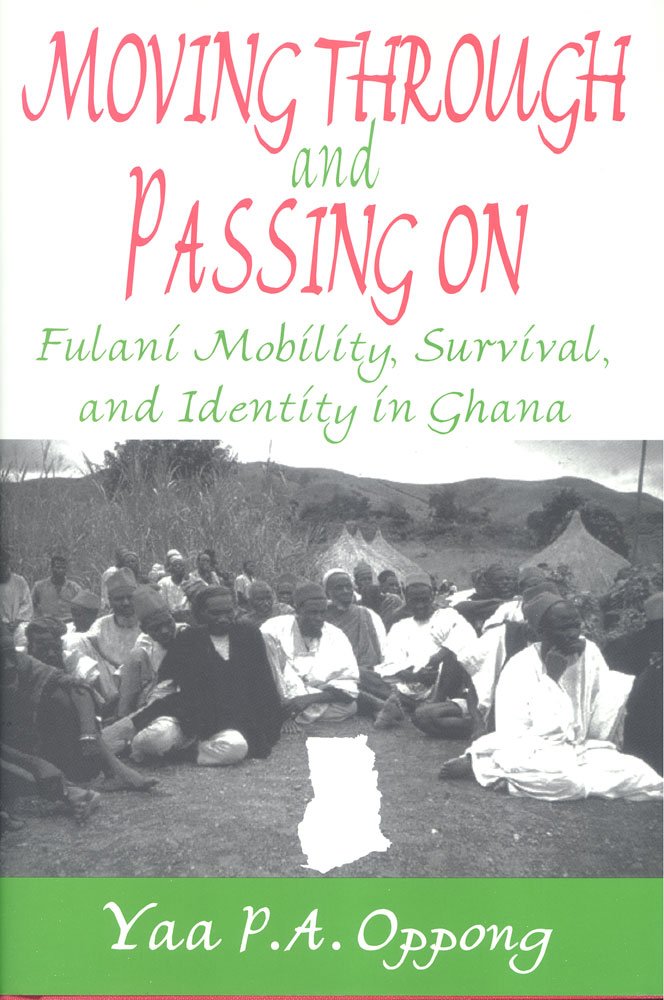
Moving Through and Passing On: Fulani Mobility, Survival and Identity in Ghana,New
Sold by Ergodebooks, an authorized reseller.
Returns accepted within 30 days | support@ergodebooks.com
Shipping Information
- Free Standard Shipping — United States only
- Processing Time: 3–5 business days
- Estimated Delivery: 6–10 business days after dispatch
- Double-boxed, fully insured & discreetly packaged
- Tracking number sent via email once dispatched
Returns & Refund
Returns accepted within 30 days of delivery.
Damaged or Defective Item
Free return shipping + replacement or full refund
Wrong Item Received
Free return shipping + replacement or full refund
Change of Mind
Return shipping at customer's expense · 25% restocking fee applies
Payment Option

The Fulani are one of West Africa's most populous and geographically dispersed ethnic groups. Commonly thought of as a pastoral people, primarily engaged in cattle herding, Fulani peoples are in reality highly differentiated in livelihood and patterns of mobility. Despite having a long history of residence in Ghana, Fulani are considered 'aliens' in the eyes of the state and 'strangers' by the various ethnic groups among whom they reside. Among Fulani themselves, differences of place, circumstance, and experience have generated parallel ambigoities on matters of identity and survival. In Moving Through and Passing On, Yaa P.A. Oppong focuses on the Fulani of the Greater Accra region to offer the first detailed account of the lives of this transnational community in Ghana.Based on eighteen months of ethnographic fieldwork, Oppong develops detailed case studies and draws upon over two hundred indepth life histories to explore issues of mobility, survival, and identity among this spacially dispersed and diverse group. Using perspectives and insights gained from oral life histories, private and public ceremonies, and ethnic associations, she examines the sites and circumstances in which people profess to be the 'same' or 'different' from one another. The markers of Fulani identityas recognized by Fulani and nonFulani alikeare examined. Oppong also explores the factors that allow them, as a distinct ethnic category, to maintain and perpetuate this identity and viability in Greater Accra. The metaphoric analogy of 'construction sites' is employed to define the explicit and implicit events and recurring processes through which people conceive of themselves as Fulani. These locations and contexts of action include ethnic associations, public gatherings, and common rites of passage. The recurring processes include genealogical reckoning of kinship and endogamous marriage transactions, and the ways in which ties of descent and filiation are used to enhance individual survival and family development goals.In tracing Fulani mobility, survival, and identity across space and through time, Oppong connects her investigation to universal experiences of migration, social change, education, and family life. Moving Through and Passing On will be of interest to anthropologists, sociologists, and Africa area specialists.
⚠️ WARNING (California Proposition 65):
This product may contain chemicals known to the State of California to cause cancer, birth defects, or other reproductive harm.
For more information, please visit www.P65Warnings.ca.gov.