
Title
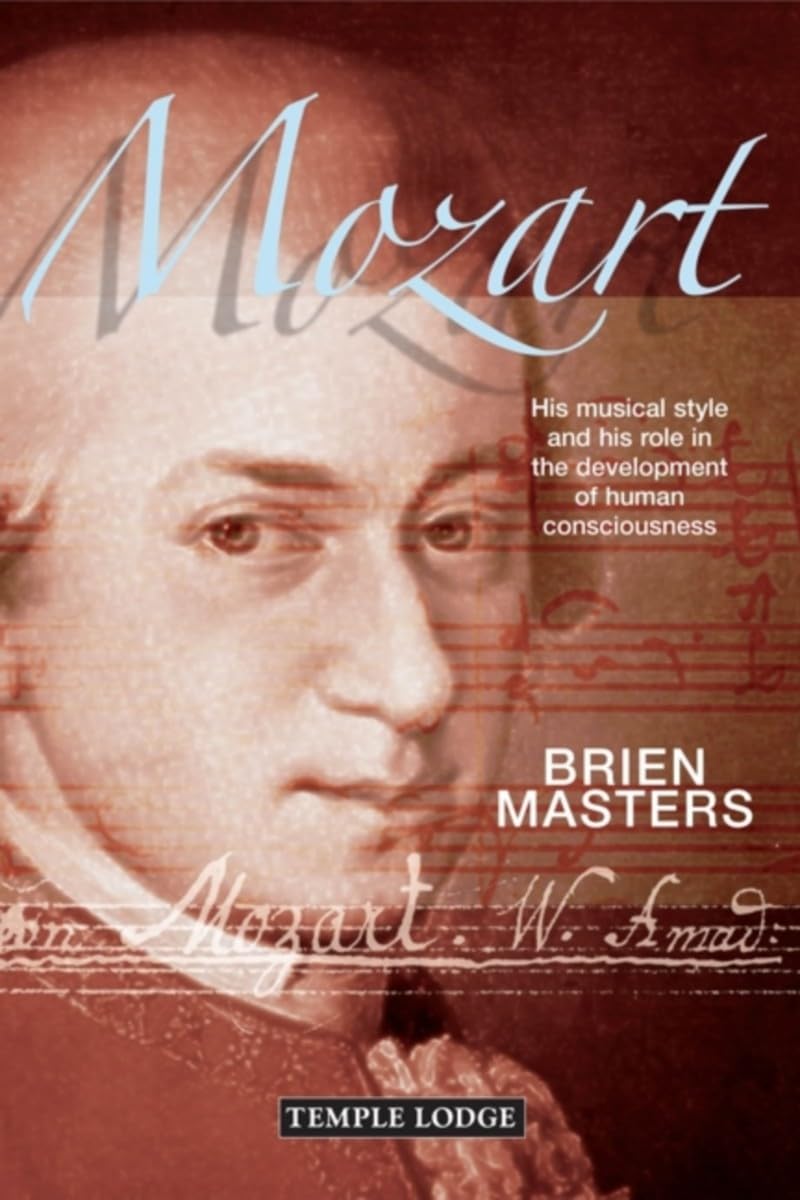
Mozart: His Musical Style and His Role in the Development of Human Consciousness,New
Sold by Ergodebooks, an authorized reseller.
Returns accepted within 30 days | support@ergodebooks.com
Shipping Information
- Free Standard Shipping — United States only
- Processing Time: 3–5 business days
- Estimated Delivery: 6–10 business days after dispatch
- Double-boxed, fully insured & discreetly packaged
- Tracking number sent via email once dispatched
Returns & Refund
Returns accepted within 30 days of delivery.
Damaged or Defective Item
Free return shipping + replacement or full refund
Wrong Item Received
Free return shipping + replacement or full refund
Change of Mind
Return shipping at customer's expense · 25% restocking fee applies
Payment Option

When he was first introduced to the idea that human consciousness has been evolving over the centuries and millennia, Brien Masters discovered the possibility of gaining insight into this phenomenon by examining the musical styles of various classical composers. Following years of musical study and practice, in Mozarts music he detected a reflection of humanitys emerging consciousness of selfhood and individuality.Two hundred and fifty years after his birth, Mozart continues to be acknowledged universally as a musical genius. Recognition of his work, however, goes beyond the pleasure we derive from listening to his music. In the 1990s, psychologists discovered the socalled Mozart Effect, the notion that listening to Mozart enhances mental capacities and even health. In this study, the author considers Mozart in relation to the evolution of human consciousness.Could Mozarts music affect changes in human makeup? Masters studies Mozarts musical style and considers the nature of the human I. By analyzing Mozarts compositions, the author shows how the principles of the I are particularly evident his music. Masters tells us that his book may be read as his attempt to describe the selfs journey toward the richness of Mozarts musical style [and] to shed Mozartean light onto the self as the central element in the human constitution. The former perspective is a comment on the significance of his genius appearing in the second half of the eighteenth century. The latter has relevance, among other things, for the debate on and understanding of the socalled Mozart Effect today.Relevant musical scores are included for those who wish to study the relevant pieces in greater detail.
⚠️ WARNING (California Proposition 65):
This product may contain chemicals known to the State of California to cause cancer, birth defects, or other reproductive harm.
For more information, please visit www.P65Warnings.ca.gov.