If you have any questions, you are always welcome to contact us. We'll get back to you as soon as possible, withing 24 hours on weekdays.
Customer service
All questions about your order, return and delivery must be sent to our customer service team by e-mail at yourstore@yourdomain.com
Sale & Press
If you are interested in selling our products, need more information about our brand or wish to make a collaboration, please contact us at press@yourdomain.com
Help
If you have any questions, you are always welcome to contact us. We'll get back to you as soon as possible, withing 24 hours on weekdays.
Customer service
All questions about your order, return and delivery must be sent to our customer service team by e-mail at yourstore@yourdomain.com
Sale & Press
If you are interested in selling our products, need more information about our brand or wish to make a collaboration, please contact us at press@yourdomain.com
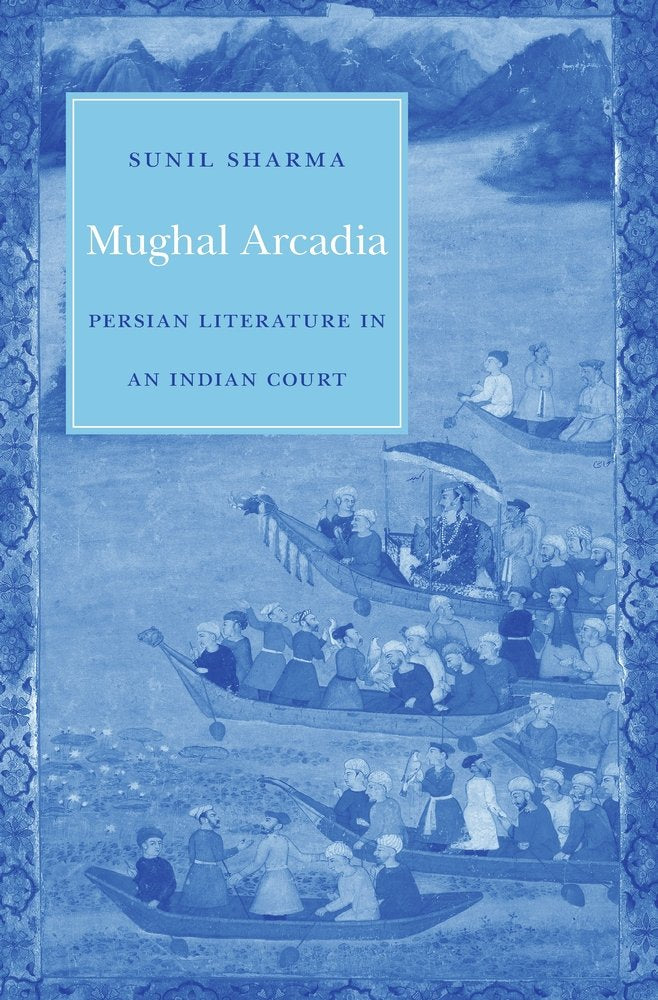
At its height in the sixteenth and seventeenth centuries, the Mughal Empire was one of the largest empires in Eurasia, with territory extending over most of the Indian subcontinent and much of presentday Afghanistan. As part of the Persianate world that spanned from the Bosphorus to the Bay of Bengal, Mughal rulers were legendary connoisseurs of the arts. Their patronage attracted poets, artists, and scholars from all parts of the eastern Islamic world. Persian was the language of the court, and poets from Safavid Iran played a significant role in the cultural life of the nobility. Mughal Arcadia explores the rise and decline of Persian court poetry in India and the invention of an enduring ideafound in poetry, prose, paintings, and architectureof a literary paradise, a Persian garden located outside Iran, which was perfectly exemplified by the valley of Kashmir.Poets and artists from Iran moved freely throughout the Mughal empire and encountered a variety of cultures and landscapes that inspired aesthetic experiments which continue to inspire the visual arts, poetry, films, and music in contemporary South Asia. Sunil Sharma takes readers on a dazzling literary journey over a vast geographic terrain and across two centuries, from the accession of the first emperor, Babur, to the throne of Hindustan to the reign of the sixth great Mughal, Aurangzeb, in order to illuminate the life of Persian poetry in India. Along the way, we are offered a rare glimpse into the social and cultural life of the Mughals.
⚠️ WARNING (California Proposition 65):
This product may contain chemicals known to the State of California to cause cancer,
birth defects, or other reproductive harm.
For MAP (Minimum Advertised Price) violations and Intellectual Property (IP) or Trademark concerns, please contact:
support@ergodebooks.com
⚠️ California Proposition 65 Warning: Some products sold on this website may expose you to chemicals known to the State of California to cause cancer, birth defects, or other reproductive harm. For more information, visit www.P65Warnings.ca.gov.