
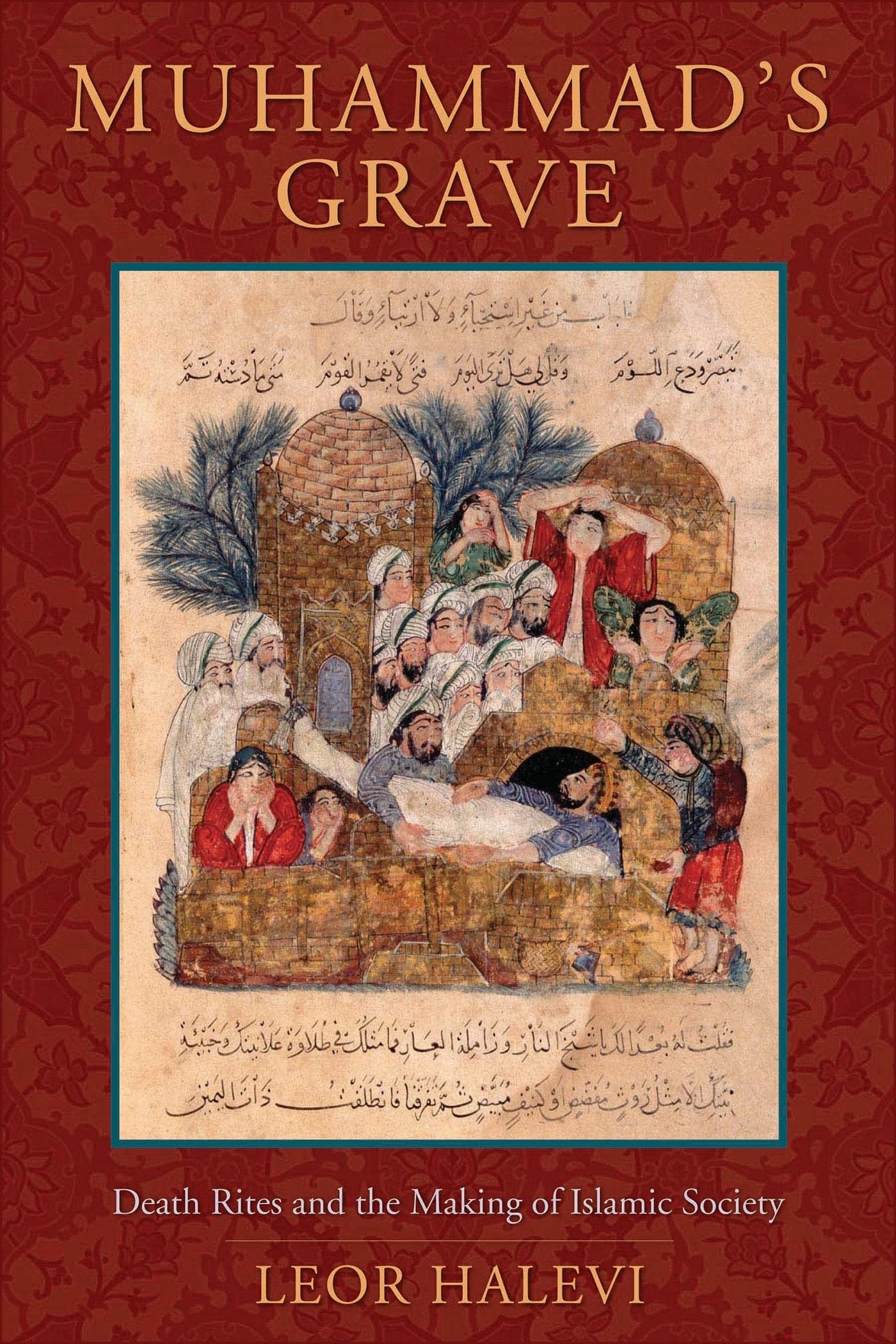
Title
Muhammad'S Grave: Death Rites And The Making Of Islamic Society
Sold by Ergodebooks, an authorized reseller.
Returns accepted within 30 days | support@ergodebooks.com
Shipping Information
- Free Standard Shipping — United States only
- Processing Time: 3–5 business days
- Estimated Delivery: 6–10 business days after dispatch
- Double-boxed, fully insured & discreetly packaged
- Tracking number sent via email once dispatched
Returns & Refund
Returns accepted within 30 days of delivery.
Damaged or Defective Item
Free return shipping + replacement or full refund
Wrong Item Received
Free return shipping + replacement or full refund
Change of Mind
Return shipping at customer's expense · 25% restocking fee applies
Payment Option

Winner, 2007 Albert Hourani Book Award, Middle East Studies Associationwinner, 2008 Award For Excellence In The Study Of Religion In Analyticaldescriptive Studies, American Academy Of Religionwinner, 2011 John Nicholas Brown Prize, Medieval Academy Of Americawinner, 2008 Ralph Waldo Emerson Award, Phi Beta Kappashortlisted, 2008 Best First Book In The History Of Religions, American Academy Of Religionlonglisted, 2008 Cundill International Prize And Lecture In History At Mcgill Universityin His Probing Study Of The Role Of Death Rites In The Making Of Islamic Society, Leor Halevi Imaginatively Plays Prescriptive Texts Against Material Culture And Advances New Ways Of Interpreting Highly Contested Sources. His Original Research Reveals That Religious Scholars Of The Early Islamic Period Produced Codes Of Funerary Law Not Only To Define The Handling Of A Muslim Corpse But Also To Transform Everyday Urban Practices. Relying On Oral Traditions, These Scholars Established New Social Patterns In The Cities Of Arabia, Mesopotamia, And The Eastern Mediterranean. They Distinguished Islamic Rites From Christian, Jewish, And Zoroastrian Rites And Changed The Way Men And Women Interacted Publicly And Privately.In Each Chapter Halevi Explores A Different Layer Of Human Interaction, Following The Movement Of The Corpse From The Deathbed To The Grave. In The Process He Analyzes The Real And Imaginary Relationships Between Husbands And Wives, Prayer Leaders And Mourners, And Even Dreamers And The Dead. He Describes How Muslims Wailed For The Deceased, Prepared Corpses For Burial, Marched In Funerary Processions, And Prayed For The Dead, Highlighting The Specific Economic And Political Factors Involved In These Rituals As Well As Key Religious And Sexual Divisions.Offering A Unique Perspective On The Making Of Islamic Social And Religious Ideals During This Early Period, Halevi Forges A Fascinating Link Between The Development Of Funerary Rites And The Efforts Of An Emerging Religion To Carve Out Its Own, Distinct Identity. Muhammad'S Grave Is A Groundbreaking History Of The Rise Of Islam And The Roots Of Contemporary Muslim Attitudes Toward The Body And Society.
⚠️ WARNING (California Proposition 65):
This product may contain chemicals known to the State of California to cause cancer, birth defects, or other reproductive harm.
For more information, please visit www.P65Warnings.ca.gov.