
Title
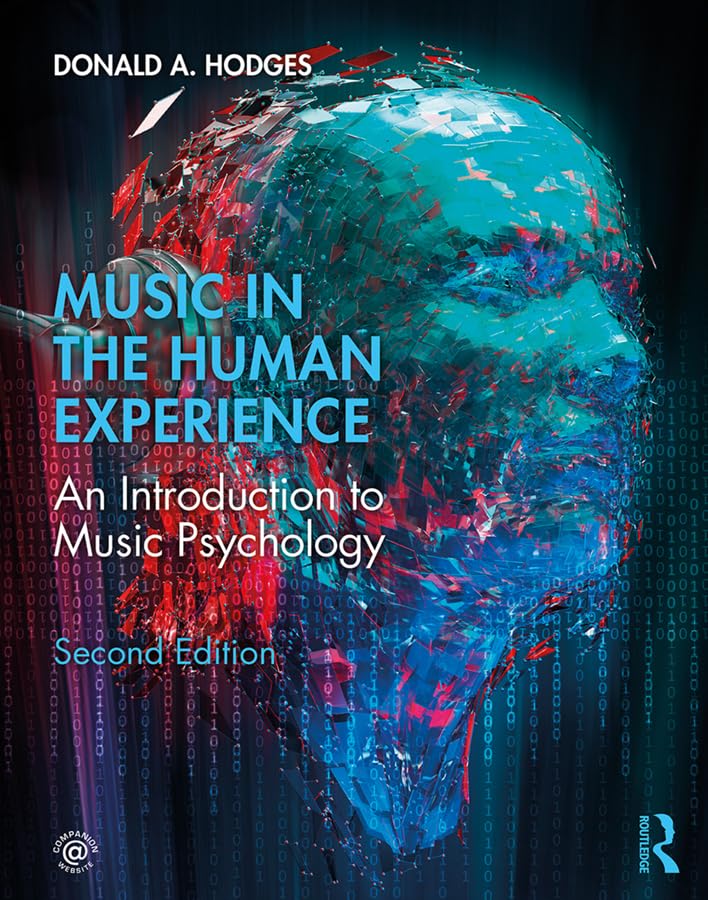
Music in the Human Experience: An Introduction to Music Psychology,Used
Sold by Ergodebooks, an authorized reseller.
Returns accepted within 30 days | support@ergodebooks.com
Shipping Information
- Free Standard Shipping — United States only
- Processing Time: 3–5 business days
- Estimated Delivery: 6–10 business days after dispatch
- Double-boxed, fully insured & discreetly packaged
- Tracking number sent via email once dispatched
Returns & Refund
Returns accepted within 30 days of delivery.
Damaged or Defective Item
Free return shipping + replacement or full refund
Wrong Item Received
Free return shipping + replacement or full refund
Change of Mind
Return shipping at customer's expense · 25% restocking fee applies
Payment Option

Music in the Human Experience: An Introduction to Music Psychology, Second Edition, is geared toward music students yet incorporates other disciplines to provide an explanation for why and how we make sense of music and respond to itcognitively, physically, and emotionally. All human societies in every corner of the globe engage in music. Taken collectively, these musical experiences are widely varied and hugely complex affairs. How did human beings come to be musical creatures? How and why do our bodies respond to music? Why do people have emotional responses to music? Music in the Human Experience seeks to understand and explain these phenomena at the core of what it means to be a human being.New to this edition: Expanded references and examples of nonWestern musical styles Updated literature on philosophical and spiritual issues Brief sections on tuning systems and the acoustics of musical instruments A section on creativity and improvisation in the discussion of musical performance New studies in musical genetics Greatly increased usage of explanatory figures
⚠️ WARNING (California Proposition 65):
This product may contain chemicals known to the State of California to cause cancer, birth defects, or other reproductive harm.
For more information, please visit www.P65Warnings.ca.gov.
- Q: What is the binding type of this book? A: This book is a paperback edition. Paperback bindings are flexible and lightweight, making them easy to carry and read.
- Q: How many pages does this book have? A: This book has four hundred fifty-six pages. It offers a comprehensive exploration of music psychology and human experience.
- Q: What are the dimensions of this book? A: The book measures seven point five two inches in length, one point one inches in width, and nine point five inches in height. These dimensions make it a suitable size for both reading and storage.
- Q: Who is the author of this book? A: The author of this book is Donald A. Hodges. He is known for his expertise in music psychology and education.
- Q: What is the primary category of this book? A: The primary category of this book is Appreciation. It focuses on understanding music's role in human experience and psychology.
- Q: Is this book suitable for beginners? A: Yes, this book is suitable for beginners. It is designed for music students but is accessible for anyone interested in music psychology.
- Q: How can I use this book effectively? A: You can use this book as a textbook for music psychology courses or for personal enrichment. It is structured to provide insights into music's cognitive, emotional, and physical aspects.
- Q: Is this book appropriate for academic study? A: Yes, this book is appropriate for academic study. It includes expanded references and updated literature on various aspects of music and psychology.
- Q: How should I store this book to keep it in good condition? A: Store this book in a cool, dry place away from direct sunlight. This will help preserve the paperback binding and pages.
- Q: Can I lend this book to others? A: Yes, you can lend this book to others. Just ensure it is returned in good condition to maintain its quality.
- Q: Are there any specific care instructions for this book? A: No specific care instructions are required for this book. Just handle it gently and store it properly.
- Q: Is there a warranty or return policy for this book? A: Typically, books do not come with a warranty. However, you can check the return policy of the retailer from which you purchased it.
- Q: What if the book arrives damaged? A: If the book arrives damaged, you should contact the retailer for a return or exchange. Most retailers have customer service to assist with such issues.
- Q: How does this book compare to other music psychology texts? A: This book is unique due to its interdisciplinary approach, combining insights from various fields. It also includes updated studies and illustrations not commonly found in other texts.
- Q: Is this book recommended for advanced readers? A: Yes, advanced readers may find this book valuable. It provides in-depth discussions and references that can enhance understanding of complex music psychology concepts.
- Q: What are the key themes covered in this book? A: Key themes include cognitive responses to music, emotional connections, non-Western musical styles, and the role of creativity and improvisation.