If you have any questions, you are always welcome to contact us. We'll get back to you as soon as possible, withing 24 hours on weekdays.
Customer service
All questions about your order, return and delivery must be sent to our customer service team by e-mail at yourstore@yourdomain.com
Sale & Press
If you are interested in selling our products, need more information about our brand or wish to make a collaboration, please contact us at press@yourdomain.com
Help
If you have any questions, you are always welcome to contact us. We'll get back to you as soon as possible, withing 24 hours on weekdays.
Customer service
All questions about your order, return and delivery must be sent to our customer service team by e-mail at yourstore@yourdomain.com
Sale & Press
If you are interested in selling our products, need more information about our brand or wish to make a collaboration, please contact us at press@yourdomain.com
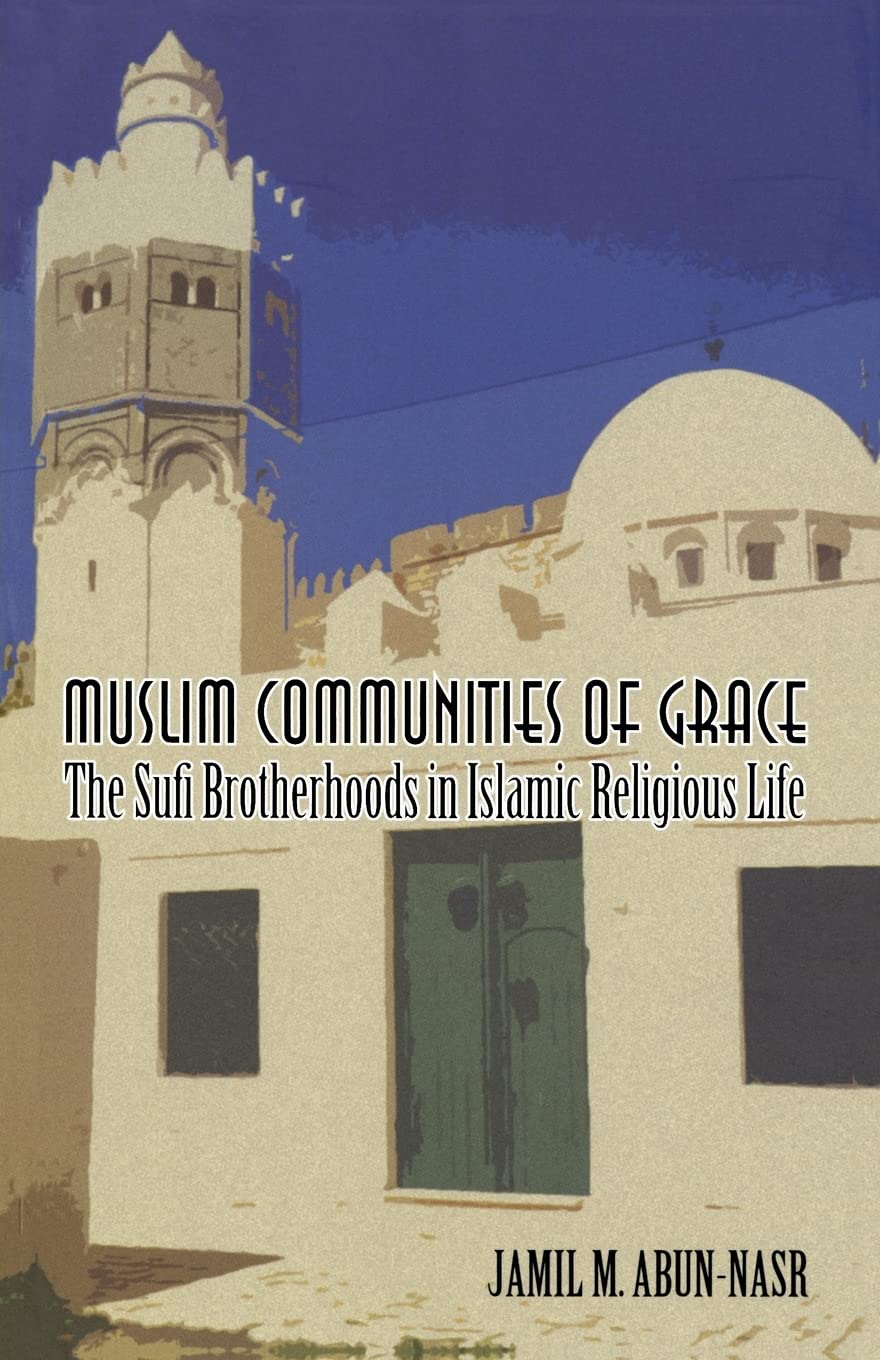
Since the eighteenth century, adherence to Sufism, the mystical tradition of Islam, has been associated with membership in one of the Sufi brotherhoods. These brotherhoods constitute distinct religious communities within the general community of Islam. Jamil M. AbunNasr describes them as 'communities of grace' because his readings in Sufi hagiographies have convinced him that divine grace is the central element of their system of beliefs.In his reconstruction of the development of the Sufi tradition, AbunNasr examines the emergence of Sufism's central tenets and the factors that account for their appeal to Muslims in different lands. Drawing on original Sufi sources, he contends that, in their formative period, Sufi tenets were shaped by the caliphs' inability to live up to the ideal the Prophet represented in the Muslim community: that political leadership was a subordinate function of religious guidance. He also contends that the Sufi brotherhoods' form of religious communalism emerged from the adaptation of the spiritual authority that Sufis ascribed to their leaders to the Muslims' major pious concerns. In the last two chapters AbunNasr examines the reaction of the Sufi brotherhoods' shaykhs to European colonial rule, the campaign directed against them by Muslim reformers of the Salafiyya school, and the reliance of the independent Muslim states' rulers on their support in counteracting the hostility of the Muslim reformers, as well as, since the 1970s, the Islamists, to their secular development plans.
⚠️ WARNING (California Proposition 65):
This product may contain chemicals known to the State of California to cause cancer,
birth defects, or other reproductive harm.
For MAP (Minimum Advertised Price) violations and Intellectual Property (IP) or Trademark concerns, please contact:
support@ergodebooks.com
⚠️ California Proposition 65 Warning: Some products sold on this website may expose you to chemicals known to the State of California to cause cancer, birth defects, or other reproductive harm. For more information, visit www.P65Warnings.ca.gov.