
Title
Muslim Society (Cambridge Studies in Social and Cultural Anthropology, Series Number 32),Used
Sold by Ergodebooks, an authorized reseller.
Returns accepted within 30 days | support@ergodebooks.com
Shipping Information
- Free Standard Shipping — United States only
- Processing Time: 3–5 business days
- Estimated Delivery: 6–10 business days after dispatch
- Double-boxed, fully insured & discreetly packaged
- Tracking number sent via email once dispatched
Returns & Refund
Returns accepted within 30 days of delivery.
Damaged or Defective Item
Free return shipping + replacement or full refund
Wrong Item Received
Free return shipping + replacement or full refund
Change of Mind
Return shipping at customer's expense · 25% restocking fee applies
Payment Option

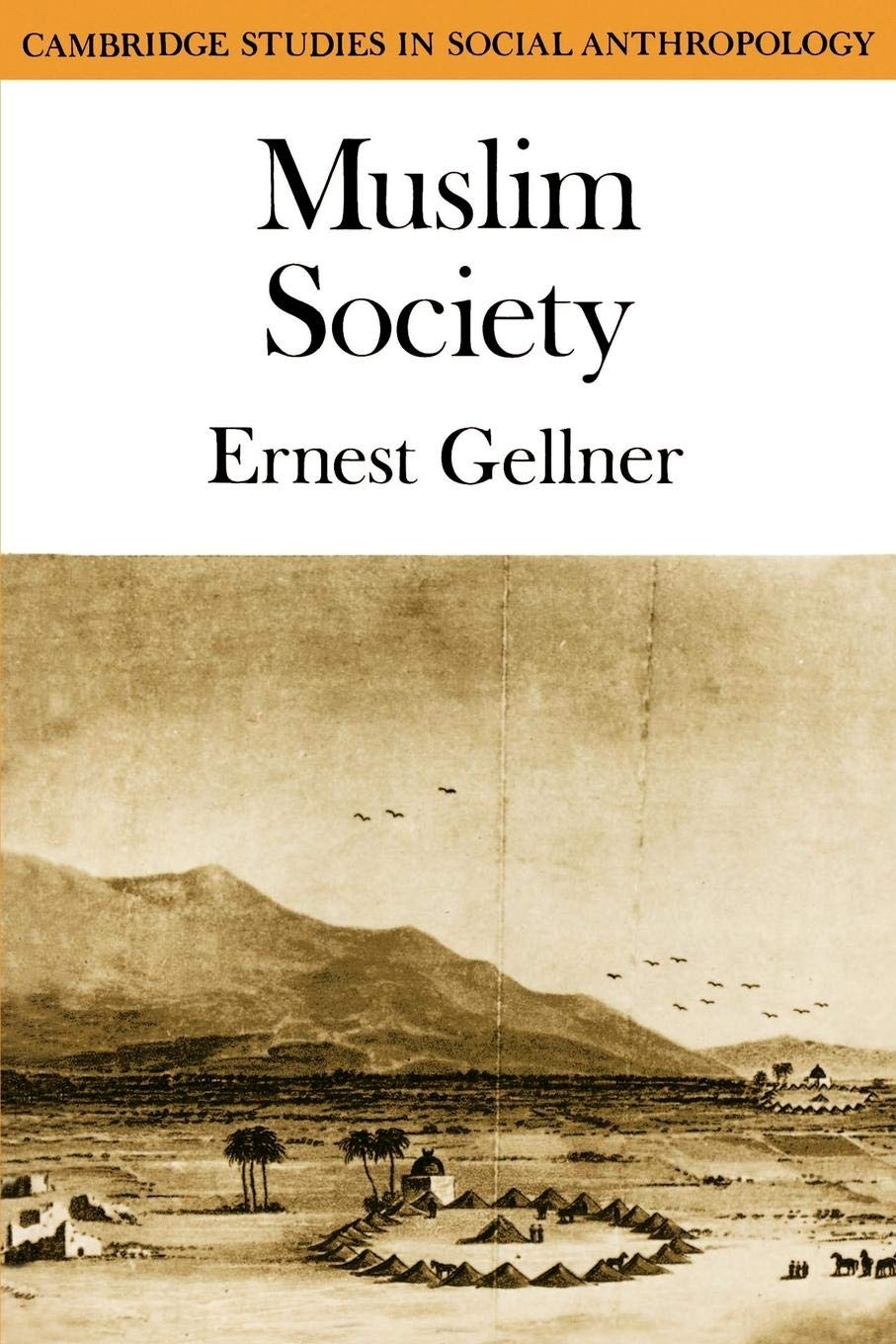
Of all the great world religions, Islam appears to have the most powerful political appeal in the twentieth century. It sustains some severely traditional and conservative regimes, but it is also capable of generating intense revolutionary ardour and of blending with extreme social radicalism. As an agent of political mobilisation, it seems to be overtaking Marxism, arid surpassing all other religions. The present book seeks the roots of this situation in the past. The traditional Muslim society of the arid zone has, in the past, displayed remarkable stability and homogeneity, despite great political fragmentation, and the absence of a centralised religious hierarchy. The book explores the mechanisms which have contributed to this result a civilisation in which (in the main) weak states coexisted with a strong culture, which had a powerful hold over the populations under its sway. A literate Great Tradition, in the keeping of urban scholars, lived side by side with a more emotive, ecstatic folk tradition, ill tile keeping of holy lineages, religious brotherhoods and freelance saints. One tradition was sustained by the urban trading class and periodically swept the rest of the society in waves of revivalist enthusiasm; the other was based on the multiple functions it performed in rural tribal society and amongst the urban poor. The two traditions were intertwined, yet remained in latent tension which from time to time came to tile surface. The book traces the manner in which the impact of the modern world, acting through colonialism arid industrialisation upset the once stable balance, and helped the erstwhile urban Great Tradition to become the pervasive arid dominant one, culminating in the zealous arid radical Islam which is so prominent now. The argument is both formulated in the abstract and illustrated by a series of case studies and examinations of specific aspects, and critical examinations of rival interpretations.
⚠️ WARNING (California Proposition 65):
This product may contain chemicals known to the State of California to cause cancer, birth defects, or other reproductive harm.
For more information, please visit www.P65Warnings.ca.gov.