
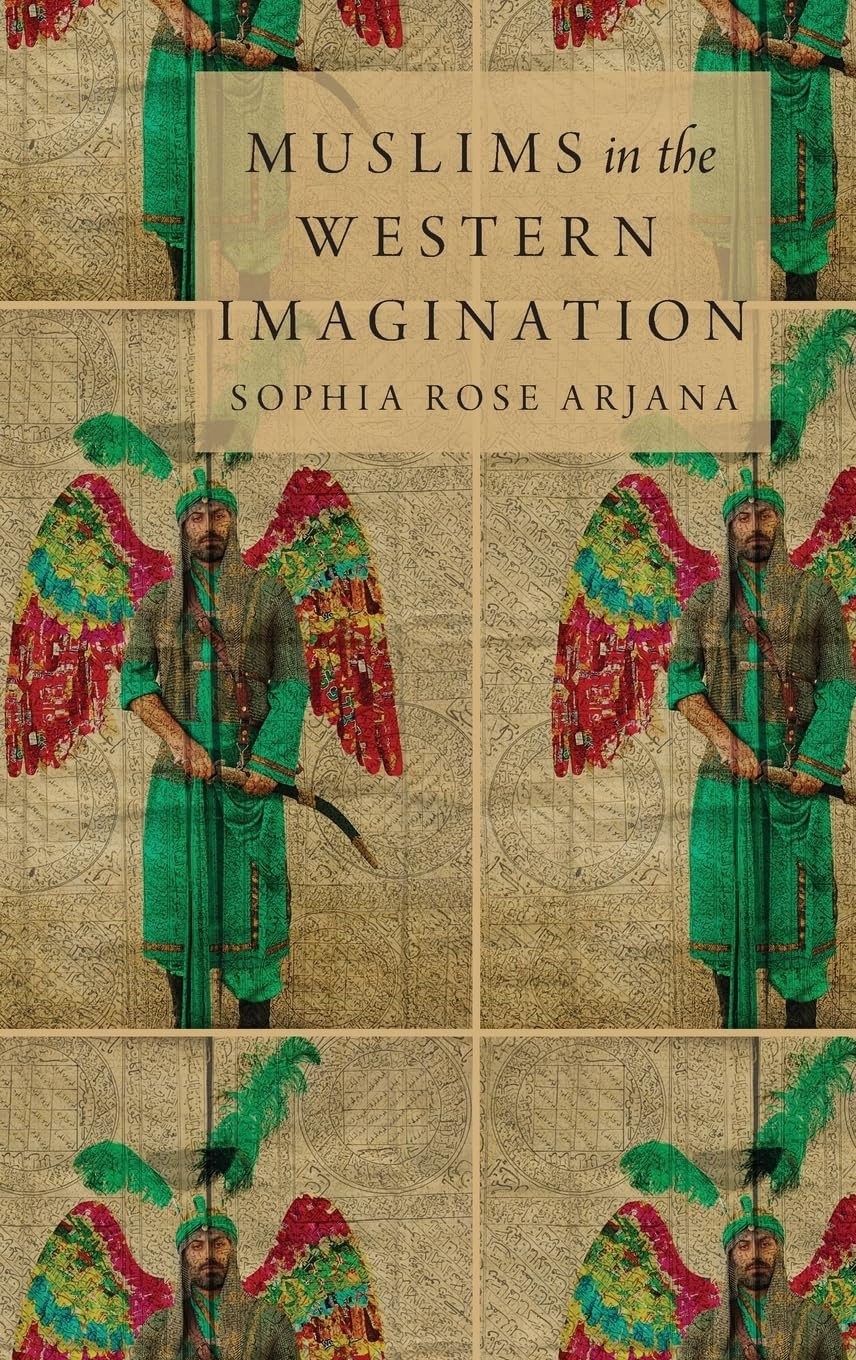
Title
Muslims In The Western Imagination
Sold by Ergodebooks, an authorized reseller.
Returns accepted within 30 days | support@ergodebooks.com
Shipping Information
- Free Standard Shipping — United States only
- Processing Time: 3–5 business days
- Estimated Delivery: 6–10 business days after dispatch
- Double-boxed, fully insured & discreetly packaged
- Tracking number sent via email once dispatched
Returns & Refund
Returns accepted within 30 days of delivery.
Damaged or Defective Item
Free return shipping + replacement or full refund
Wrong Item Received
Free return shipping + replacement or full refund
Change of Mind
Return shipping at customer's expense · 25% restocking fee applies
Payment Option

A Choice 2015 Outstanding Academic Titlethroughout History, Muslim Men Have Been Depicted As Monsters. The Portrayal Of Humans As Monsters Helps A Society Delineate Who Belongs And Who, Or What, Is Excluded. Even When Symbolic, As In Post9/11 Zombie Films, Muslim Monsters Still Function To Define Muslims As Nonhuman Entities. These Are Not Depictions Of Muslim Men As Malevolent Human Characters, But Rather As Creatures That Occupy The Imagination Nonhumans That Exhibit Their Wickedness Outwardly On The Skin. They Populate Medieval Tales, Renaissance Paintings, Shakespearean Dramas, Gothic Horror Novels, And Hollywood Films. Through An Exhaustive Survey Of Medieval, Early Modern, And Contemporary Literature, Art, And Cinema, Muslims In The Western Imagination Examines The Dehumanizing Ways In Which Muslim Men Have Been Constructed And Represented As Monsters, And The Impact Such Representations Have On Perceptions Of Muslims Today.The Study Is The First To Present A Genealogy Of These Creatures, From The Demons And Giants Of The Middle Ages To The Hunchbacks With Filed Teeth That Are Featured In The 2007 Film 300, Arguing That Constructions Of Muslim Monsters Constitute A Recurring Theme, First Formulated In Medieval Christian Thought. Sophia Rose Arjana Shows How Muslim Monsters Are Often Related To Jewish Monsters, And More Broadly To Christian Antisemitism And Anxieties Surrounding African And Other Foreign Bodies, Which Involves Both Religious Bigotry And Fears Surrounding Bodily Difference. Arjana Argues Persuasively That These Dehumanizing Constructions Are Deeply Embedded In Western Consciousness, Existing Today As Internalized Beliefs And Practices That Contribute To The Culture Of Violenceboth Rhetorical And Physicalagainst Muslims.
⚠️ WARNING (California Proposition 65):
This product may contain chemicals known to the State of California to cause cancer, birth defects, or other reproductive harm.
For more information, please visit www.P65Warnings.ca.gov.
- Q: What is the page count of 'Muslims in the Western Imagination'? A: The book has two hundred eighty pages. It provides an in-depth exploration of how Muslim men are represented in various forms of media.
- Q: What are the dimensions of this book? A: The dimensions are six point three inches in length, zero point seventy-one inches in width, and nine point sixty-nine inches in height. These measurements make it a convenient size for reading.
- Q: What is the binding type of this book? A: This book is a hardcover edition. Hardcover bindings are known for their durability and are ideal for long-term use.
- Q: Who is the author of 'Muslims in the Western Imagination'? A: The author is Sophia Rose Arjana. She is known for her scholarly work on the representation of Muslims in Western culture.
- Q: What is the main theme of the book? A: The main theme explores the dehumanizing portrayals of Muslim men in Western media. It discusses how these portrayals have historically shaped societal attitudes towards Muslims.
- Q: Is this book suitable for academic use? A: Yes, it is highly suitable for academic use. The book was recognized as a Choice 2015 Outstanding Academic Title, emphasizing its scholarly value.
- Q: How does this book address the topic of representation? A: The book examines various forms of literature, art, and cinema to analyze the representation of Muslims. It highlights how these portrayals affect contemporary perceptions.
- Q: Can this book be used for research on Islamophobia? A: Yes, it can be a valuable resource for researching Islamophobia. The book discusses the historical roots of negative portrayals and their modern implications.
- Q: What type of audience would benefit from this book? A: Scholars, students, and anyone interested in cultural studies would benefit from this book. It provides critical insights into the intersection of media and identity.
- Q: How should I care for this hardcover book? A: To care for this hardcover book, keep it in a dry environment and avoid exposing it to direct sunlight. This helps maintain its condition over time.
- Q: Is this book appropriate for young readers? A: No, it is not specifically designed for young readers. The content is aimed at an adult audience and deals with complex themes.
- Q: How can I store this book to keep it in good condition? A: Store the book upright on a shelf, away from moisture. This prevents warping and keeps the pages intact.
- Q: What if I receive a damaged copy of the book? A: If you receive a damaged copy, you should contact the seller for a return or exchange. Most retailers have return policies to address such issues.
- Q: Can this book help in understanding cultural stereotypes? A: Yes, it provides insights into cultural stereotypes surrounding Muslims. The analysis helps in understanding the origins and impacts of these stereotypes.
- Q: Is there a digital version of this book available? A: It depends on the retailer. Some may offer an eBook version, but you should check with the specific platform for availability.
- Q: What makes this book a noteworthy academic title? A: It is noteworthy due to its comprehensive analysis and critical perspectives on representations of Muslims. Its recognition by Choice highlights its academic quality.