
Title
Must We Burn Sade?,Used
Sold by Ergodebooks, an authorized reseller.
Returns accepted within 30 days | support@ergodebooks.com
Shipping Information
- Free Standard Shipping — United States only
- Processing Time: 3–5 business days
- Estimated Delivery: 6–10 business days after dispatch
- Double-boxed, fully insured & discreetly packaged
- Tracking number sent via email once dispatched
Returns & Refund
Returns accepted within 30 days of delivery.
Damaged or Defective Item
Free return shipping + replacement or full refund
Wrong Item Received
Free return shipping + replacement or full refund
Change of Mind
Return shipping at customer's expense · 25% restocking fee applies
Payment Option

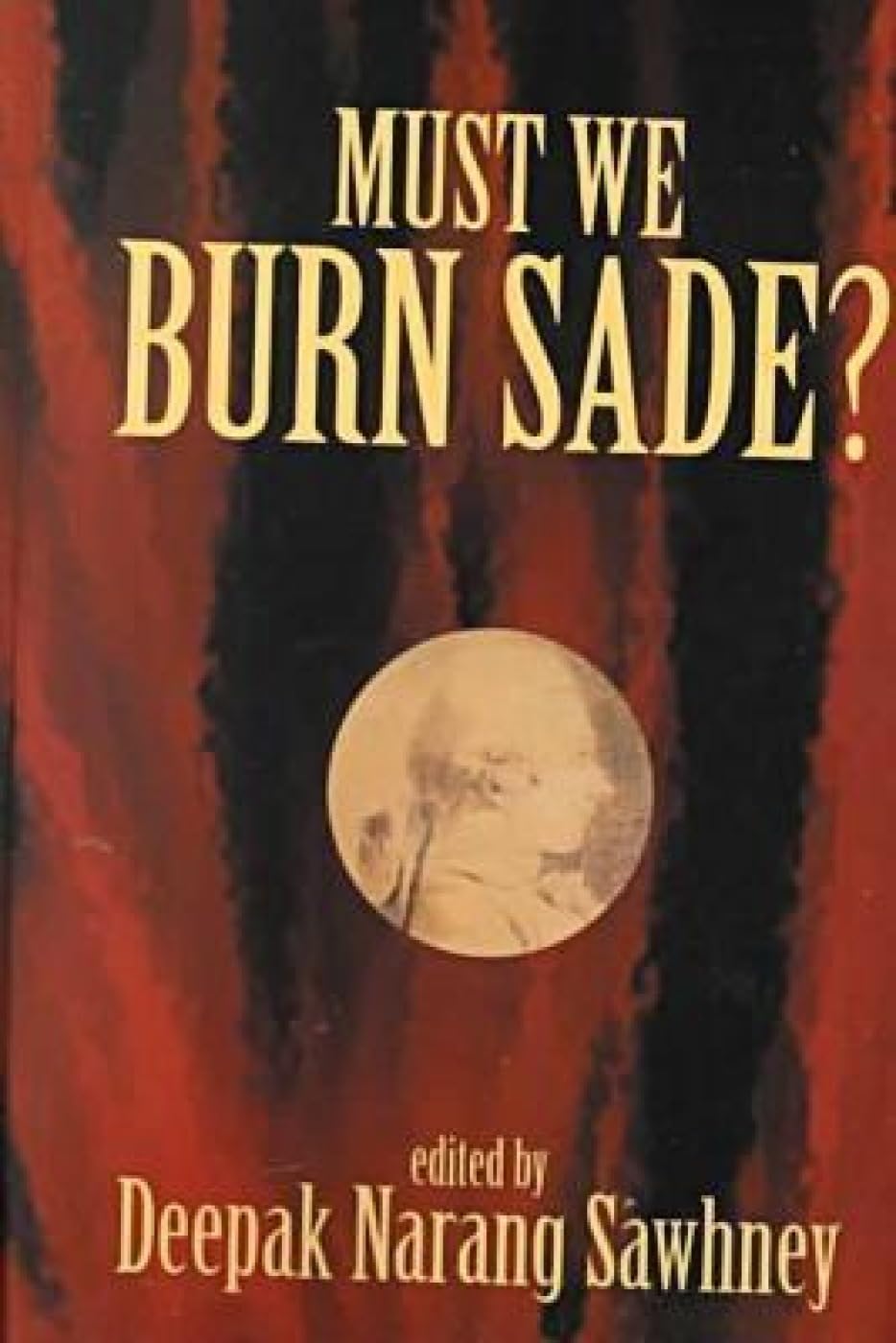
The Marquis de Sade (17401814) has been labeled everything from a sadomasochistic pornographer (The 120 Days of Sodom) to the fiction writer responsible for the ideas that led to the Nazi death camps. Must We Burn Sade? peels away the negative legacy that has shrouded Sade for too long. Deepak Narang Sawhney points out that 'Sade's legacy has been neglected, recreated, fictionalized, and venerated by medical guilds, literary hacks, religious detractors, and intellectual movements. In the past two centuries, Sade has come to represent many things for many people. . . . It is unclear whether we know Sade the writer or the apparatus which has been set up to either condemn or to sanctify his life and work.'By contrast, this intriguing collection of essays seeks to examine Sade for what he wasa writer of novels and letters, a creator of plays and stories, and an author of essays and political manifestos. The contributors examine the literary, theatrical, political, social, and philosophical aspects of Sade's work, acquitting him of the false accusations and trials that have plagued his name by revealing his influences and motivations, and by providing an understanding of society's fear of Sade. What is so alarming about Sade's books that civilized society has felt compelled to disassociate itself from his works? This volume forces us to rethink Sade. Included are essays by Kathy Acker, David Allison, Georges Bataille, Catherine Cusset, Lucienne FrappierMazur, Annie Le Brun, Alphonso Lingis, Stephen Pfohl, Deepak Narang Sawhney, Philippe Sollers, and Alistair Welchman.
⚠️ WARNING (California Proposition 65):
This product may contain chemicals known to the State of California to cause cancer, birth defects, or other reproductive harm.
For more information, please visit www.P65Warnings.ca.gov.
- Q: What is 'Must We Burn Sade?' about? A: 'Must We Burn Sade?' is a collection of essays examining the work and legacy of the Marquis de Sade, focusing on his contributions as a writer rather than the controversy surrounding his life.
- Q: Who is the author of 'Must We Burn Sade?' A: The book is edited by Deepak Narang Sawhney, who also contributes essays to the collection.
- Q: What topics are covered in the essays? A: The essays cover literary, theatrical, political, social, and philosophical aspects of Sade's work, aiming to provide a deeper understanding of his influences and motivations.
- Q: How many pages does 'Must We Burn Sade?' have? A: 'Must We Burn Sade?' contains 262 pages.
- Q: What is the condition of the book? A: The book is listed as 'Acceptable', which may indicate some wear but is still suitable for reading.
- Q: When was 'Must We Burn Sade?' published? A: 'Must We Burn Sade?' was published on October 1, 1999.
- Q: What is the binding type of the book? A: The book is available in a paperback binding.
- Q: Who are some contributors to the book? A: The book includes essays by notable contributors such as Kathy Acker, David Allison, Georges Bataille, and Philippe Sollers.
- Q: What is the main goal of the essays in this book? A: The main goal is to re-evaluate Sade's legacy by separating the myths from his actual contributions to literature and social thought.
- Q: In which category is 'Must We Burn Sade?' classified? A: 'Must We Burn Sade?' is classified under the category of Criticism & Theory.