
Title
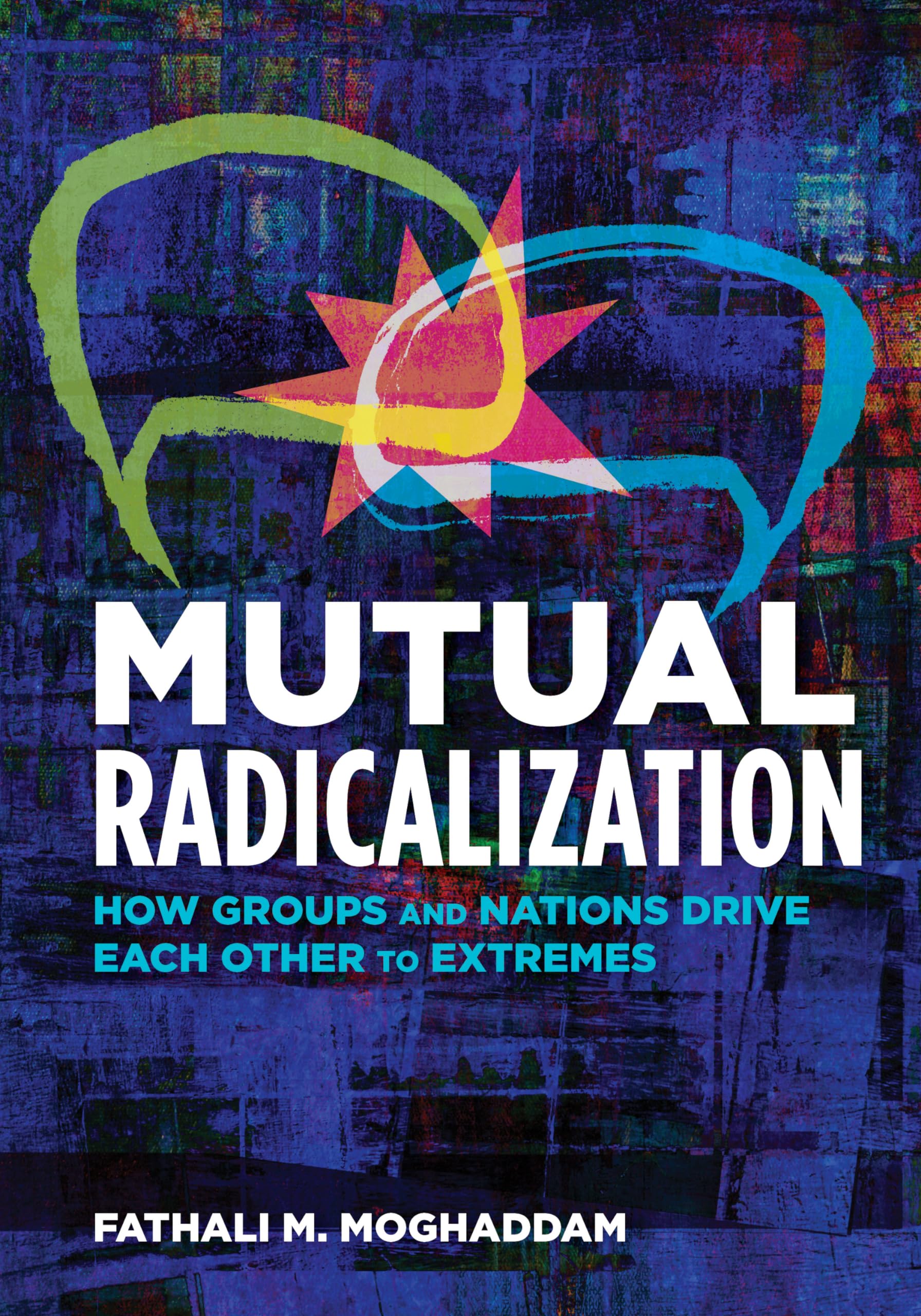
Mutual Radicalization: How Groups and Nations Drive Each Other to Extremes,New
Sold by Ergodebooks, an authorized reseller.
Returns accepted within 30 days | support@ergodebooks.com
Shipping Information
- Free Standard Shipping — United States only
- Processing Time: 3–5 business days
- Estimated Delivery: 6–10 business days after dispatch
- Double-boxed, fully insured & discreetly packaged
- Tracking number sent via email once dispatched
Returns & Refund
Returns accepted within 30 days of delivery.
Damaged or Defective Item
Free return shipping + replacement or full refund
Wrong Item Received
Free return shipping + replacement or full refund
Change of Mind
Return shipping at customer's expense · 25% restocking fee applies
Payment Option

Author featured on the hit NetFlix series How to Become A Tyrant! Also by the author, Threat to Democracy: The Appeal of Authoritarianism in an Age of Uncertainty, a timely read for our current political environment, which was mentioned on NPR Marketplace Tech.Radicalization has become a serious global problem. Groups and nations are increasingly embroiled in escalating conflicts with one another that are defined by pathological hatred and ideological polarization, with devastating consequences including terrorism and war. Social psychologist Fathali M. Moghaddam calls this process mutual radicalization. In this groundbreaking book, he explores its causes and potential solutions.Drawing from wellestablished psychological principles, Moghaddam presents a dynamic, cyclical threestage model of mutual radicalization that explains how groups gather under extremist ideologies, establish rigid norms under authoritarian leadership, and develop antagonistic worldviews that exaggerate the threats posed by each other. This process leads to intensifying aggressive actions that can even reach the point of mutual destruction. Moghaddam applies his model to ten realworld case studies of mutual radicalization that focus on three main areas: the conflict between Islamist radicals and extreme nationalists in the West; nations that are mired in longstanding hostilities, including North Korea and South Korea; and the increasingly toxic atmosphere in American politics. Moghaddam also offers practical solutions for achieving deradicalization and highlights historical successes, such as German reunification.
⚠️ WARNING (California Proposition 65):
This product may contain chemicals known to the State of California to cause cancer, birth defects, or other reproductive harm.
For more information, please visit www.P65Warnings.ca.gov.
- Q: What is the main topic of 'Mutual Radicalization'? A: 'Mutual Radicalization' explores how groups and nations influence each other to adopt extreme ideologies and engage in escalating conflicts. It focuses on the psychological processes behind mutual radicalization and offers case studies illustrating these dynamics.
- Q: Who is the author of the book? A: The author of 'Mutual Radicalization' is Fathali M. Moghaddam, a social psychologist known for his work on radicalization and authoritarianism.
- Q: What is the significance of the term 'mutual radicalization'? A: Mutual radicalization refers to the process where conflicting groups or nations become increasingly hostile toward each other, often leading to violence and terrorism. The book examines this phenomenon and its implications.
- Q: What are the main themes discussed in the book? A: The book covers themes such as the psychological mechanisms of radicalization, the impact of extremist ideologies, and the potential for deradicalization through practical solutions.
- Q: How many pages does the book have? A: 'Mutual Radicalization' contains 259 pages, providing an in-depth analysis of the topic.
- Q: When was 'Mutual Radicalization' published? A: The book was published on June 12, 2018.
- Q: What type of binding does the book have? A: 'Mutual Radicalization' is available in paperback binding, making it accessible for readers who prefer physical books.
- Q: Does the book include real-world case studies? A: Yes, the book includes ten real-world case studies that illustrate the concepts of mutual radicalization, focusing on various conflicts around the world.
- Q: What solutions does the author propose for deradicalization? A: Fathali M. Moghaddam offers practical solutions for achieving deradicalization, drawing on historical examples of successful conflict resolution.
- Q: Is 'Mutual Radicalization' suitable for general readers? A: While the book is academically rigorous, it is written in a clear and accessible style, making it suitable for both scholars and general readers interested in social psychology and political issues.